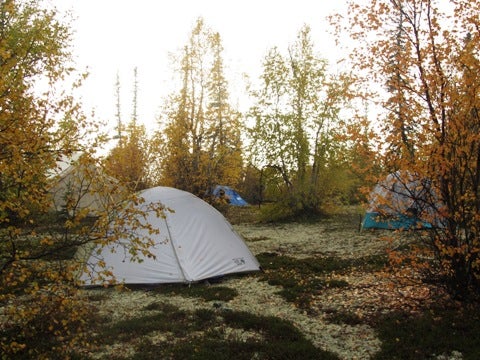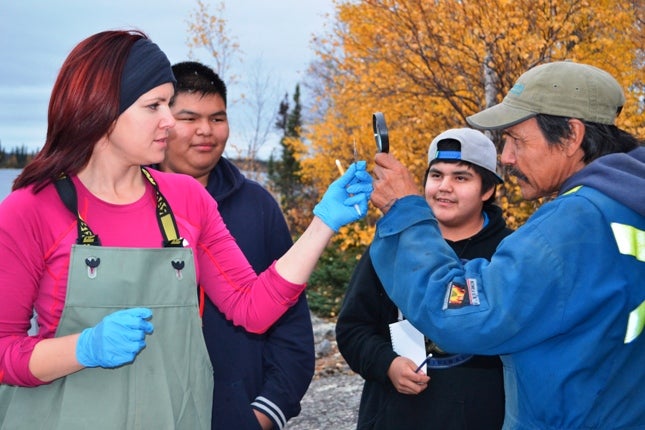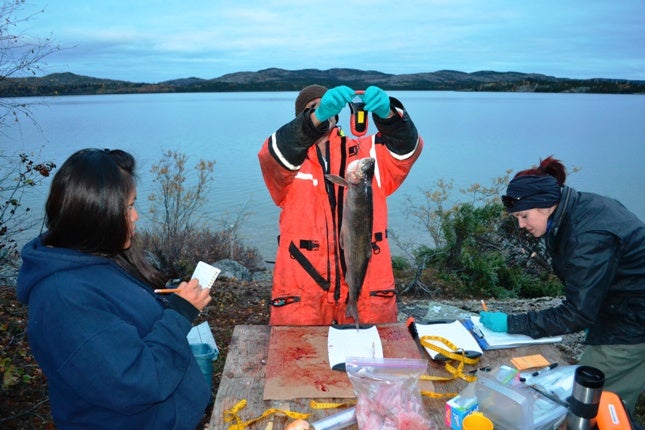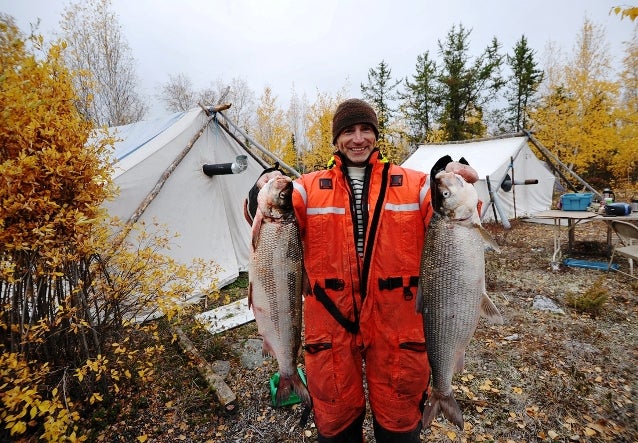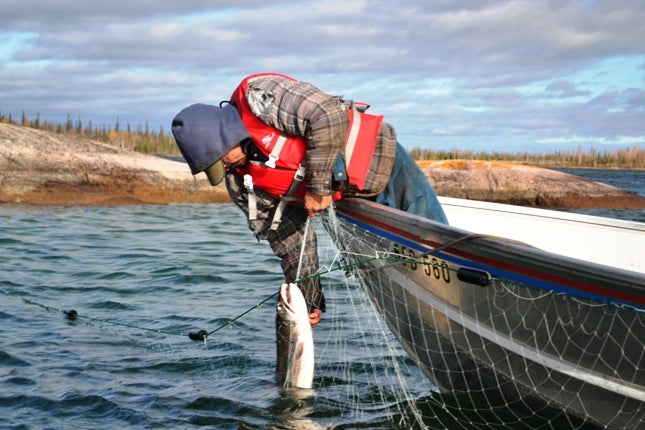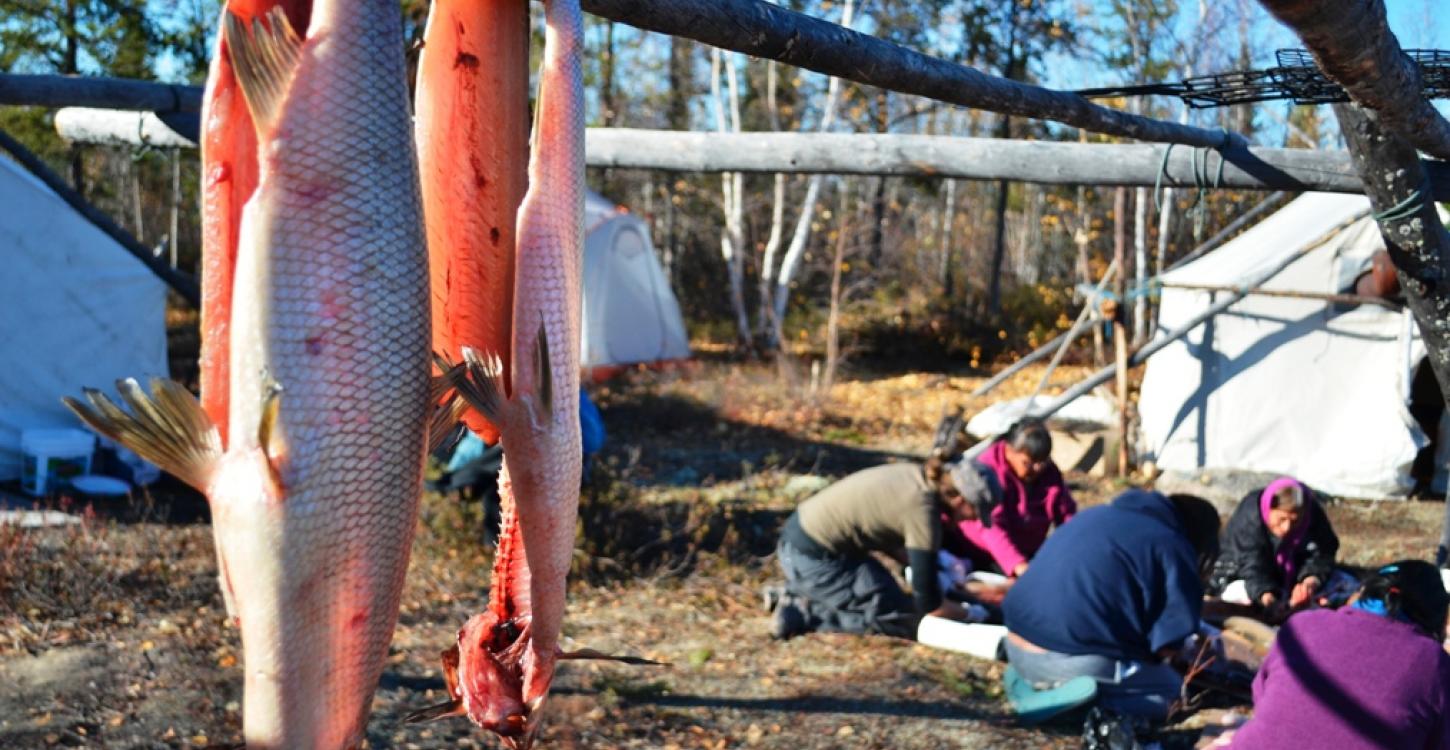
This year’s fish camp took place the week of September 23-27 at a traditional fishery site near Gamètì. This is the fourth year that community members in the Tłı̨chǫ region–elders, fishers and youth –have worked with scientists in the field to sample fish and fish habitats near their community–and to learn from one another by sharing both traditional and scientific knowledge about the health of the aquatic ecosystem and ways to monitor it.
The five-day on-the-land camp was part of the Tłı̨chǫ Aquatic Ecosystem Monitoring Program --a unique partnership that involves Tłı̨chǫ communities, the WRRB, the Tłı̨chǫ Government, the Wek’èezhìı Land and Water Board (WLWB), and the Department of Fisheries and Oceans (DFO), with additional support from a Golder Associates biologist. Collecting information on the fish, water and sediments gives communities and project partners information they can use to determine whether fish health, and water and sediment quality are changing over time near each of the four Tłı̨chǫ communities.
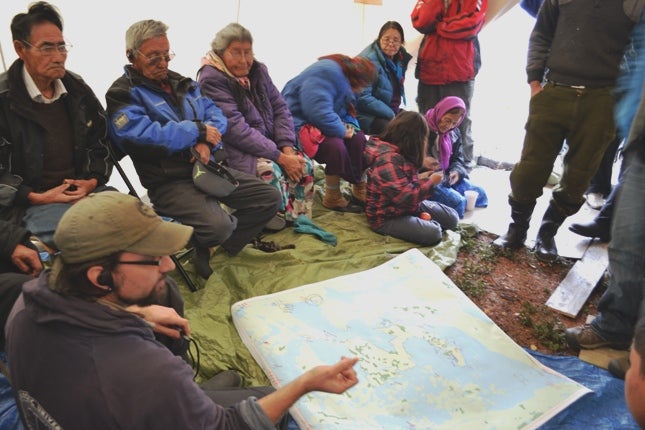
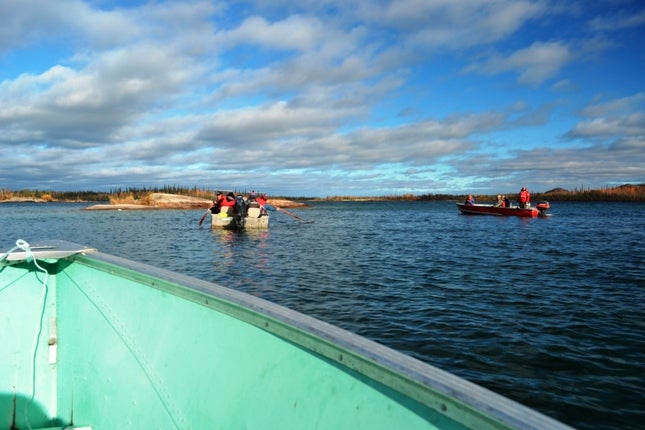
Earlier in June, community members decided to focus the sampling on two fish species that are especially important food sources--Lake Whitefish and Lake Trout-- and based on their experience as fishers in the area, recommended where to set nets. Biologists and community members successfully caught the 20 Whitefish and 20 Lake Trout that were needed for sampling. Participants also collected water and sediment samples from six locations that community members had chosen earlier at a planning meeting in Gamètì this spring—based on community use and concerns about water quality. Water samples will be analyzed for physical and chemical properties as well as for trace metals.
Fish tissue samples are now being tested for metals and other contaminants. Water and sediment samples are also being analyzed for various characteristics that can tell us about water quality, such as the amount of oxygen and nutrients in the water. Together, the sample results will give a good picture of current environmental conditions of the aquatic ecosystem near Gamètì. Those results will be reported back to the community of Gamètì in a follow-up meeting in early 2014.
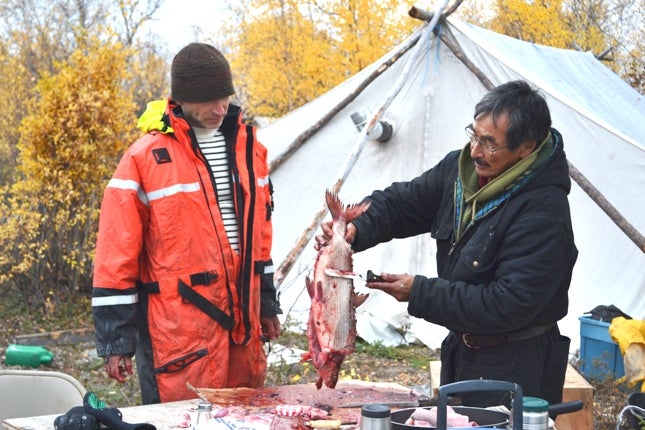
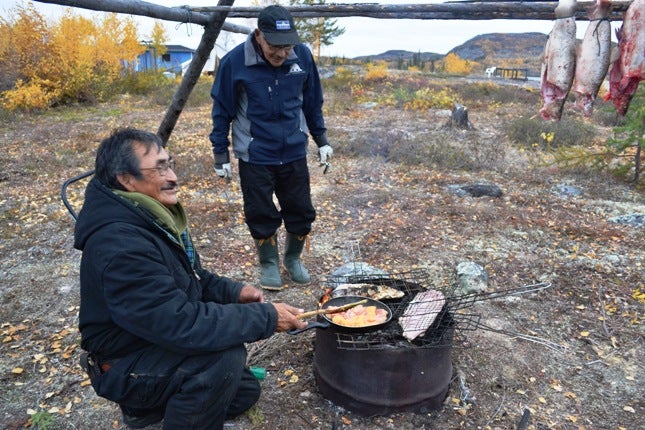
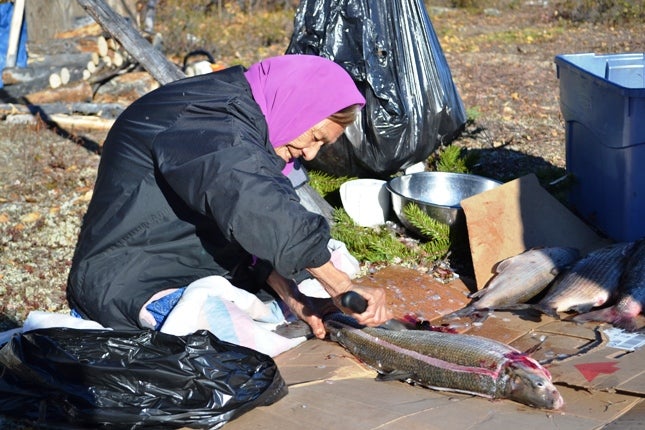
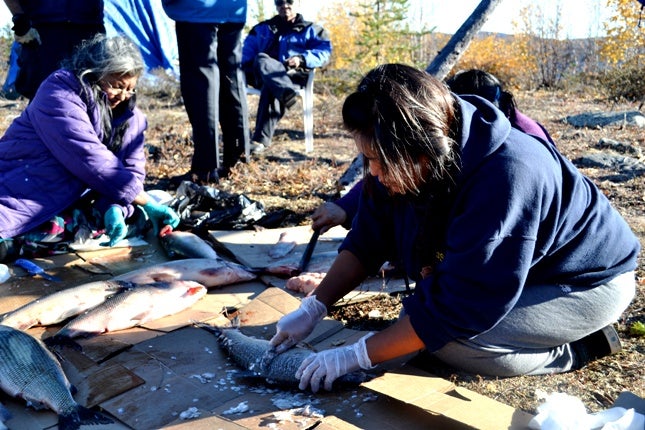
The fish camp was a great opportunity for youth, elders, scientists and resource people to interact in a traditional camp setting. Both scientific and traditional Tłı̨chǫ cultural activities took place. Elders shared stories about the history of the area and spoke of the importance of fish and the use of fish traps to catch fish in the past, gathering and storing fish for the winter. Each day, participants enjoyed delicious meals of traditional country foods. On the first night at camp, Joe Zoe cooked whitefish eggs over the fire and on the last night, moose was added to the menu. Once fish were pulled from the net and tissue samples taken, fish fillets were delivered to the cooking tent for supper—or hung over the fire. Youth learned how to make bannock—a staple at every meal—and also learned how to make dry fish, observing the elders as they skillfully scaled and filleted the fish.
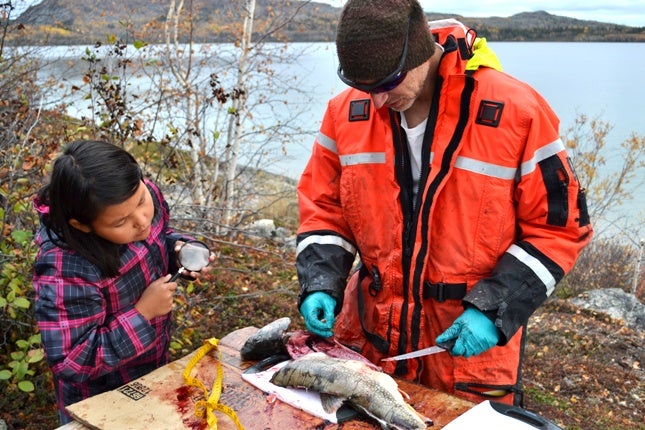
There were science “lessons” too. As biologists processed the fish pulled from the nets, youth helped record the length, weight and sex of each fish. Participants were able to observe the different parts of a fish’s anatomy and how the otolith --or ear bone-- was extracted to be used later in the lab to determine the fish’s age. The biologists showed how examining a fish’s stomach contents and its physical characteristics can tell us a lot about a fish’s ecology. For instance, a Northern Pike’s streamlined shape, camouflage markings and a mouth filled with teeth are clues that this fish is an efficient predator.
Take a look through the Photo Gallery at the end of this article for photos of this year’s fish camp.
Next Steps:
We’re looking forward to returning to Gamètì early in 2014 to share the lab results with the community. Once all the data is in, a final report will be written.
Facts about the Tłı̨chǫ Aquatic Ecosystem Monitoring Program
- The TAEMP rotates community-based sampling through each of the four Tłı̨chǫ communities once every four years.
- The 2014/2015 fish camp will be held near Whatì. That will complete the initial sampling phase and collection of baseline data for the aquatic ecosystems near all the Tłı̨chǫ communities.
- After the 2014/15 sampling, the first round of comparative baseline sampling will begin. That data can be used to compare with data collected at the same lake four years earlier to see whether any changes in fish or fish habitat have taken place.
- The data collected through the TAEMP will not only meet communities’ needs in monitoring fish and water resources, but contribute to a larger picture of aquatic health in the Tłı̨chǫ region as a whole.