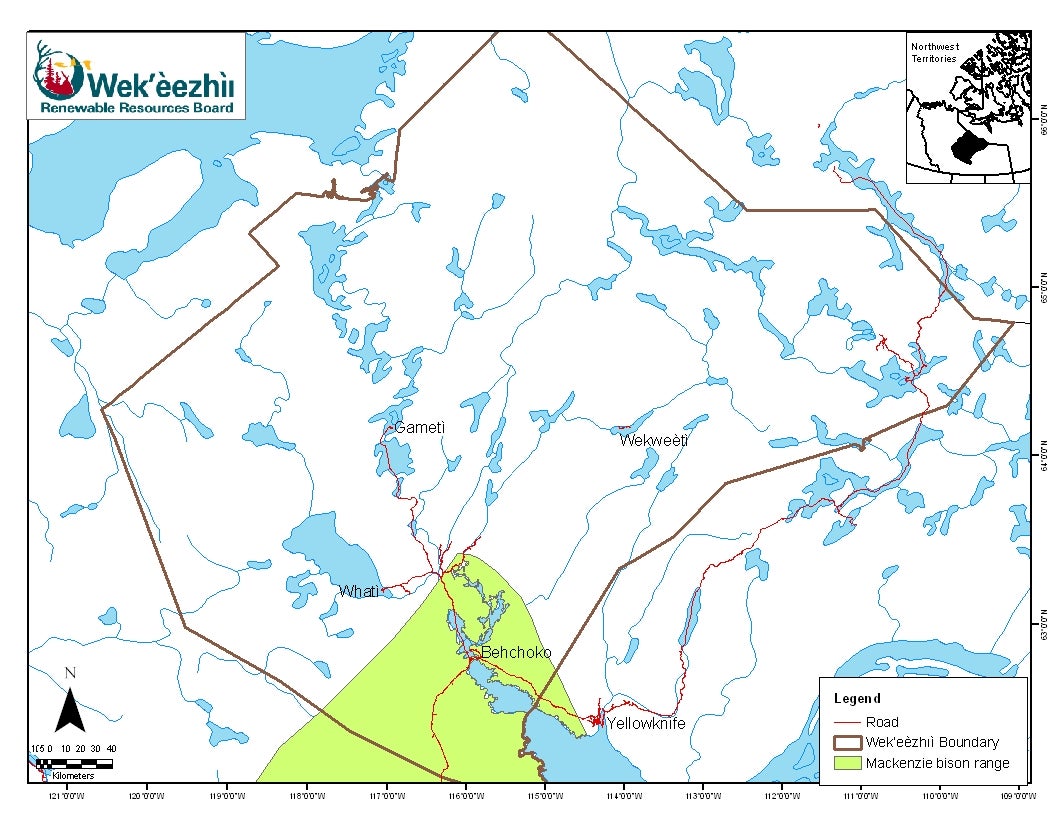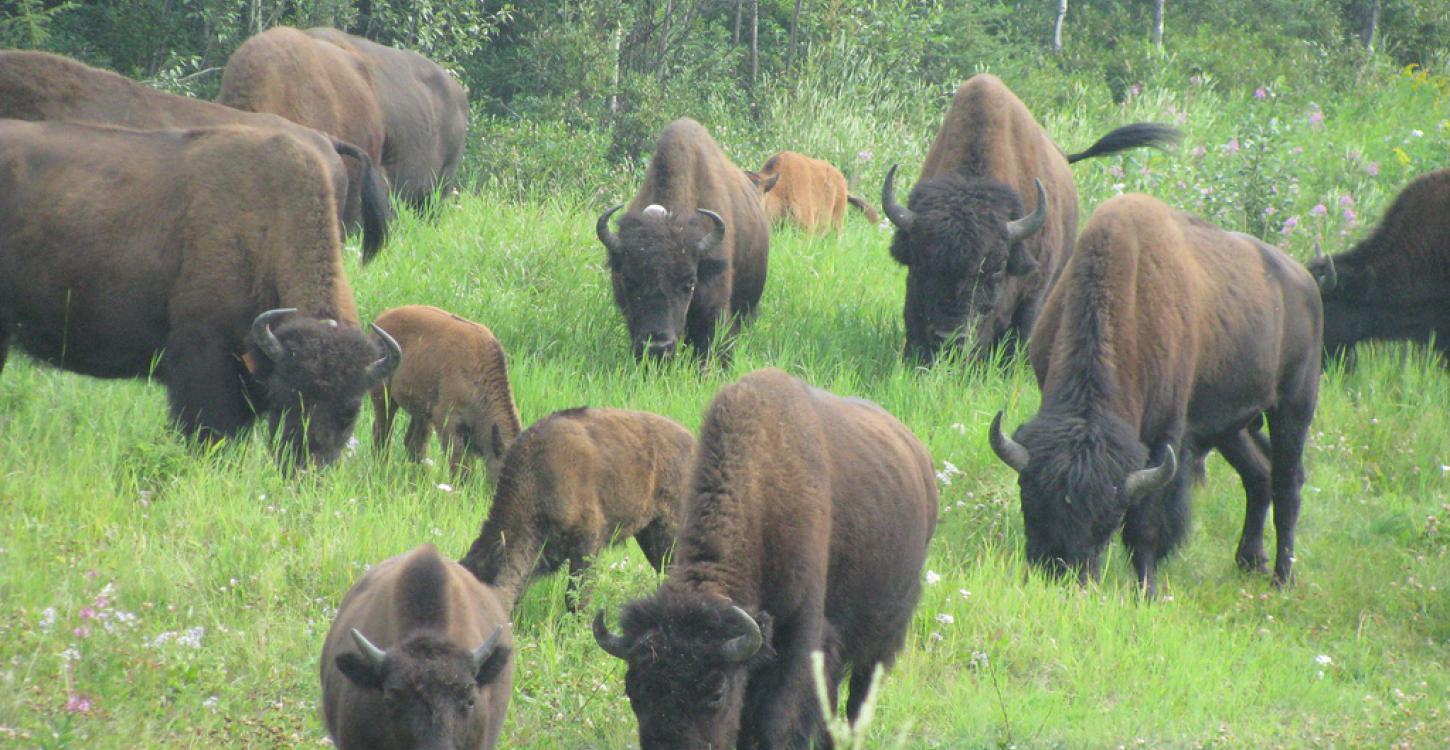
As the main body responsible for the management of wildlife throughout Wek’èezhìı, the WRRB reviews any proposals that have to do with the area’s wildlife or its habitat. It provides its recommendations on matters such as how to address last summer's population losses when an anthrax outbreak killed at least 440 bison in the NWT –or what added up to be at least 30% of a population of 1440 animals based on GNWT’s survey of Mackenzie Wood Bison this March. In its wake, the anthrax outbreak left fewer than 1000 bison in the Mackenzie population.
It was the worst known outbreak to ever occur in the NWT –and unlike other outbreaks, this time more adult females than expected died, as well as many calves. It’s unclear how quickly the population will recover. Wood Bison are listed as a threatened species under the federal Species at Risk Act. The draft National Recovery Strategy for Wood Bison considers 1000 animals to be the minimum population size for maintenance of genetic diversity and population recovery.
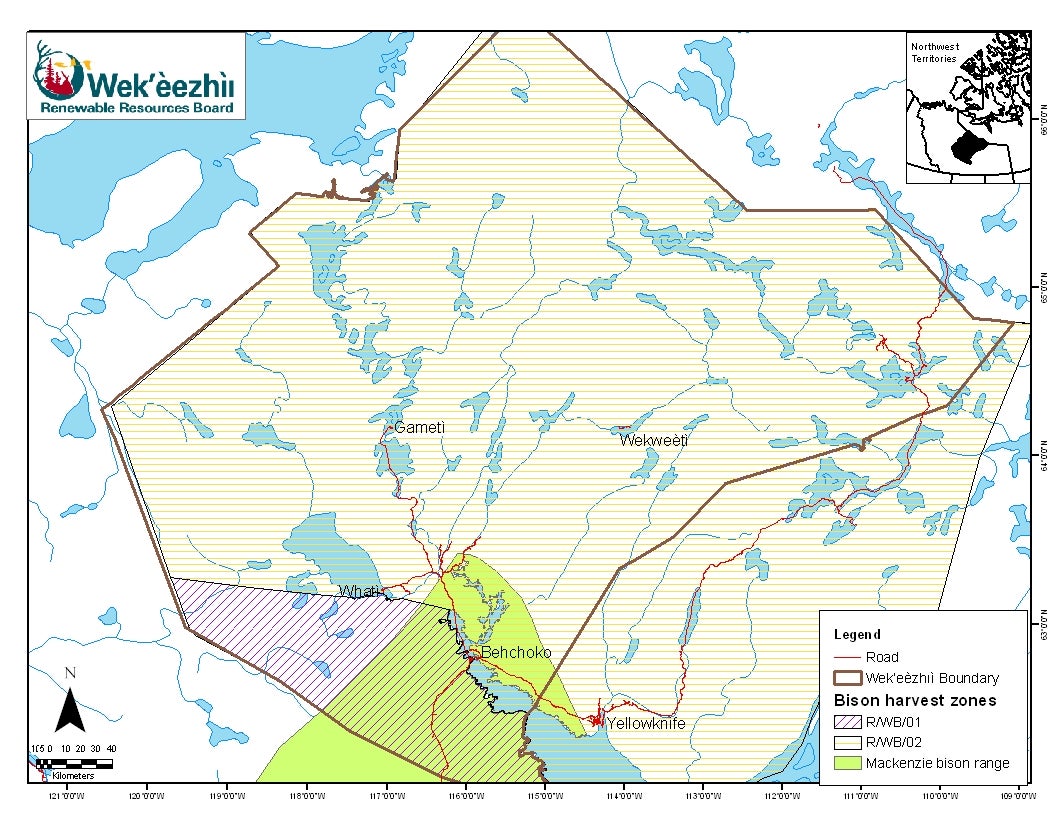
Based on the most recent information, the WRRB agreed with the GNWT’s Department of Environment and Natural Resources’ (ENR) assessment that management actions were required to minimize any additional losses to the Mackenzie population. The Board recommended that zones R/WB/01 and R/WB/02 be closed immediately to harvesting for the 2012/2013 season.
The WRRB also recommended that a population survey be conducted in 2013 on the Mackenzie population of Wood Bison and that education in Tłįcho communities regarding wood bison population and human health concerns be continued.
After conducting consultations with affected Aboriginal governments and organizations, ENR closed wood bison harvesting in Wildlife Unit R/WR/02 for all harvesters as of October 5. Effective November 1, 2012, all harvesting in the Mackenzie Woodland Bison range was closed to promote the herd's recovery.
This March 2013, ENR will conduct a population survey of the Mackenzie Woodland Bison to estimate how many bison there are currently --and to determine the full impact of this latest anthrax outbreak. That information will inform management planning for the Mackenzie Wood Bison for next year.