With this September’s fish camp near Whatì, the first phase of the Tłįcho Aquatic Ecosystem Monitoring Program (TAEMP) is complete. Once the fish, water and sediment samples that were collected at the Whatì fish camp are analyzed, there will be baseline data on fish and fish habitat near all four Tłįcho communities. That baseline provides a starting point that describes conditions in an area at that time, which can then be compared with data collected in future monitoring to see if there are any changes to fish or water over time.
“It is good that you are doing a study on the fish and the water and we will know more with your assistance and with our guidance.” -- Whatì elder Lucy Nitsiza
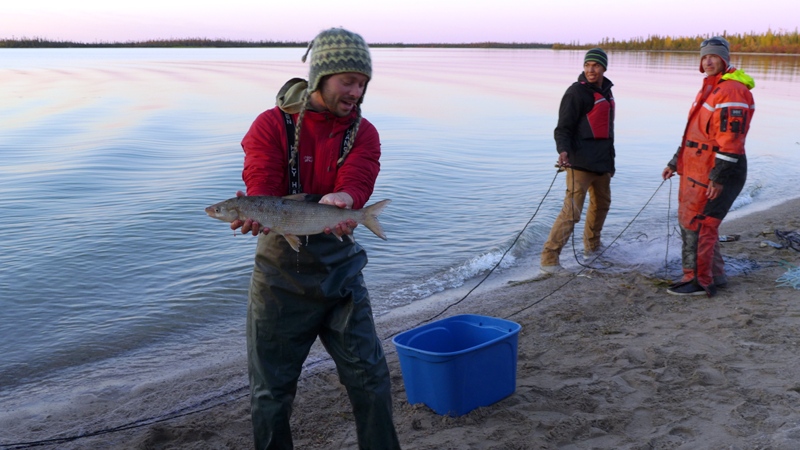
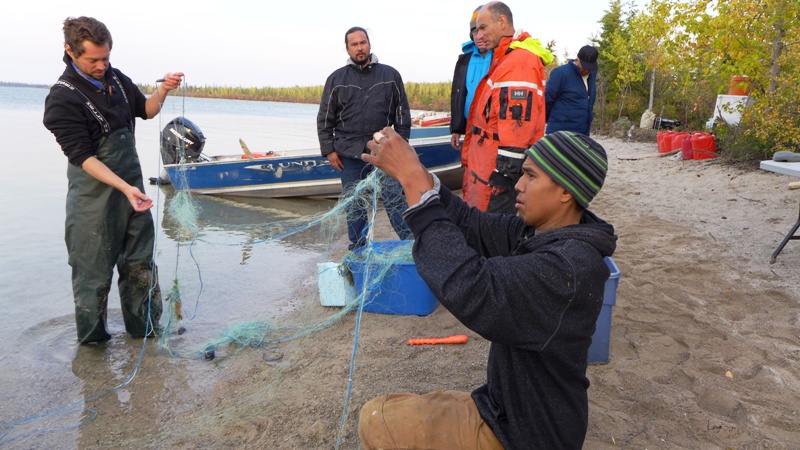
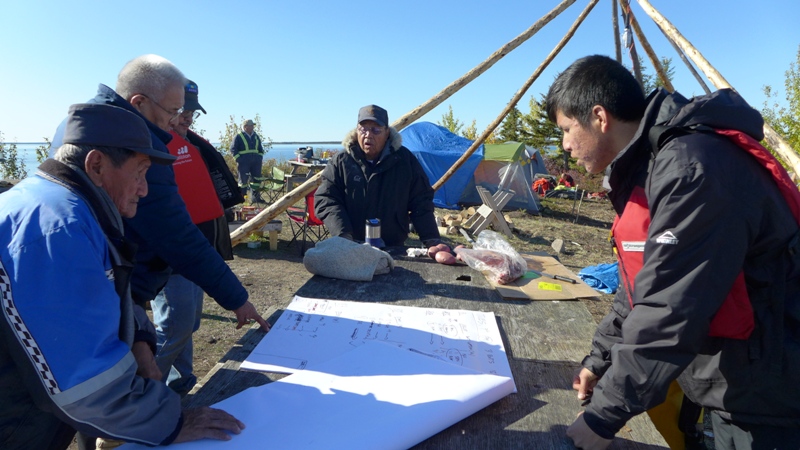
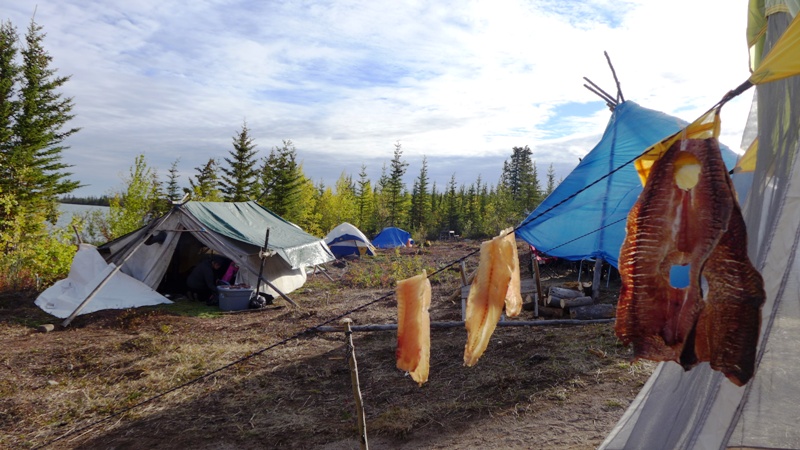
From September 8-12, 2014 elders, youth, and support staff from Whatì joined fish biologists, water monitoring specialists and WRRB staff at a five-day on-the-land camp on Burnt Island, about 14 km west of the community. The camp location was a great place for learning and sharing traditional Tłįcho and scientific information and observations about the area’s aquatic environment. Elders spoke about how important Lac la Martre is in providing for the community’s fishing needs –as well as the needs of others. Community members showed where to set nets to catch the 20 Lake Whitefish and 20 Lake Trout required for sampling, and recommended where to take water and sediment samples. They advised that water levels in Lac la Martre were low this year, and elders and boats captains helped navigate the boats safely through the rocks and shoals in the shallow water.
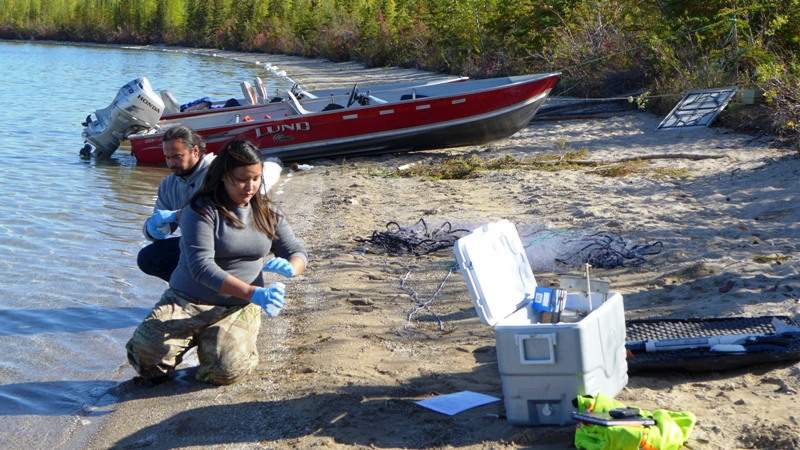
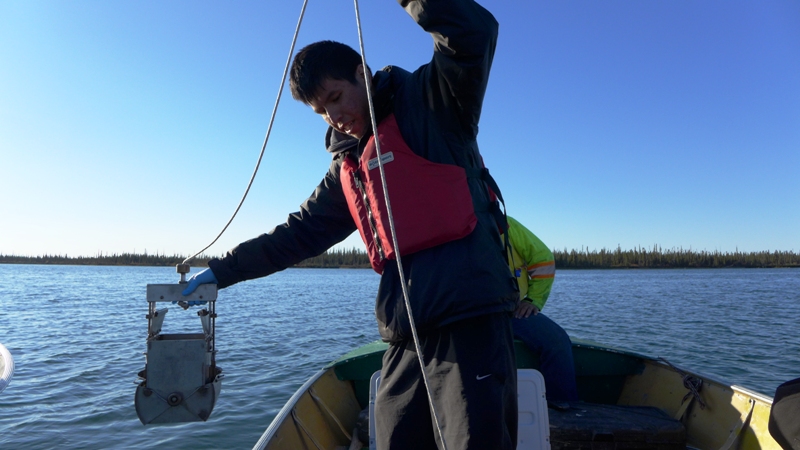
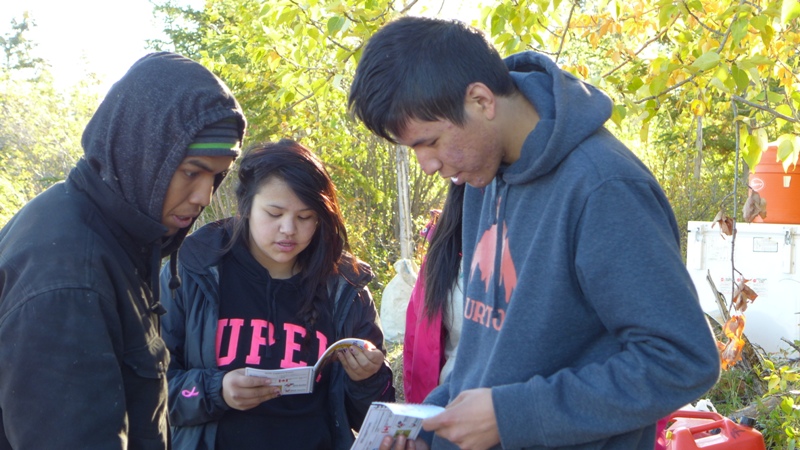
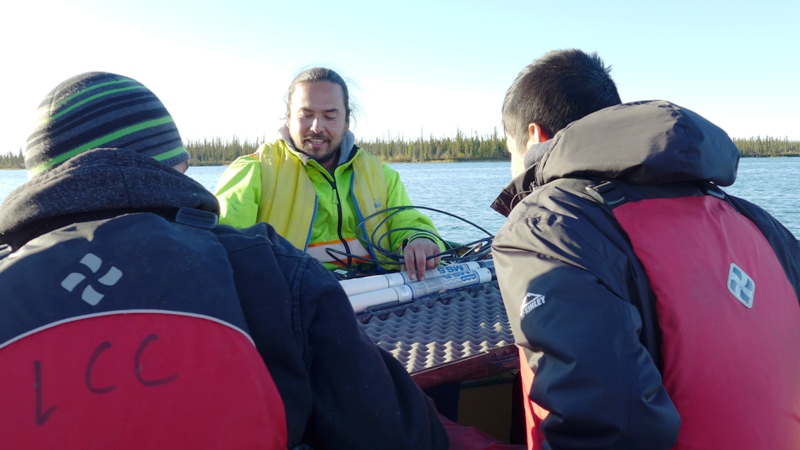
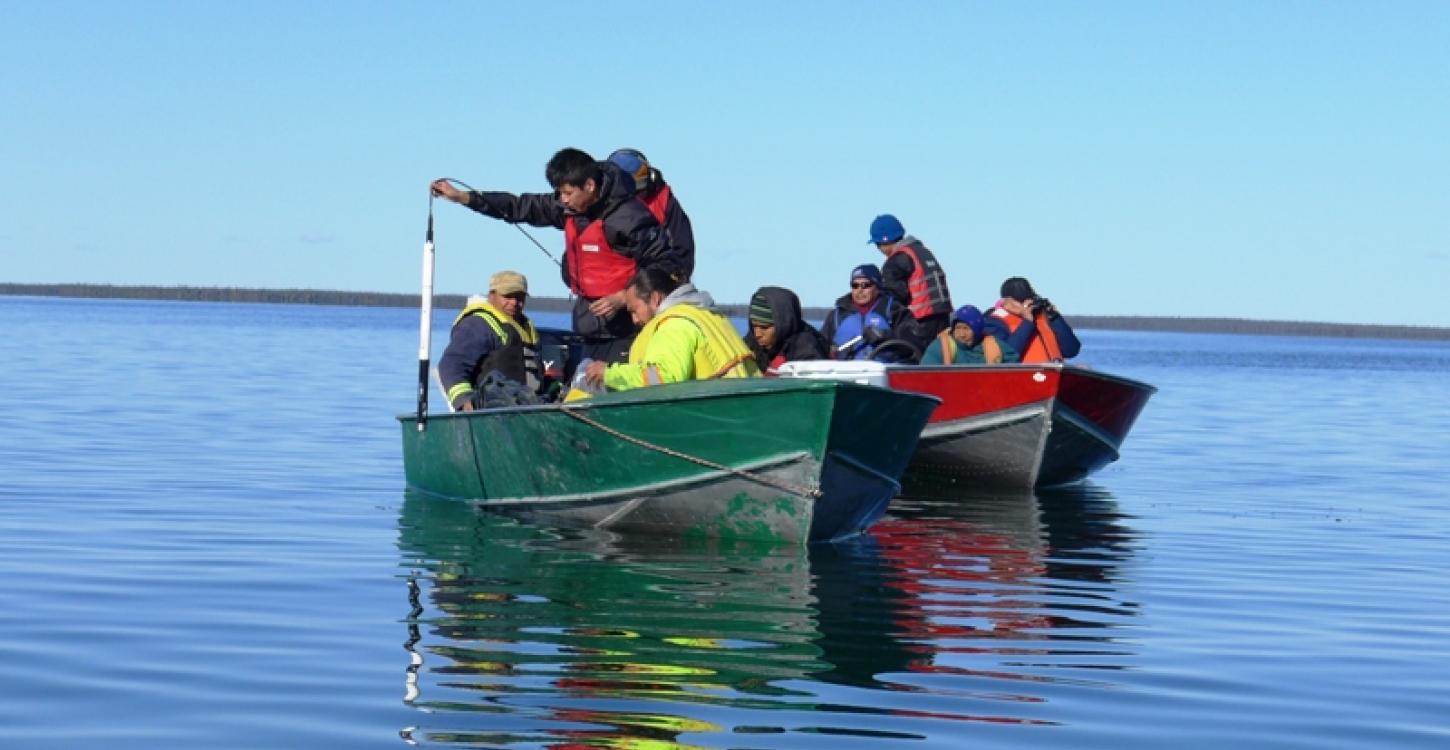
On the first day of water and sediment sampling out in the boats, Sean Richardson, Wildlife Coordinator for the Tłįcho Government’s Culture and Lands Protection Department, and Roberta Judas from the Wek’èezhìı Land and Water Board, showed the youth how to use water sampling equipment to help determine the amount of solid matter suspended in the water and how “cloudy” it was, the dissolved oxygen, how acidic the water was, the levels of nutrients and various metals, and water temperature. Each of these measures has a story to tell. For example, water temperature is important for the health and survival of aquatic life. Changes in the temperature can affect reproduction and growth.
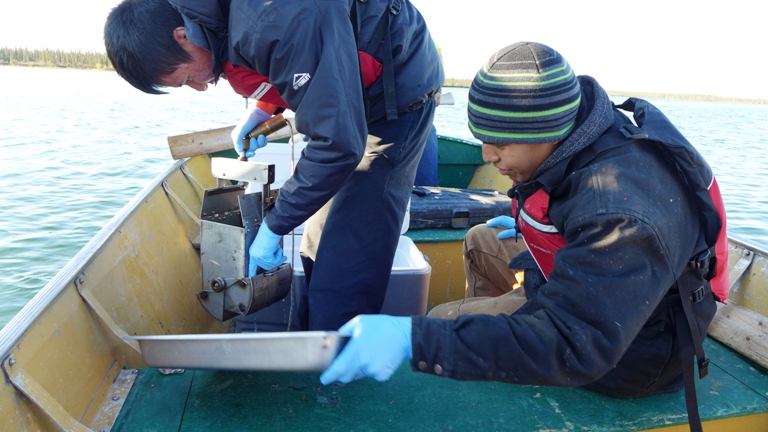
Sean and Roberta also showed the youth how to use an Eckman grab sampler to collect sediment samples used to test for metals. It was challenging to get right down to the mud at the lake bottom in some of the more rocky sites, but the youth quickly mastered the technique. This hands-on learning is a valuable skill. Sean explained, “It will be the youth here in the community who will come up with areas for fish and water sampling in the future so it’s the communities who can monitor any development and watch for any changes.”
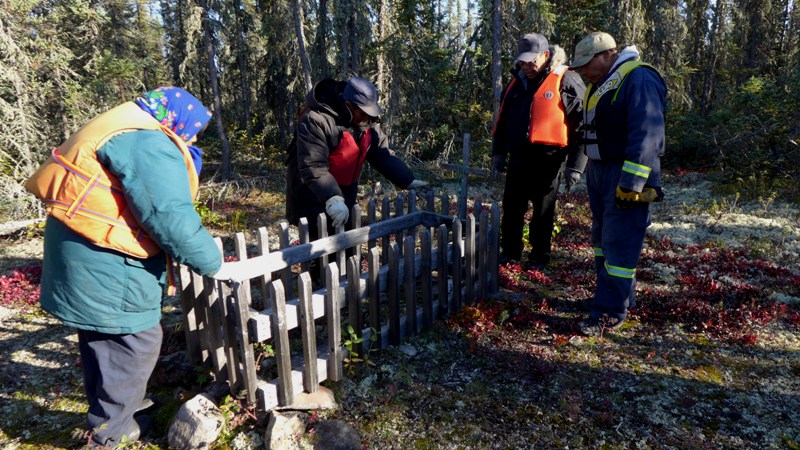
A highlight of the first day was visiting a traditional gravesite where elders led prayers and held a feeding the fire ceremony. Elders explained the importance of maintaining gravesites and paying respect for those who have passed on. When high winds on the second and third day created big waves and unsafe conditions for water travel, community members selected alternate places closer to camp to sample. During his interview for a video on the Whatì fish camp, elder Jimmy Nitsiza shared traditional Tłįcho “techniques” for paying respect to the water and calming the wind for safe passage.
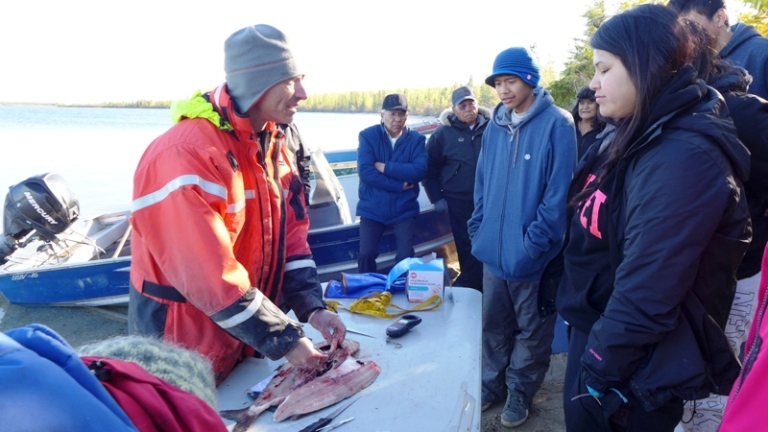
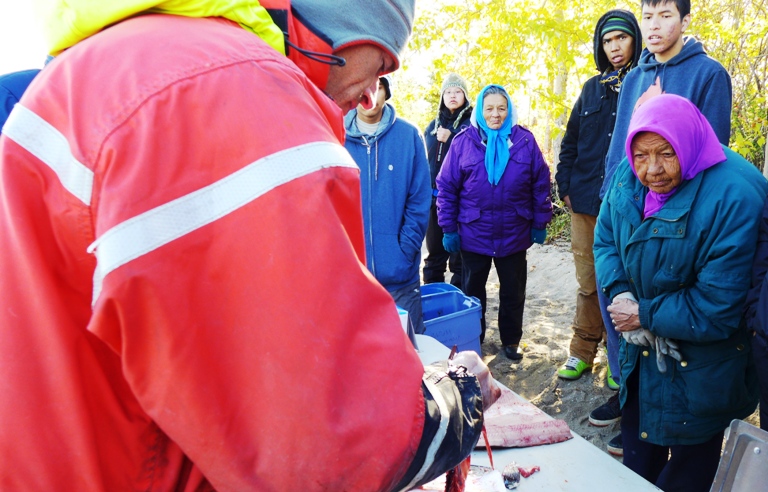
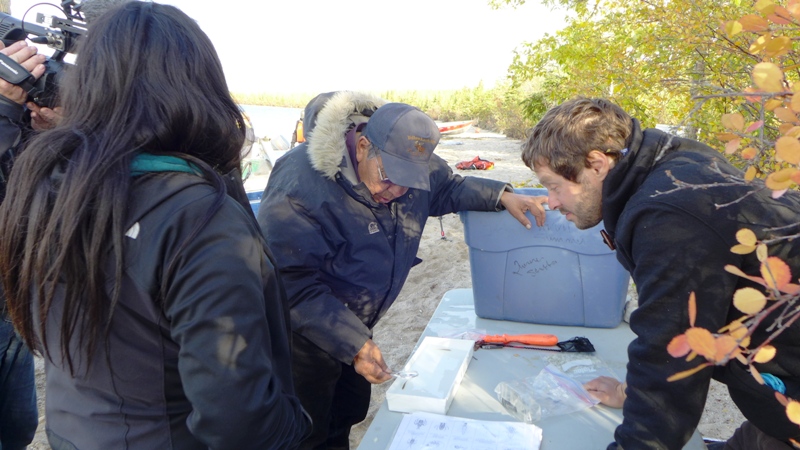
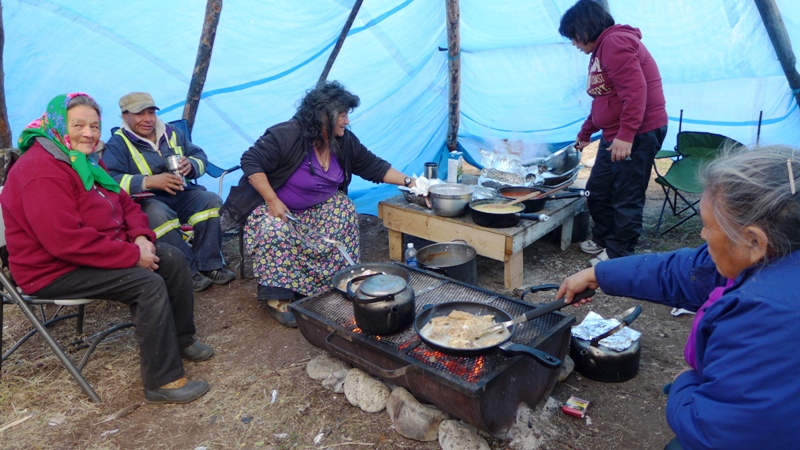
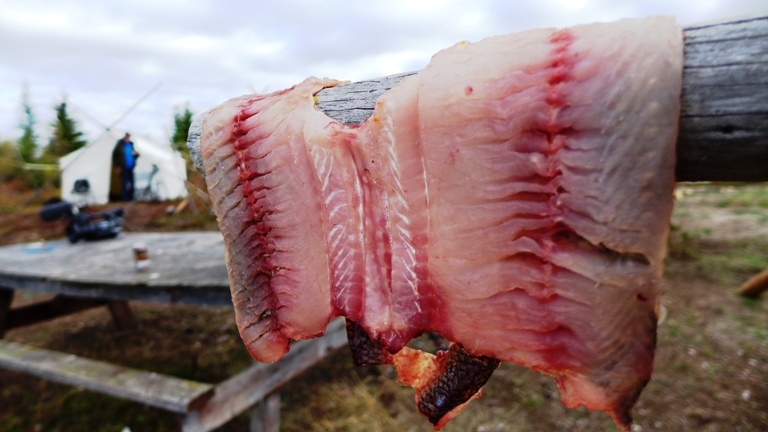
Being wind-bound provided a good opportunity for taking part in learning activities right in camp. Fish biologist Paul Vecsei, Golder Associates, demonstrated how to process a fish for sampling and how to obtain the required information from the fish. Assisted by Francois Larouche, DFO, Paul measured each sample fish’s length, girth, and weight, recorded its sex, and observed the general appearance of the fish. Tissue samples were collected, with the samples examined by a lab after the camp in order to determine the levels of various contaminants in the fish collected at the camp. To determine the fish’s age, Paul extracted a tiny bone from the head, the otolith, because it has rings that can be counted, similar to counting the annual growth rings in a tree. Paul also pointed out the differences among the fish species caught in the fish nets, and the characteristics that make each best adapted for the lifestyle they live, the way they hunt, and the places they live in. Pike, for example, are solitary ambush predators that move so fast the human eye can’t even follow them! Once fish were pulled from the net and samples taken, fish fillets were delivered to the cooking tent for supper—or hung over the fire for dry fish.
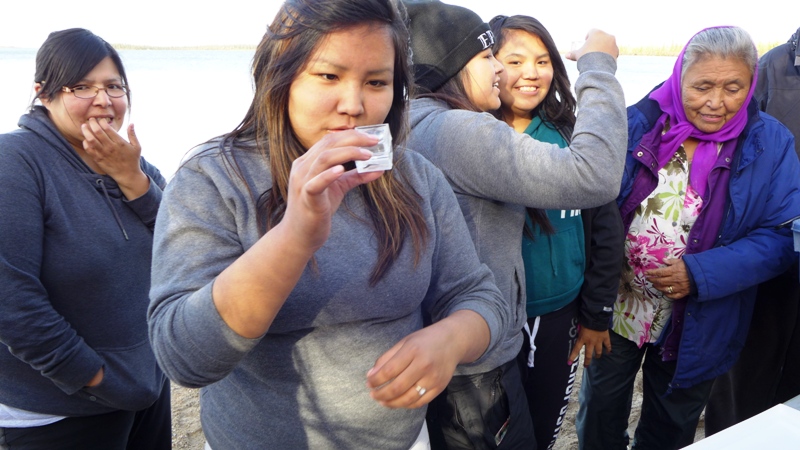
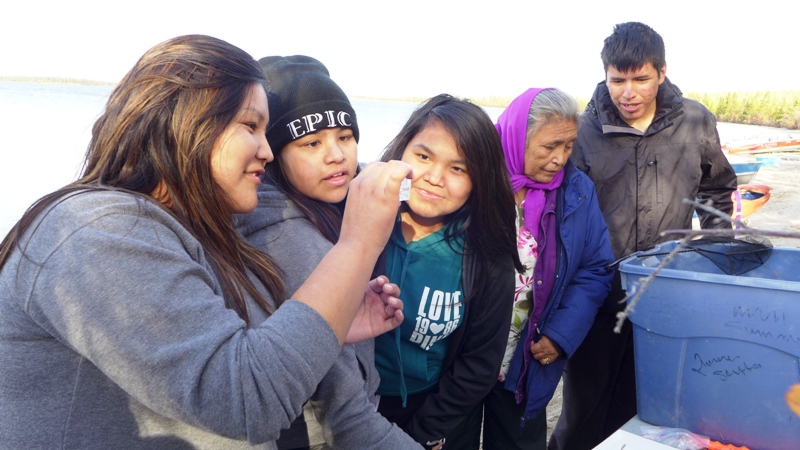
Camp participants also had a close look at some of the smaller creatures in the lake—aquatic invertebrates found close to shore—under a magnifying glass. Aquatic insects, snails, worms and other invertebrates play an important role in the aquatic ecosystem, providing food for Lake Whitefish, young Lake Trout and smaller fish like Sticklebacks and Ciscoes, water birds, and other animals. Earlier, during the fish processing demonstration, Paul had pointed out the small invertebrates inside a Whitefish’s stomach, including tiny shrimp-like scuds and a snail swallowed whole.
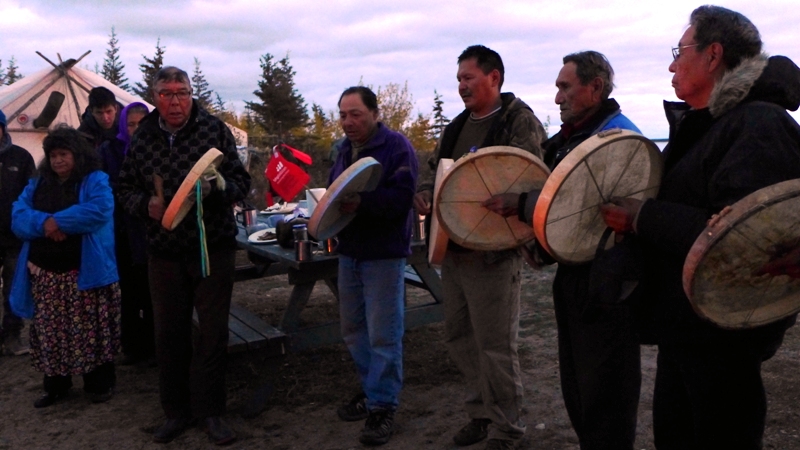
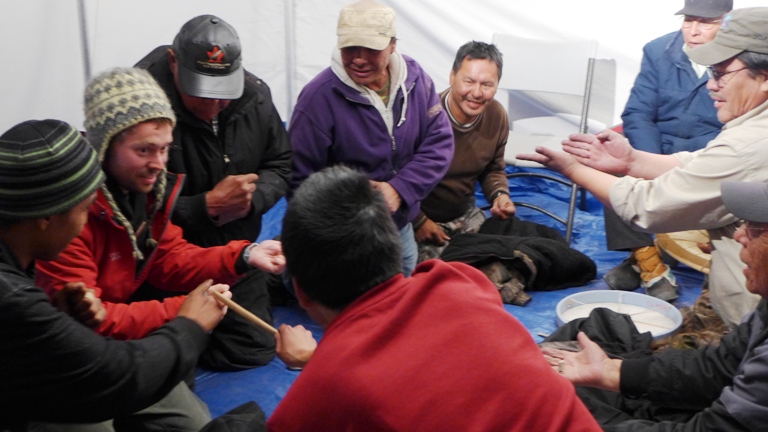
The TAEMP team would like to thank the community of Whatì and all the participants for a successful and rewarding camp. Elders shared their knowledge and stories, and the youth helped out at camp and learned from the elders and support staff. Everyone enjoyed the traditional food prepared by the camp cooks, especially the fish fillets. On the last evening there was laughter and good spirits in the meeting tent during the hand games demonstration and drum dancing. The next morning, after feeding the fire and packing up their things, everyone returned home safely.
Elder Jimmy Nitsiza spoke of how traditional knowledge and science worked “in good cooperation and good spirit” at the fish camp. “Traditional knowledge talks about the land and how to relate to land and water...and we need your expertise. Both of them work together and make a better community. The last four days showed a good example. We became good friends, we had good relationships, a good indication of working together as one people.”
Paul Vecsei shared his perspective on how both systems of knowledge work together: “In fisheries science, what kinds of things can we look at which give more support to traditional knowledge observations? Think of traditional knowledge as the information and think of fisheries science as the numbers that can give support to those sentences, and the two combined can make a very strong case.”
The exchange of information that is taking place in this program has enriched all participants’ knowledge and appreciation for the aquatic ecosystem. Learning about Tłįcho ways of assessing the health of the environment—alongside scientific ways—can only deepen our understanding of ecosystem change.
“We were all living together as a group, as friends. Down the road, the youth might remember, they were breaking new ground, making history for themselves, having good memories of the camp.” –Whatì elder Madeline Champlain
What Happens Next?
Test results from fish, water and sediment samples collected at the fish camp will be reported back to the community of Whatì at a follow-up meeting in early 2015. Community members will also see the newest fish camp video!
Fact Box
- TAEMP activities focus on sampling fish, water and sediments near Tłı̨chǫ communities, and using both traditional and scientific knowledge to address the question: “Are the fish and water safe to consume?”
- The TAEMP rotates fish, water and sediment sampling through each of the four Tłı̨chǫ communities so that every community will have samples collected and analyzed once every four years.
- The TAEMP is a unique partnership that involves Tłı̨chǫ communities, the WRRB, the Tłı̨chǫ Government, the Wek’èezhìı Land and Water Board (WLWB), Health and Social Services, GNWT, and the Department of Fisheries and Oceans (DFO), with additional support from Golder Associates.
- The TAEMP team thanks the project funders for this year’s fish camp:
- Department of Fisheries and Oceans
- Northern Contaminants Program
- Cumulative Impact Monitoring Program
- Government of the Northwest Territories
- Tides Canada