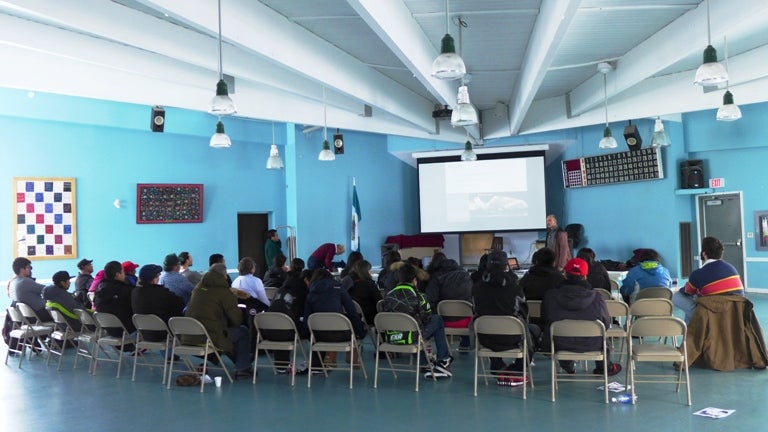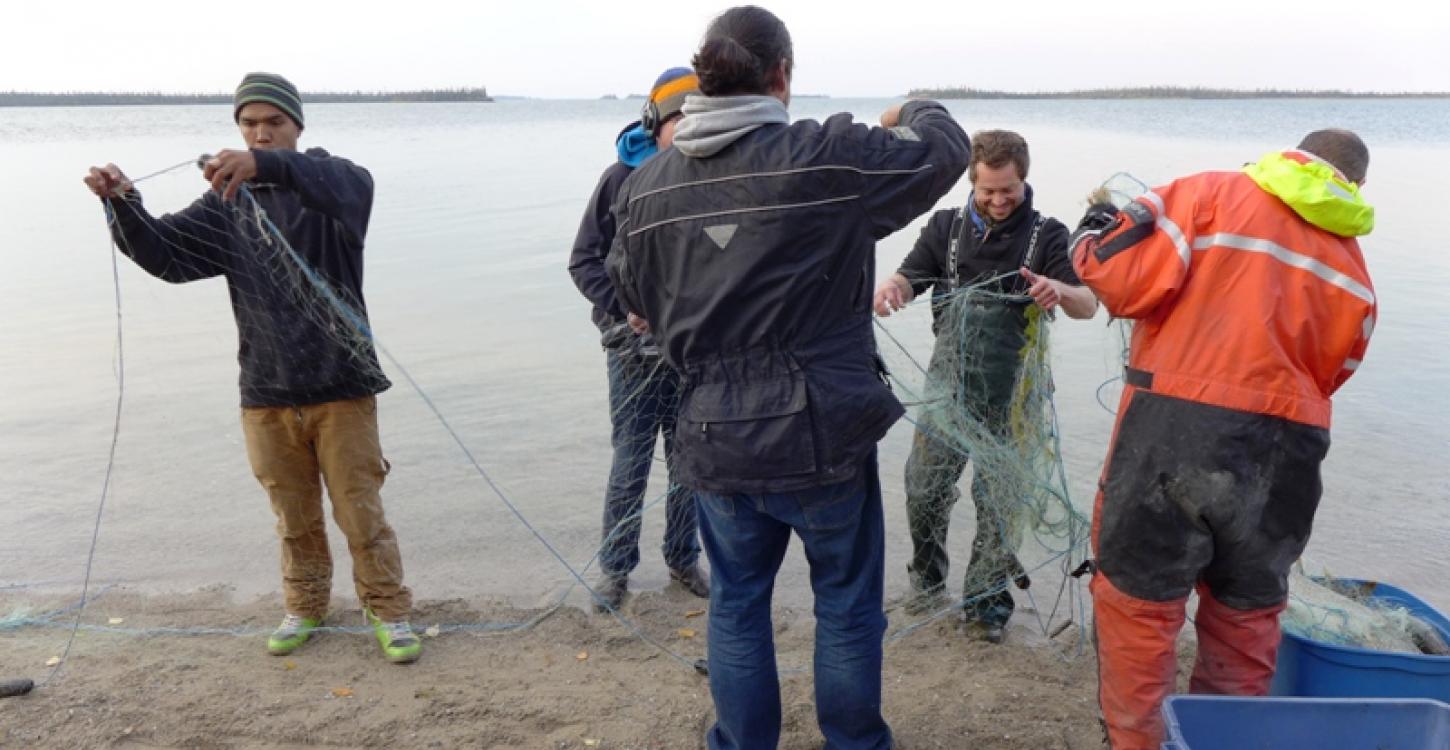
In February, the TAEMP (Tłı̨chǫ Aquatic Ecosystem Monitoring Program) team returned to Whatì to share the results from last September’s fish camp at Burnt Island west of the community.
Many community members came out for the presentation, including students from Mezi Community School and Aurora College, to learn about the findings from the lab analyses done on fish, water and sediment samples collected at the camp. Overall, the results indicate that Lac la Martre is considered a healthy lake with clean water and healthy fish. We now have a snapshot of conditions that currently exist in the aquatic ecosystem next to Whatì. This “baseline” information on fish and their habitats can be compared with data collected in the future and allow us to see if there are any changes to fish or water occurring over time.
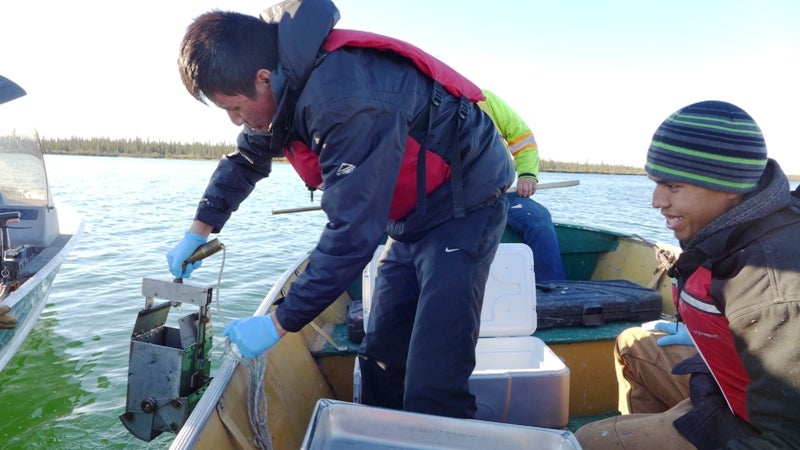
The presentation opened with a showing of a draft version of the video about the Whatì fish camp that Alan Booth, from Yellowknife Films, has been making. Paul Vecsei, a fish biologist with Golder Associates, then described the activities at the fish camp and how fish tissue samples, otoliths (little ear bones in the fish), measurements, and observations on general health were collected from 20 Łih (Lake Whitefish) and 20 Łıwezǫǫ̀ (Lake Trout). Different fish habitats were sample, ranging from shallow areas to deeper holes. Analysis of the tissue samples provided information about the current levels of metals and other contaminants like mercury in the fish. Analysis of the otoliths provided information on the age of the fish: the Łih sampled ranged from 6 – 22 years and Łıwezǫǫ̀ from 8 -21 years.
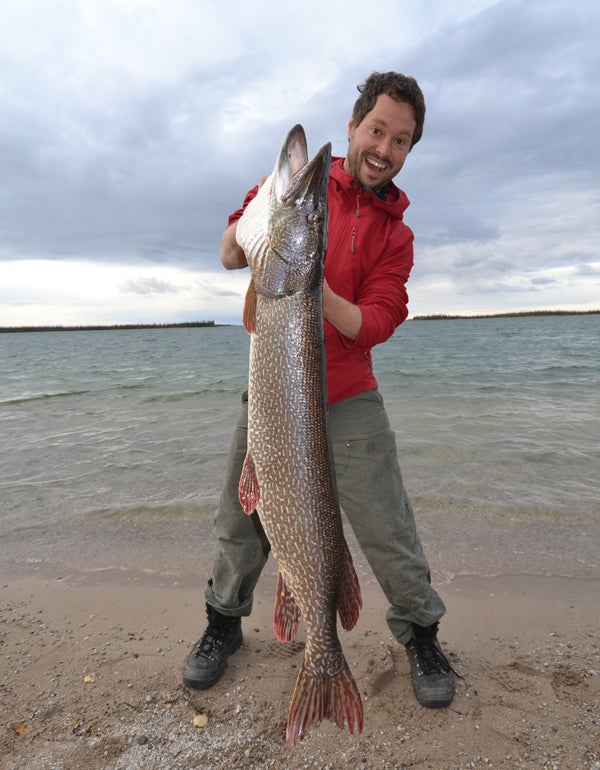
Mercury is known to naturally occur in small amounts in lakes throughout the North. Mercury levels are generally lower in species like Łih which feed on aquatic insects and other organisms near the bottom of the food chain. Levels are usually higher in predatory species such as Łıwezǫǫ̀ and Įhdaa (Northern Pike, also known as Jackfish) because they are more likely to eat smaller fish and mercury becomes more concentrated with each step up the food chain. This process, known as bioaccumulation, can be thought as: the larger and older the fish, the greater the likelihood that there is more mercury built up in its body. As expected, the sample results showed higher mercury levels in Łıwezǫǫ̀ than in Łih, but except for very large and very old Łıwezǫǫ̀, the mercury levels in Łıwezǫǫ̀ were not considered to be a concern. In fact, Paul explained, the mercury levels were even on the low side for Łıwezǫǫ̀ in lakes at this latitude.
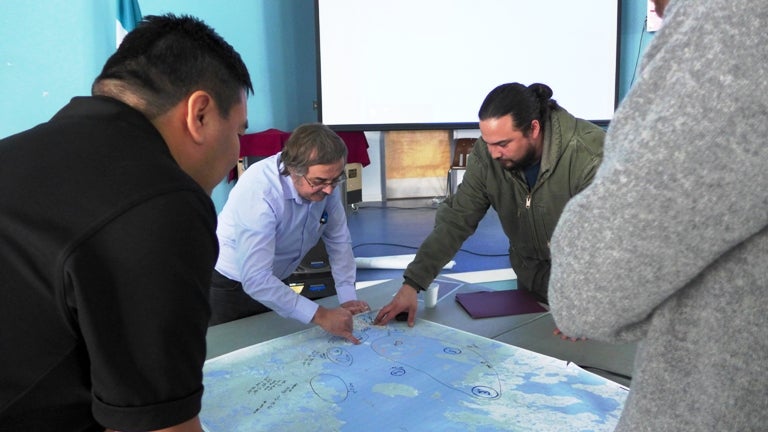
Sean Richardson, Wildlife Coordinator for the Tłįcho Government’s Culture and Lands Protection Department, presented the results of the water and sediment sampling. Water and sediment samples were taken at six locations selected by community members, as well as a location near the community dock and a location at the sewage lagoon outflow near Whatì. Results from the 2014 monitoring program supported the expectation that water quality and sediment quality is good in Lac la Martre. All sites showed that the lake water is “hard”, due to the dissolved minerals in the water that are typically found in lakes—such as calcium and magnesium.
Baseline sampling of fish, water and sediments has now been completed near all four Tłı̨chǫ communities. This year’s camp (2015) returns to the Behchokǫ̀ area to begin the next phase of comparative sampling, which involves returning to the same lakes to see if there are any changes to fish or water / sediment quality since the initial sampling.
Fact Box
- Lac La Martre is a large, 70 km long inland lake, part of the Marian River watershed that flows into the North Arm of Great Slave Lake. The lake supports resident populations of Łıwezǫǫ̀ (Lake Trout), Łih (Whitefish), and ı̨hdaa (Northern Pike /Jackfish).
- The TAEMP is a partnership that involves Tłı̨chǫ communities, the WRRB, the Tłı̨chǫ Government, the Wek’èezhìı Land and Water Board, GNWT Department of Health and Social Services, and the Department of Fisheries and Oceans and Environment Canada, with additional support provided by Golder Associates.
- Funding for the 2014 Fish Camp near Whatì was provided by Department of Fisheries and Oceans, Northern Contaminants Program, Cumulative Impact Monitoring Program, Government of the Northwest Territories (GNWT), and Tides Canada.