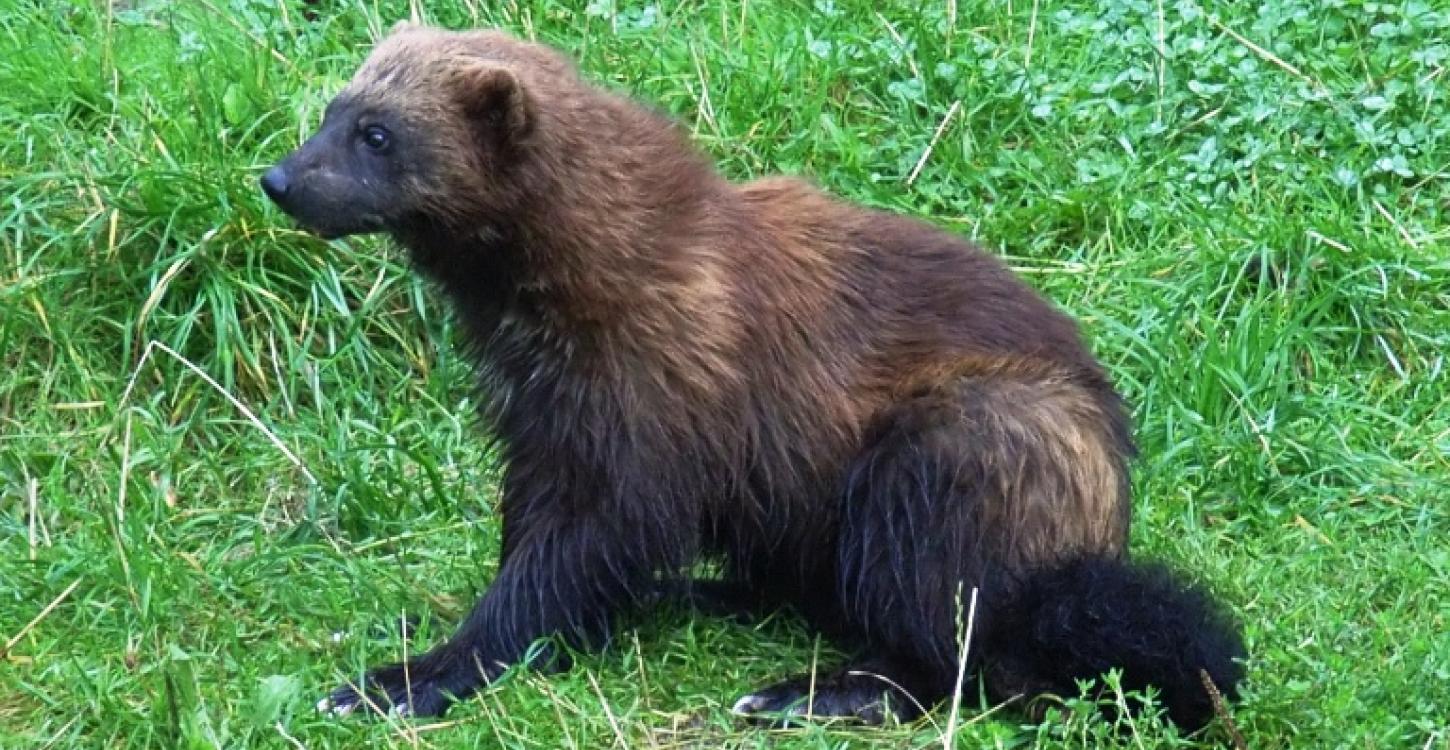
The NWT Species at Risk Committee (SARC) met in December, 2014, and assessed two wildlife species: Wolverine and Western Toad.
SARC determined that the territory's wolverine population is healthy and assessed Wolverines as Not at Risk in the NWT. While there may be some areas where their numbers are a little lower, across the territory, their population appears to be doing well, and there is even some evidence that they may be expanding their range northward. The Committee also recommended looking at the wolverine population's health again in five years. Nationally, the Wolverine is considered a species of Special Concern (Read more here).
SARC also reviewed the biological status of one of six species of amphibians that are believed to occur in the NWT--the Western Toad. Its known range in the NWT is limited to the southwest corner of the territory, south of Nahanni Butte in the Dehcho Region, and does not include Wek’èezhìı. SARC assessed this species as Threatened in the NWT: diseases, wildfires, habitat degradation, increased Ultraviolet-B rays from the sun, and small population size are all considered threats to the species. The Western Toad is listed as a Special Concern species under the federal Species at Risk Act (SARA).
Fact Box—Wolverine
- Wolverines are a shy species and not often seen. They generally prefer remote areas in forests and tundra, and are sensitive to human disturbance. Wolverines live in dens made out of snow tunnels, rock and boulders.
- Wolverines’ home ranges are large and their populations tend to be at low numbers and densities. On average, males may have a home range of several hundred square kilometres, while females typically use an area several times smaller. Often on the move looking for food, wolverines are opportunistic feeders, with a diet that includes berries and plants as well as animals as small as mice and Snowshoe Hares to as big as moose and caribou.
Fact Box – Western Toad
- Amphibian literally means “double lives” for they spend periods of their lives on land and other periods in water. The Western Toad requires aquatic habitat for breeding, egg laying and tadpole development; foraging habitat, and habitat for hibernating.
- Western toads are terrestrial and in the daytime, often stay on the forest floor in the soil under rocks, logs, or stumps. Where hiding cover is scarce, Western Toads may spend most of the day in the water.
WRRB Re-Appoints Moise Rabesca to NWT Species at Risk Committee (SARC)
At its Board meeting, the WRRB appointed Moise Rabesca to a second five-year term on SARC. The WRRB Board and Staff thanked Moise for his work on the Committee and his dedication to wildlife issues in Wek’èezhìı. As of March 16, 2015, Moise’s five year term begins. Boyan Tracz, Wildlife Management Biologist for the WRRB, serves as an Alternate on SARC. The SARC is an independent body of experts; Moise sits as an expert from the Tłı̨chǫ knowledge perspective.

Moise Rabesca (at right) re-appointed to SARC and Boyan Tracz, Alternate member
![Western Toad (Photo credit: Walter Siegmund (Own work) [GCC BY-SA 3.0]](/sites/default/files/Western_Toad.jpg)
Western Toad (Photo credit: Walter Siegmund (Own work) [GCC BY-SA 3.0]