We are fortunate that in the NWT, most wild species and their habitats are healthy and secure. But there are some species that are currently at some level of risk and need extra protection, and others that may be at risk in the future. There are 4 species that are currently being considered for listing as species of risk under the Species at Risk (NWT) Act. One of these, Boreal Caribou, occurs within Wek’èezhìı and throughout the NWT. The others--Peary Caribou, Polar Bear, and Hairy Braya (a plant)--are found farther north, in the Inuvialuit region of the NWT.
These are the first species being considered for potential listing under the Species at Risk (NWT) Act which came into force in 2010. Community consultations were held in the Tłı̨chǫ region the week of August 12-15 to help determine whether Boreal caribou should be added to the NWT Species at Risk list as Threatened.
What is the Process for Adding a Species to the NWT Species at List?
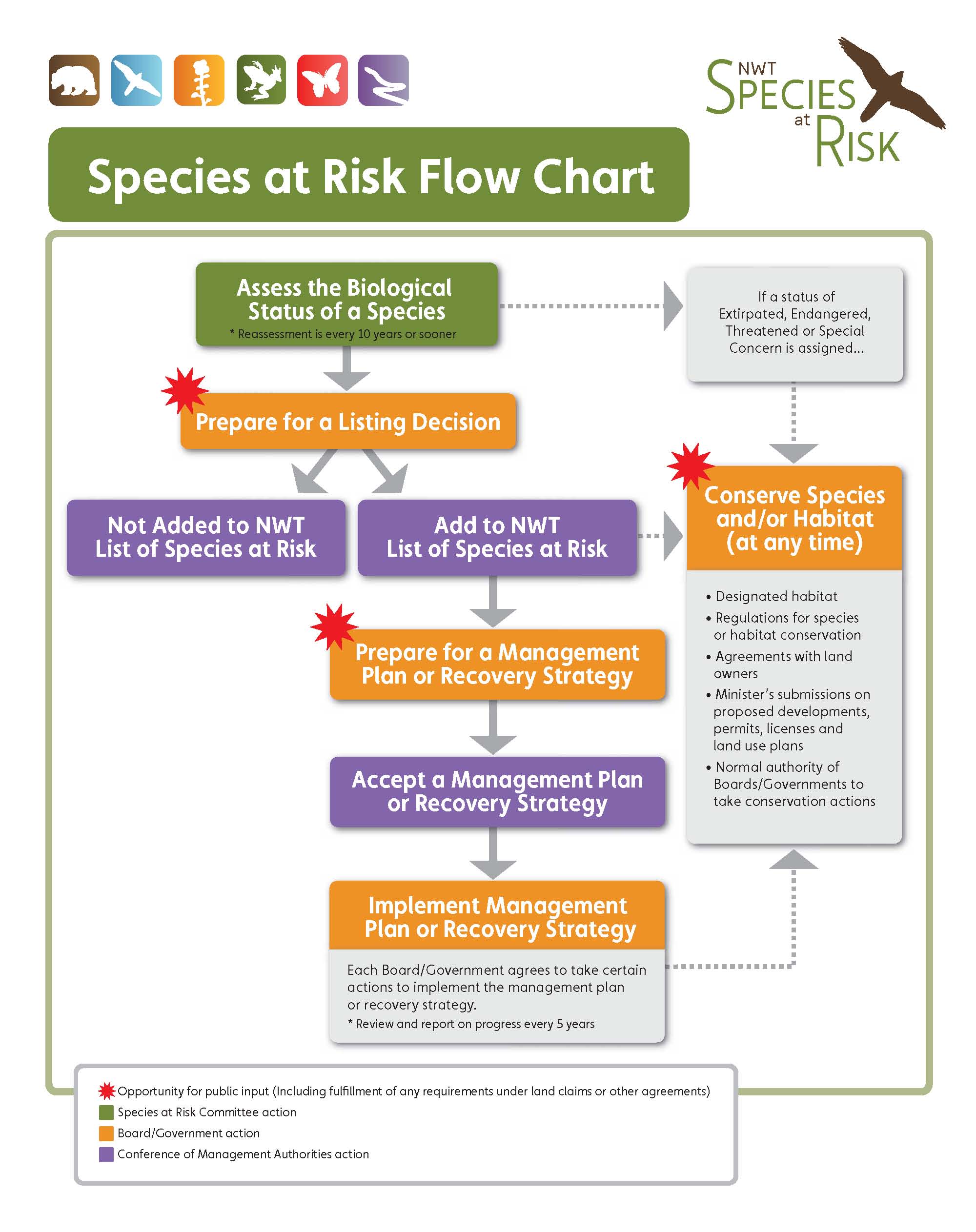
What are the steps that can be taken to help species at risk recover, and that help prevent other species from becoming at risk of disappearing? Overall, here’s how the process works in the NWT.
Step 1
First, there is a general ranking of species in the NWT that’s done every 5 years through the NWT General Status Ranking Program. Agencies working on wild species in the NWT work together to identify, in a very general way, which species are thought to be secure, which are sensitive and which species may be at risk and need more attention or investigation. Those ranked as “May be at Risk” or "At Risk" are the highest priority for more detailed assessment—the next step in the process.
Step 2
The Species at Risk Committee –or SARC—then assesses the biological status of each species that may be at risk. SARC is made up of experts on species, habitats, northern ecosystems or conservation, appointed by the wildlife co-management boards, the Government of Canada, and the Government of the Northwest Territories. They act as independent experts and do not represent the group that appointed them. Moise Rabesca is appointed by the WRRB and Boyan Tracz, WRRB’s wildlife management biologist, is Moise’s alternate.
SARC produces a status report on each species, and species assessments are based on these species status reports. A species status report is a comprehensive report that compiles and analyzes the best available Aboriginal traditional knowledge, community knowledge, and scientific knowledge. Each species is assigned a status category to describe the level of risk, and SARC uses the assessments to make recommendations to the Conference of Management Authorities on the listing of species at risk. (See the end of the article for a description of each "at risk" category.)
Step 3
SARC’s species status report and recommendations are delivered to the Conference of Management Authorities—or CMA—for its review, along with other information, as it prepares for a listing decision. CMA members are appointed by the co-management boards and governments that share responsibility for the conservation and recovery of species at risk in the NWT. Grant Pryznyk and Charlie Rabesca are the WRRB’s appointed CMA members.
The CMA operates by building consensus, and by respecting the responsibilities of Management Authorities established under land claims and self-government agreements. The membership of the CMA depends on which species is being considered. Only management authorities that have responsibility for that species are involved in making decisions.
Step 4
Each individual co-management board and government makes a decision about the listing of a species and brings that decision to the CMA. They are required to consult with the public before the CMA signs a Consensus Agreement on listing the species.
Step 5
The CMA makes a consensus decision on whether to list a species under the Species at Risk (NWT) Act, based on a review of the status report and other information, the recommendations from the co-management boards and governments, and comments received through consultations. If all the members of the CMA agree a species should be listed, they will sign a Consensus Agreement. The CMA also decides the category status for the species if it decides to list the species.
Step 6
If the CMA decides to add a species to the NWT List of Species at Risk, then a management plan or recovery strategy must be developed with goals and actions to protect the species and/or its habitat specifically for the NWT. Consultation is held to involve the public in the development of the plan.
See the flow chart in the Gallery at the end of the article for a visual illustration of the Species at Risk listing process.
Boreal Caribou and the NWT Species at Risk Listing Process
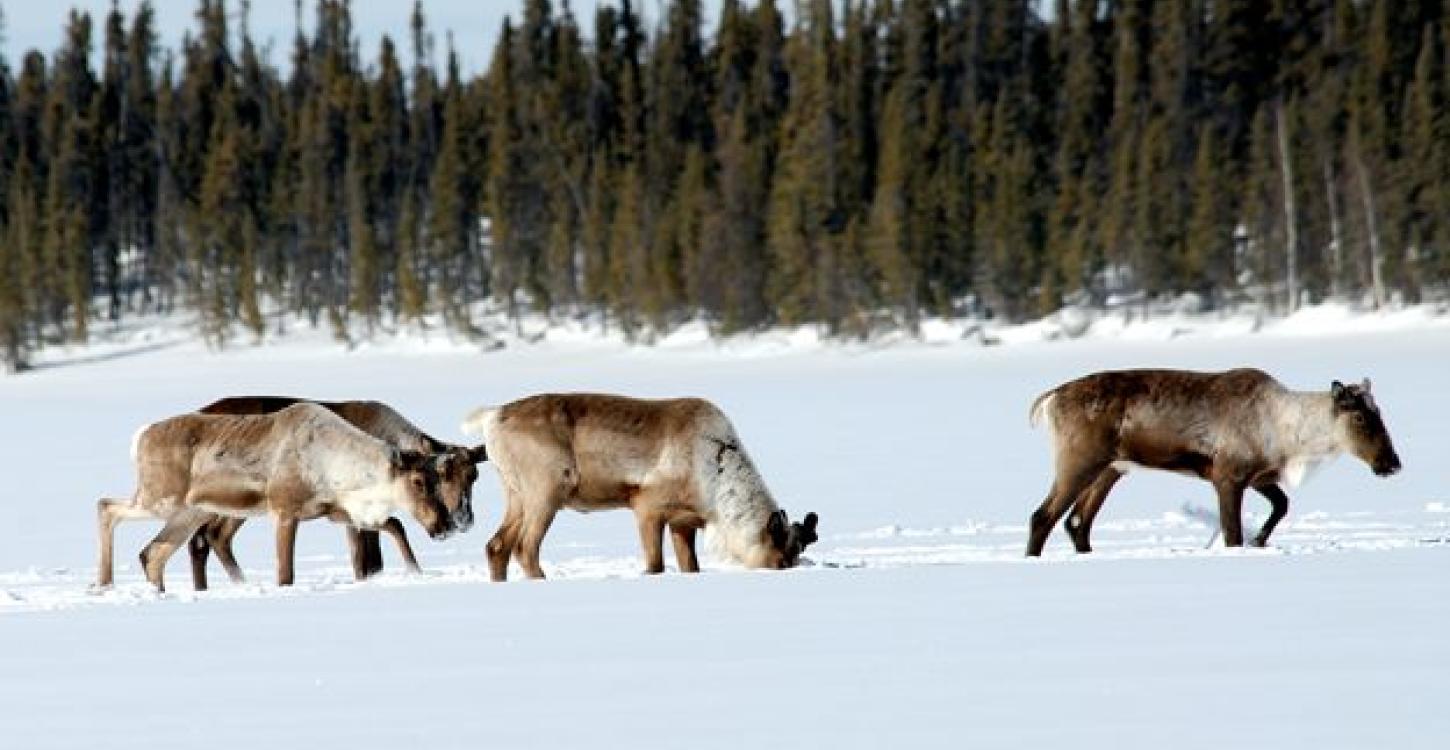
In December, 2012, SARC assessed Boreal Caribou as Threatened in the NWT. Its assessment was based on an approved status report containing the best available traditional, community, and scientific knowledge. Already on the federal Species at Risk list as a Threatened species, Boreal caribou are now being considered for a listing decision in the NWT.
In mid-August, WRRB and Tłı̨chǫ Government staff visited Tłı̨chǫ communities to consult on the proposed listing for Boreal caribou. WRRB wildlife management biologist Boyan Tracz and Tłı̨chǫ Lands Department Director Kerri Garner shared information on the status of Boreal caribou in the NWT as assessed by SARC and explained the listing process. They also shared information on boreal caribou closer to home, based on research the WRRB and the Tłı̨chǫ Government have been doing on boreal caribou habitat and habitat use in Wek’èezhìı. This research indicates that habitat disturbance is close to a threshold set by the federal Recovery Strategy for boreal caribou--a significant concern because of the caribou’s need for large areas of intact habitat and the possibility of continued disturbance due to forest fires and increased human activities, such as seismic lines or roads.
Each co-management board and government will now make a decision about whether to list Boreal Caribou as a Threatened species under the Species at Risk (NWT) Act and bring that decision to the CMA. The CMA will meet in December to review all information and comments and decide whether to legally list Boreal Caribou as a species at risk in the NWT. Listing would then allow for the development of a recovery strategy that would recommend objectives for conservation and recovery, and recommend approaches on how to achieve those objectives.
What are the species at risk categories?
Each species is assigned to a status category that tells us about its level of risk.
The status of species can change over time –so species at risk are re-assessed every 5 to 10 years to see if their status has changed.
The categories from least to highest risk are:
Special Concern: may become threatened or endangered because of a combination of biological characteristics and identified threatsThreatened: may soon become endangered if nothing is done to change the factors leading to its disappearance
Endangered: will likely disappear from the NWT or from the world if nothing is done
Extirpated: no longer exists in the wild in the NWT but exists in the wild outside of the NWT
Extinct: no longer exists anywhere in the world
For More Information on the Species at Risk Process in the NWT:
- The NWT General Ranking Program has an onling catalogue of information on NWT species, including species at risk: NWT Species Infobase.
- Visit the NWT Species at Risk website: http://nwtspeciesatrisk.ca
For More Information on the status of Boreal Caribou:
- Visit the NWT Species at Risk website: http://www.nwtspeciesatrisk.ca/species/boreal-caribou