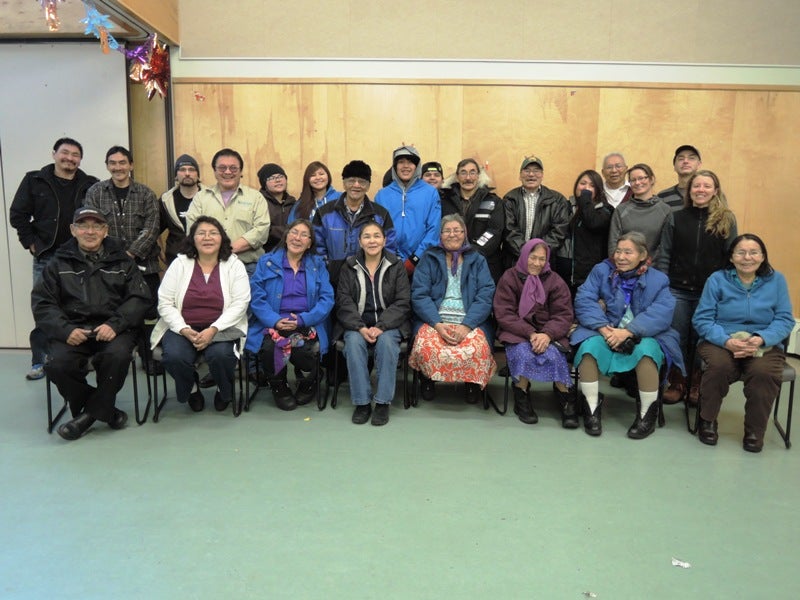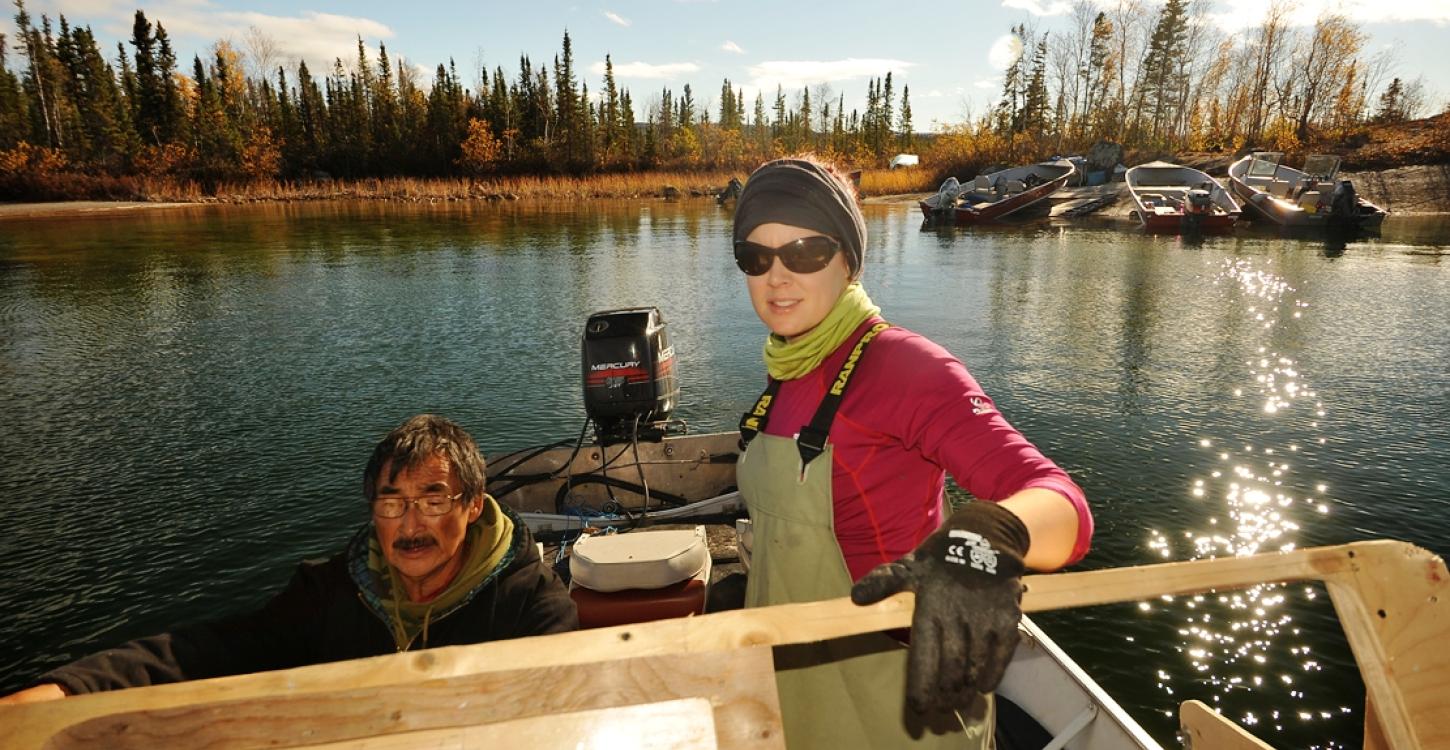
Members of the Tłı̨chǫ Aquatic Ecosystem Monitoring Program (TAEMP) team returned to Gamètì in February to meet with community members and share results from last September’s fish camp. The five-day on-the-land camp was part of the TAEMP, a community-based program designed to monitor water, sediments and fish near Tłı̨chǫ communities, using both science and traditional knowledge. The meeting was a good opportunity to ask questions and discuss the findings from the lab analyses done on samples collected at the camp. For the 18 students from Jean Wetrade School who attended and for those who participated at the September camp—it was also a chance to learn about science in the field and in their own backyard, and what was discovered.
“Resource people and the community can work hand in hand. They can learn from us and our expertise.” – Alphonse Apples
In the TAEMP, Tłı̨chǫ communities and scientists work together to collect fish, water and sediment samples which are then sent out for lab analyses. The results and data provided by the labs create a baseline—a starting point telling us what is happening in an area at that time, which can then be compared with data collected in future monitoring. The TAEMP team plans to return to each Tłįcho community every 4 years, collecting new samples and comparing results to the baseline data. By comparing results, the TAEMP will be able to track any changes to fish health or water quality which may be occurring over time, and be able to see if there are any trends in the data collected.
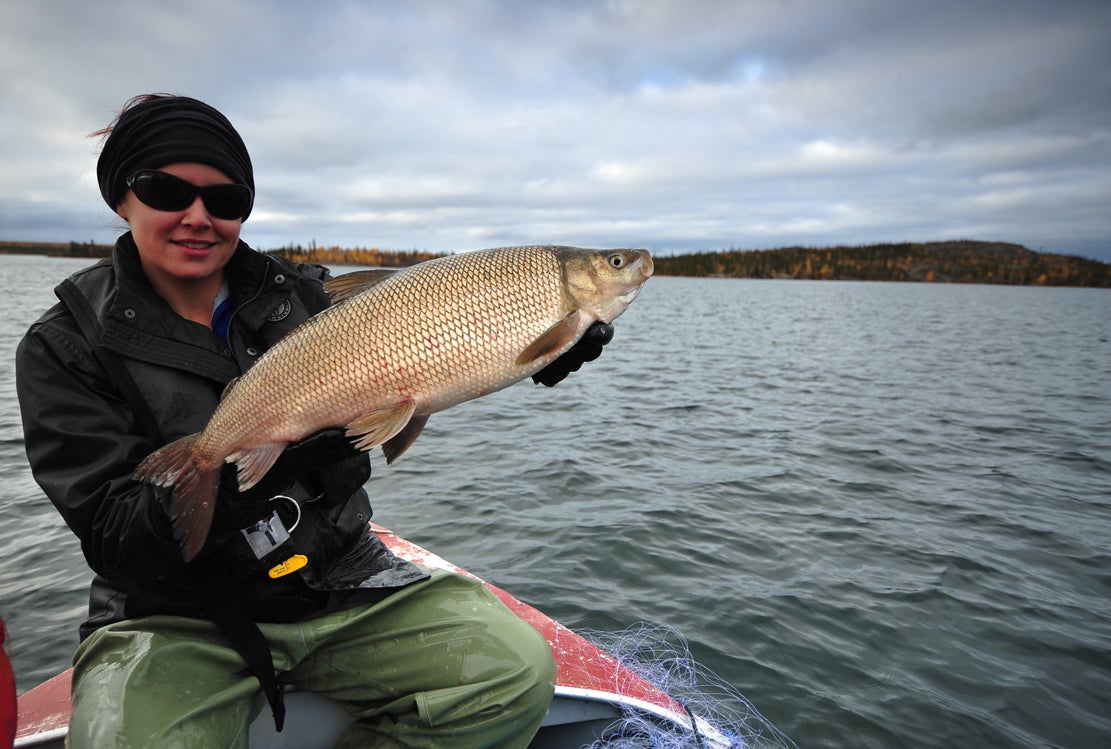
The presentation of the fish camp results opened with a showing of a short draft video about the Gamètì fish camp that Mason Mantla, from Tłı̨chǫ Government’s CART (Community Action Research Team), has been making. Paul Vecsei, a fish biologist with Golder Associates, then described the activities at the Gamètì fish camp and how tissue samples, otoliths (little ear bones in the fish), measurements, and observations on general health were collected from 20 Lake Whitefish (Łih) and 20 Lake Trout (Łıwezǫǫ̀). Analysis of the tissue samples provided information about the current levels of metals and other contaminants like mercury in the fish. Analysis of the otoliths provided information on the age of the fish, and an interesting result was learning that the oldest fish sampled was a 48-year-old Whitefish—the oldest Paul has encountered.
“Fish can provide a lot of things. It’s an important food. We want fish to be protected for the future. We want to pass on our knowledge on how to filet, how to prepare fish.”
Gamètì elder
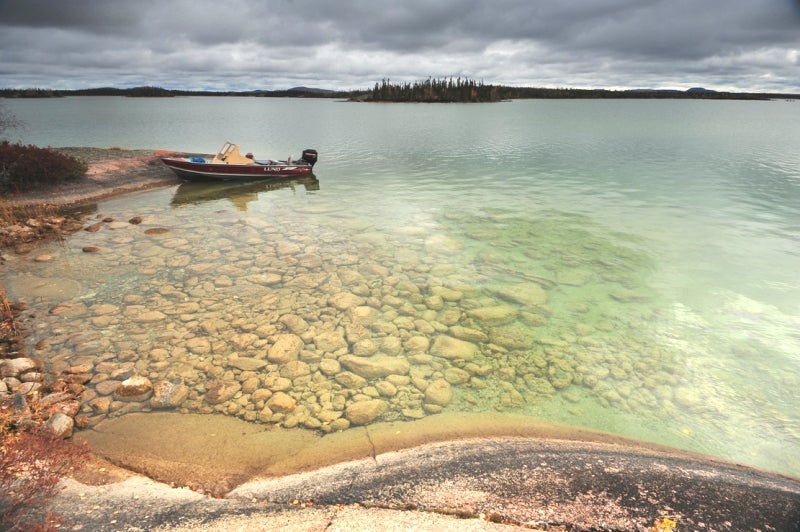
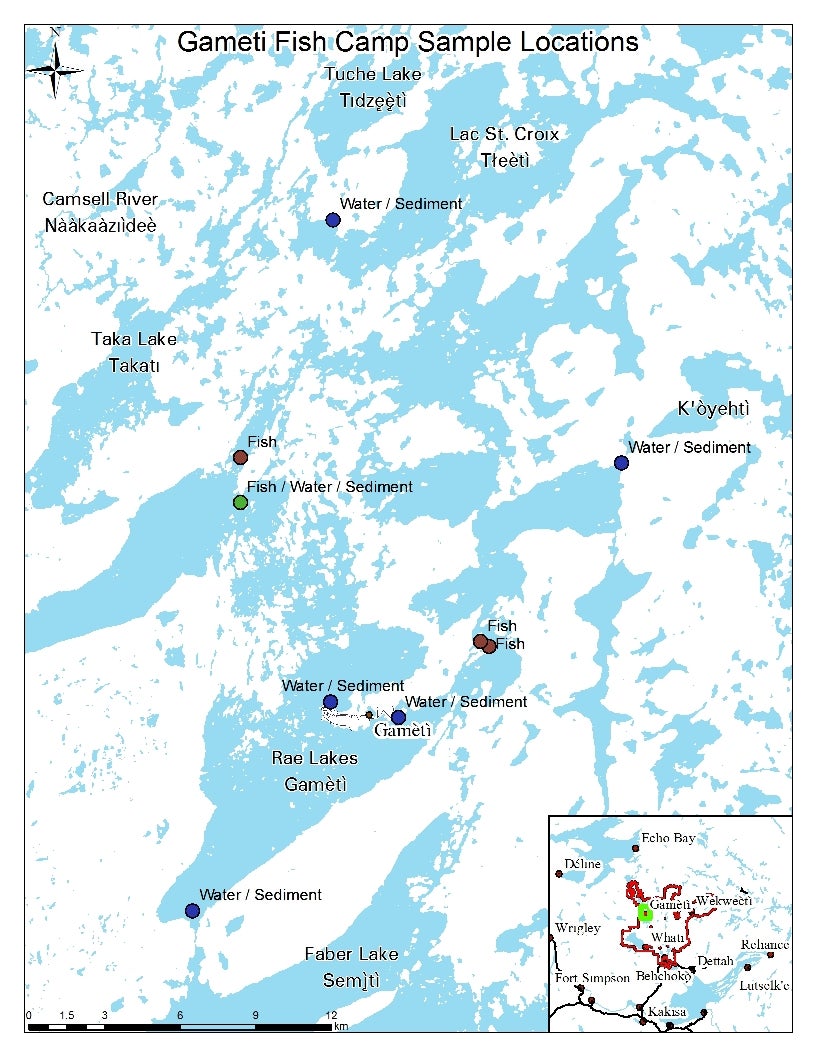
Water and lake sediments were also sampled at six sites selected by elders and fishers from the community. Results from the fish, water and sediment samples that were collected at the fish camp indicated that overall the lake is in good condition- with clean water and healthy fish.
Another interesting finding showed how Traditional Knowledge and science can work together and help tell a complete story. One of the places that Gamètì community members chose for sampling was a place where water is collected for making tea. The lab analysis results for the water showed that at the “tea water” location, the water was “soft”—different from the “hard” water found at the other water sampling locations. Hard water has more dissolved minerals which give it a characteristic taste, and differs in taste from the water the community likes to use for tea.
A final report on the 2013/2014 fish camp will be prepared this spring and will be available on the WRRB website. The final Gamètì fish camp video will be ready soon and also posted on the WRRB website. Check the WRRB Facebook page for updates at www.facebook.com/wrrb.nwt
Next Fish Camp is in Whatì!
Fact Box
- The TAEMP is a partnership that involves Tłįcho communities, the WRRB, the Tłįcho Government, the Wek’èezhìı Land and Water Board, and the Department of Fisheries and Oceans, with additional support provided by Golder Associates.
- Funding for the 2013/14 fish camp near Gamètì was provided by the Cumulative Impacts Monitoring Program (CIMP), the Department of Fisheries and Oceans (DFO), and the Northern Contaminants Program (NCP).
- So far, fish and fish habitat near Behchokǫ̀, Wekweètì and Gamètì have been sampled. The next fish camp will be held near Whatì in 2014 where initial baseline data will be collected. In 2015/16 the first round of comparative sampling will begin, with a return to lakes near Behchokǫ̀ where the program first started in 2010.