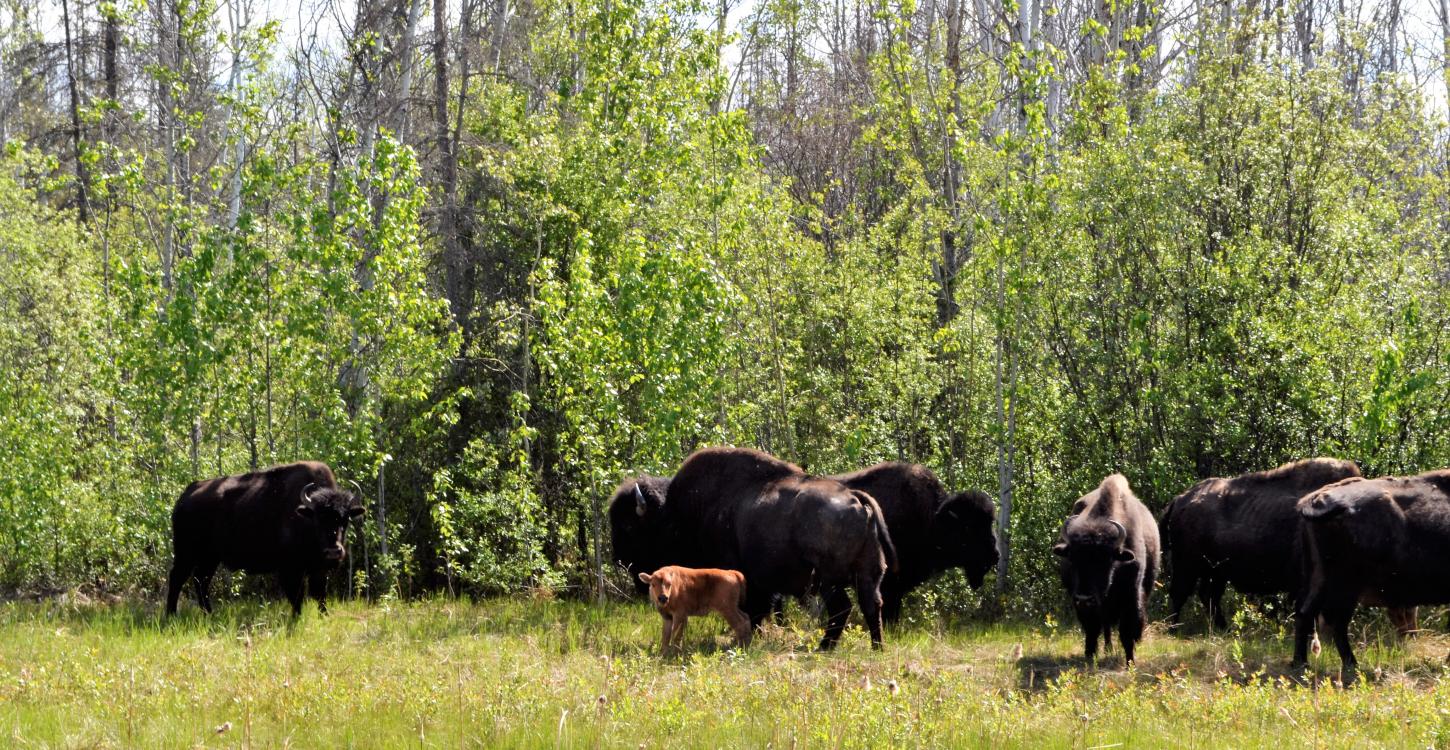
This summer, July 2017, Wood bison were added to the NWT List of Species at Risk as a Threatened species. A Threatened species or wildlife population in the NWT is likely to become endangered in the NWT if nothing is done to reverse the factors leading to its extirpation (disappearance from an area) or extinction (no longer exists anywhere). The population size of Wood bison in the NWT is small, and there is evidence that overall their numbers are declining. As well, Wood bison are facing a number of serious threats, and there is concern that these animals could disappear from the territory in our children’s lifetime.
In the Northwest Territories as a whole, there are about 2,500 Wood bison in three distinct populations: the Mackenzie population (whose range includes a portion of Wek’èezhìı), the Greater Wood Buffalo Ecosystem population, and the Nahanni population. Over the last few years, their numbers overall have declined by approximately 50%. Only the small Nahanni population has shown an increase.
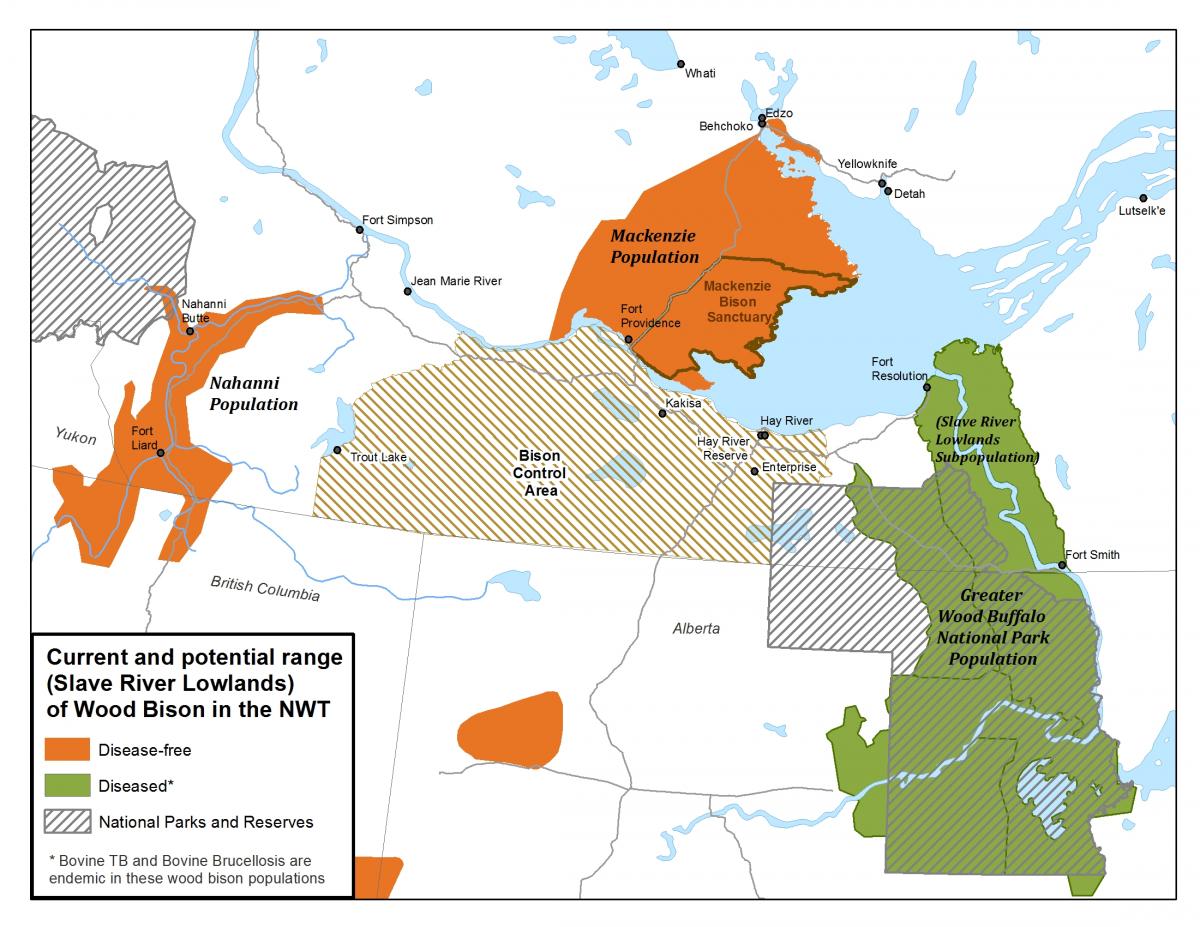 Map: NWT Species at Risk, GNWT
Their small population size makes NWT wood bison vulnerable to threats such as disease, predation by wolves, especially on newborn calves, human-caused mortality, and habitat loss. The Mackenzie population took an especially hard hit when an outbreak of anthrax, an infectious bacterial disease, occurred in the summer of 2012 killing more than half the animals in the herd. Additional losses to this herd have resulted from an increasing number of collisions with motor vehicles. Highway 3 runs through the middle of the Mackenzie Wood Bison's range, and bison frequently travel along the sides of the road or cross it.
Other threats include forest fires, changes in the snowpack (the snow that doesn’t melt until spring) and water levels, and the movement of woody shrubs northward due to warming temperatures that may all contribute to a loss of important meadow habitat. Wood bison browse in open grassland and meadows, relying on a variety of grasses, sedges, willow leaves and twigs found there. Present and future industrial development may also pose a threat to Wood bison habitat. Their small numbers could also make it more difficult for these bison to adapt to changes in their habitat.
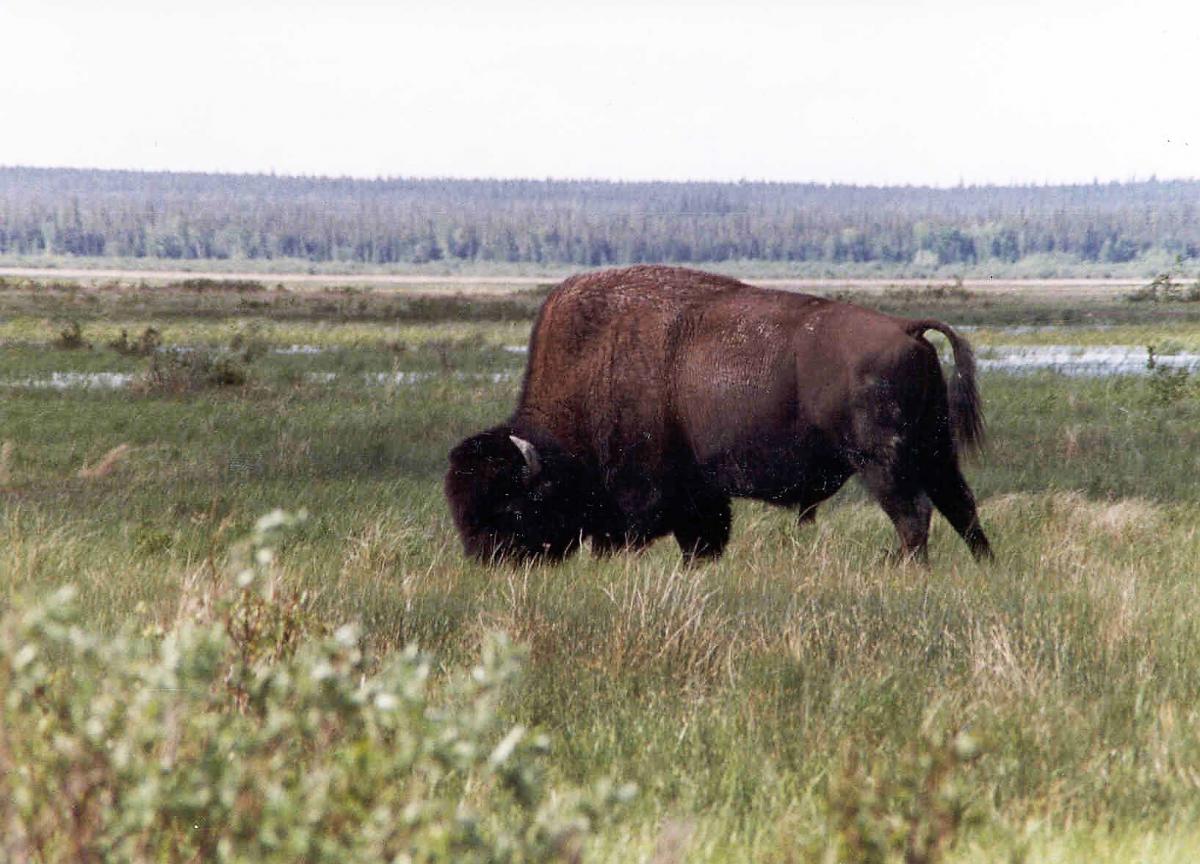 Wood bison prefer grass and sedge meadows, which produce high quality forage, essential for their nutritional requirements. Photo: GNWT
What happens next?
Now that Wood bison have been listed as a Threatened species, a recovery strategy will be developed to guide their conservation and recovery in the NWT.
Fact Box
- The foraging habitats most favoured by Wood bison are grass and sedge meadows typically interspersed among poplar and aspen stands, coniferous forest, and wetlands. Wet meadows are used in late summer when they become drier and in winter when they freeze and are easier to move through. Forests are used as travel corridors between meadows, for summer shades, and for shelter in winter storms.
- During late summer and fall, Wood bison disperse into small groups for breeding.
- Historically, Wood bison ranged throughout the boreal forests of northern Alberta, northeastern British Columbia, the western Northwest Territories south and west of Great Slave Lake, the Mackenzie River Valley, the Yukon, and interior Alaska. (see map)
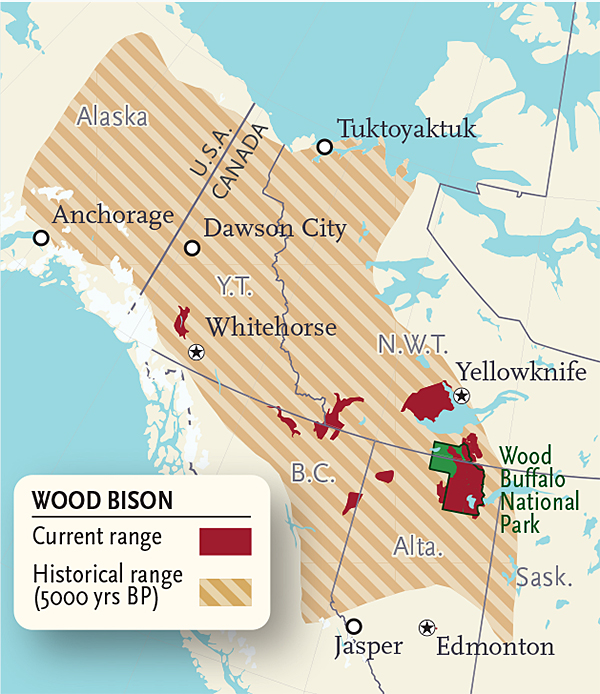
Map: Chris Brackley / Canadian Geographic. Data Credit: Historical range based on Wood Bison Management Strategy for the Northwest Territories: 2010-2020 (GNWT / Environment & Natural Resources)
- It’s believed that at one point, Wood bison numbered about 168,000 animals, but by the beginning of the 20th century, fewer than 300 remained. Since then, there have been conservation efforts to restore the bison in its natural habitat.
- At the national level, in 1978 the Committee on the Status of Endangered Wildlife in Canada designated Wood bison as Endangered in Canada based primarily on the fact that there were only about 400 disease-free Wood bison. By 1988, recovery efforts had helped downgrade that status to Threatened and Wood bison were reclassified from Endangered to Threatened in Canada. In 2003, they were listed as Threatened under the Species at Risk Act (SARA).
- For more information on Wood bison and their listing, visit the NWT Species at Risk website.