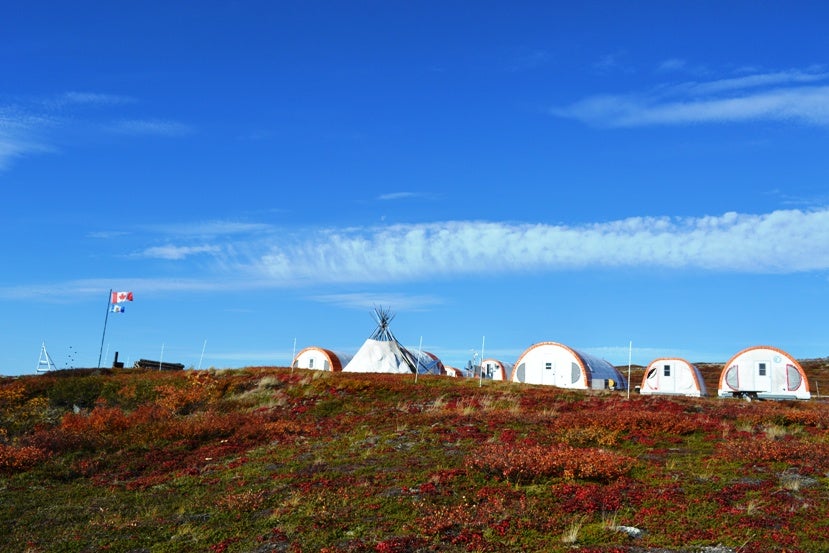
Each summer since 1995, high school students have had a chance to spend 10 days on the Barren lands about 300 km northeast of Yellowknife at Daring Lake. They learn about this unique environment from scientists, environmental educators, on-site researchers and Dene elders. WRRB wildlife management biologist, Karin Clark, has been teaching at the camp on and off since 1998 and was back again this past summer.
GNWT’s Department of Environment and Natural Resources set up the Tundra Ecological Research Station to research and monitor the tundra ecosystem but it also supports conservation education programs like the Tundra Science Camp. Participants learn about the area’s geology, archaeology, human history, Aboriginal culture, birds, plants, grizzly bears, caribou and other wildlife –and how all are connected in the tundra environment.
Karin joined a group of instructors, each with his or her area of specialization and passion for teaching about a particular aspect of the unique environment found around Daring Lake. The instructional team included Tom Andrews, archaeologist with the Prince of Wales Northern Heritage Centre, GNWT, ECE; Dianne Baldwin, a geologist with the NWT Geoscience Office; Joachim Obst, a naturalist; Tasha Stephenson, Stephanie Yuill, and Brenda Hans, conservation education specialists, GNWT, ENR and ECE; and Tłı̨chǫ elders Michel Louis Rabesca, Bernadette Rabesca, and Dora Nitsiza.
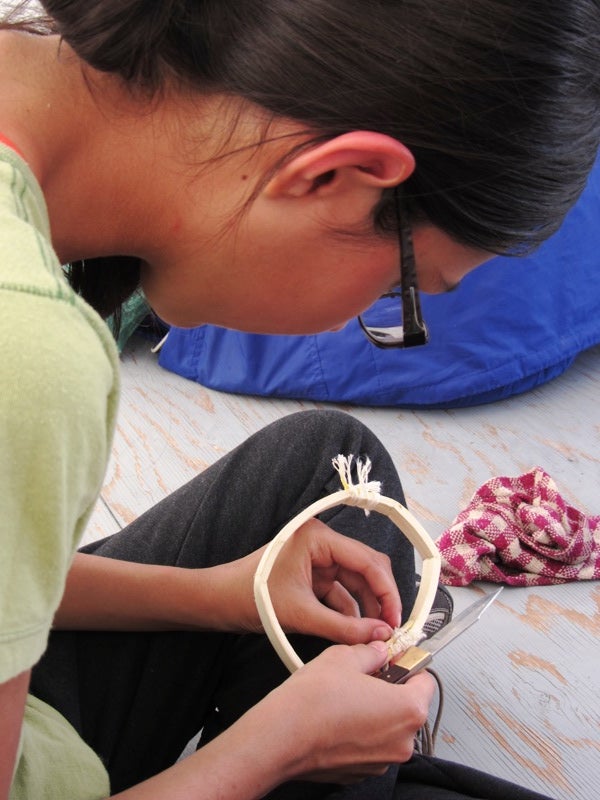
The elders shared their knowledge of the land through story-telling and demonstrations and throughout the camp, led students through cultural activities such as beading, rattle making and drumming. Their teaching brought a valuable Tłı̨chǫ cultural perspective to the learning that took place –and connected the human history visible here in trails and archaeological sites to an understanding of the tundra as a whole.
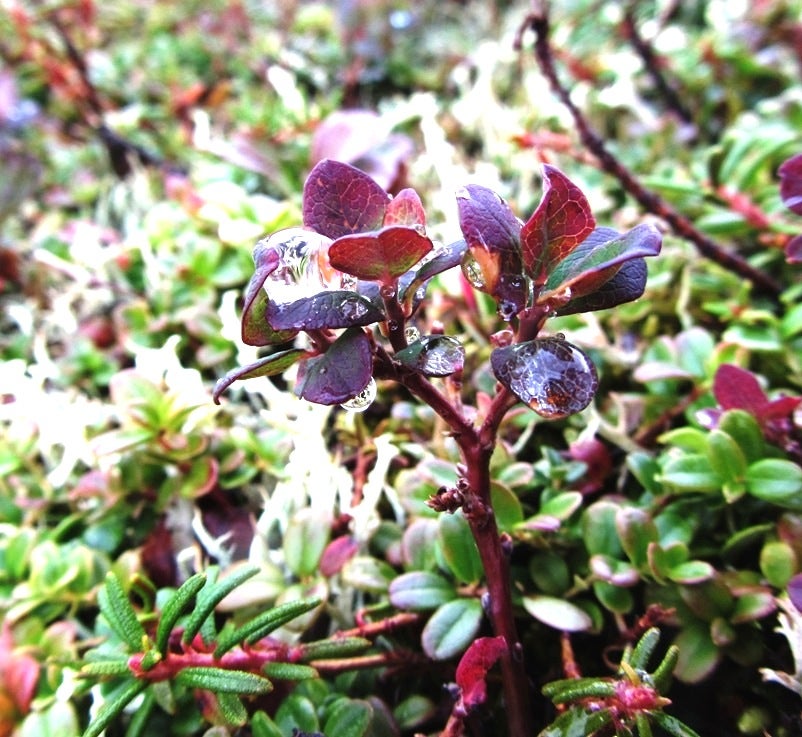
Karin used her background in ecology to teach sessions in plant ecology and caribou ecology. The tundra environment is anything but “barren” even though it is 50 km north of the tree line. The many species of lichens, mosses, berries, and shrubs that carpet the tundra gave participants good practice in figuring out what makes a plant a plant, and how it adapts to its environment. They learned that staying small and low is what many plants do to survive the dry, windy conditions on the barrenlands.
Learning about Tundra Wildlife
The barrens are also home to wildlife such as the Barren-ground caribou, Barren-ground grizzly bear, wolverine, tundra wolves, Arctic and Red fox, Arctic hare, Arctic ground squirrels, peregrine falcons and other birds. The camp provides a unique opportunity for students to learn about these amazing creatures from resident experts and educators, including traditional knowledge holders, in a setting on the land. Using the caribou as an example, Karin explained the unique adaptations wildlife use to survive in such a harsh environment.
Pretend this is a Caribou!
What can a pop can, rubber gloves, garden hose and shovel tell us about caribou? Caribou have compact bodies –like a pop can! Blowing up the rubber gloves showed a more efficient shape for keeping body heat in –a sphere –a sphere won’t accommodate legs very well, but a cylinder can. Caribou have compact bodies –like a pop can! A pop can is the most “economical” shape –reducing surface area available for heat loss. The caribou’s long legs are another adaptation: for running, swimming, and for ploughing through deep snow. One might think that having such long legs would result in the caribou losing more body heat but their veins and arteries are close together and their hearts keep pumping warm blood to keep the colder blood in the veins warm. The shovel modeled the caribou’s uniquely adapted hooves which are hollow underneath and adapted to scooping up the tundra’s grasses, plants and lichens when they dig under the snow for food. It's little wonder that the word ‘caribou’ comes from a Micmac word meaning ‘snow shoveler’.
Student Projects
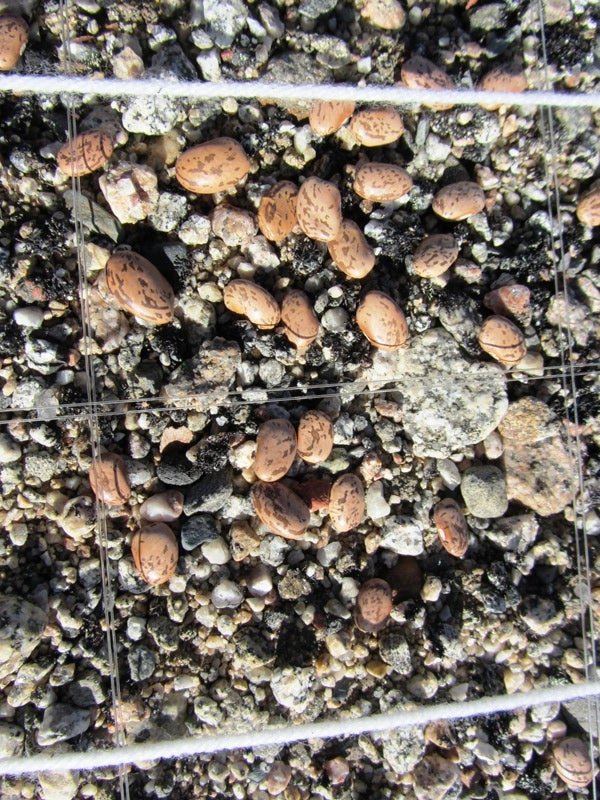
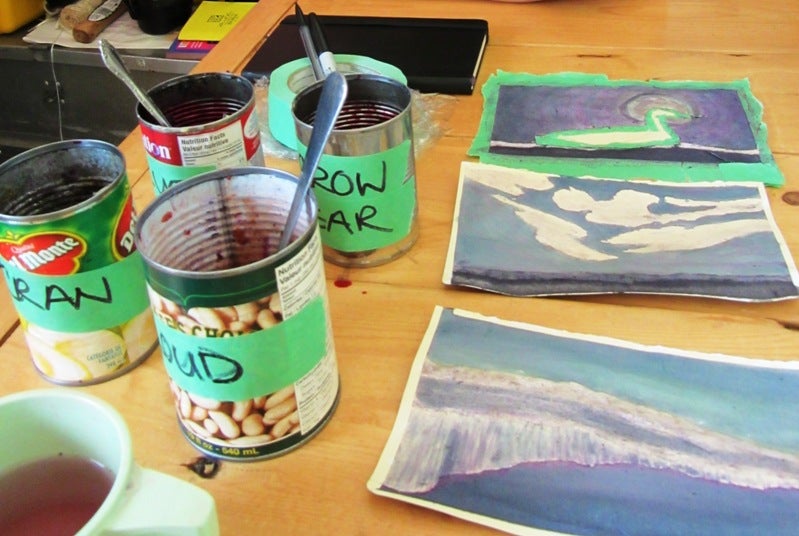
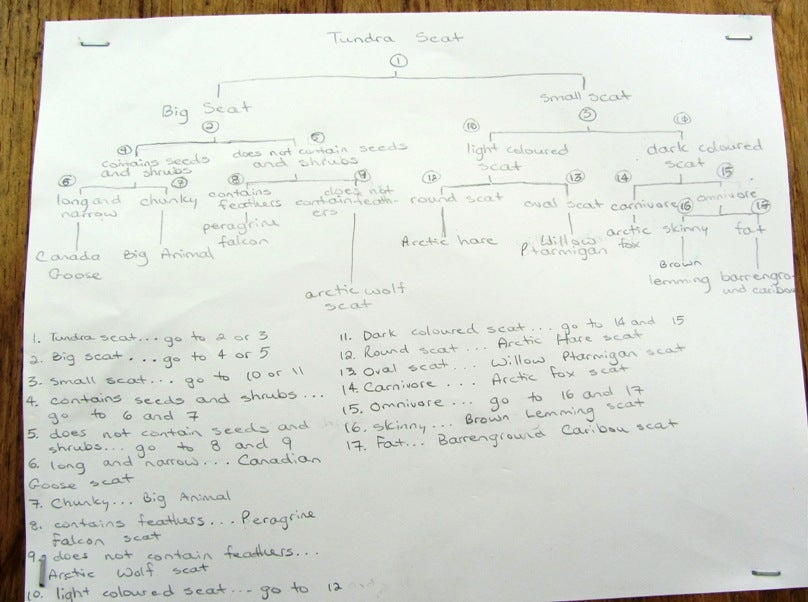
In keeping with the camp’s hands-on approach, students created their own collections of objects which they later researched and identified using the resource materials back in camp. At this year’s Collections Fair, students displayed plants and footprints, feathers and rocks, and even ….scat! And for their big project, students worked in an area that interested them with the help of a mentor to guide their research. What they came up with was an impressive list of creative topics and questions to investigate. What tundra plant dyes work the best? Crowberries, blueberries, fireweed blossoms or snow lichen? Which plants have medicinal properties? It seems there is a whole pharmacy out there in the barrenlands stocked with cloudberries, cranberries, Labrador tea, bearberry, sphagnum moss, dwarf birch and fireweed. Another student created beautiful watercolour paintings using the pigments of the land. And what about tundra cuisine? From analyzing the chemistry of an esker to reassembling a bird’s feathers to understand the structure of a bird’s plumage, this part of the program was a great opportunity to consolidate learning and to learn from one another.
Diamonds and Caribou: Using Co-Management to Manage Resources
To show students how natural stressors may affect wildlife through their seasonal activities, Karin asked for volunteers to act out caribou migrating through an obstacle course. The obstacles were natural features caribou may encounter on their migratory route. Participants were given items to carry as they progressed through their migration representing natural stressors in the caribou’s environment -- from predators to river crossings to a late spring. The exercise was repeated, but this time the “caribou” faced human stressors such as mine development and harvesting. Of all the things that affect caribou, human activity is the easiest to control. But how do you decide which activities to control?
Karin also led students through a hands-on activity to demonstrate the challenges inherent in co-management. Wildlife boards such as the WRRB share responsibility to manage wildlife and habitat with partners that work together or “co-manage”. To simulate making choices about managing caribou, participants voted with their feet. Different statements representing differing values, opinions and beliefs were read out loud. Students stepped forward if they agreed with a statement and backwards if they disagreed. This activity helped them see how people feel differently on different issues – and how challenging it can be to make a management decision. Respecting diversity of opinion and ensuring that everyone who needs to, has a voice is a key challenge in co-management.
One thing was easy to decide on: the 2012 science camp was another success. It opened participants’ eyes to the grandeur of the tundra and to the intricacy of its ecosystem.