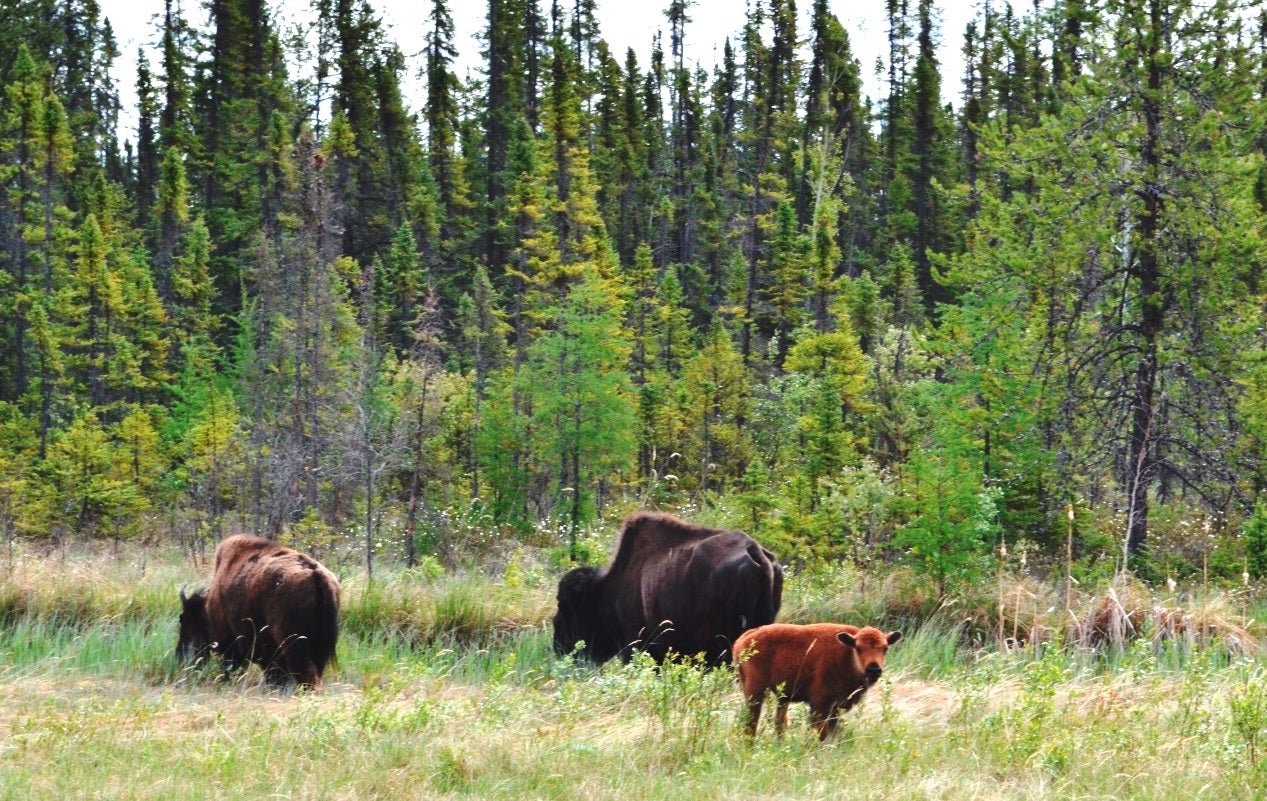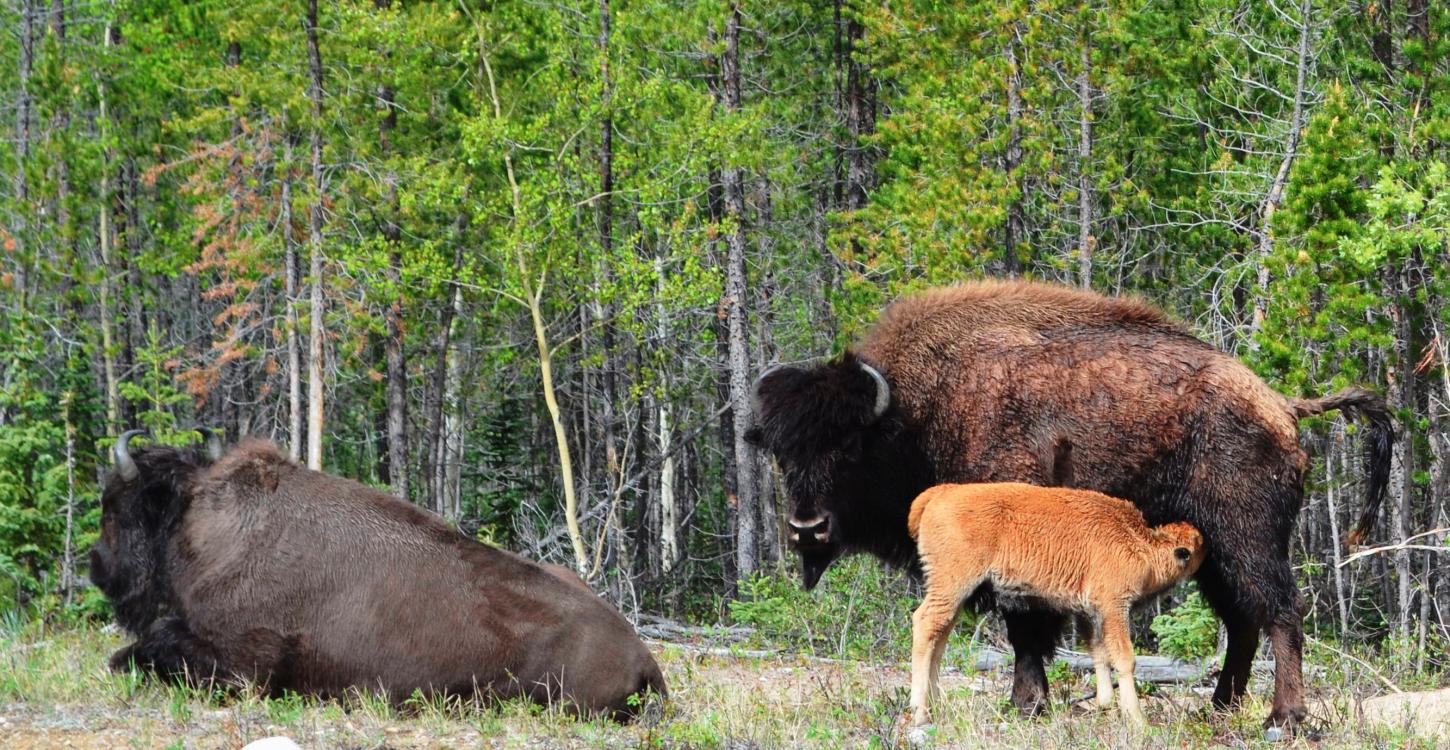
At one time, wood bison ranged over most of the boreal region of the continent west of the Precambrian Shield—a broad region of ancient Precambrian rock covering roughly half of Canada (see map in the Photo Gallery at the end of this story). In the NWT, their historic range covered most of the western NWT. But by the end of the last century, both their range and their populations had been reduced. Today, wood bison are listed as a threatened species under the federal Species at Risk Act—and here, in the NWT, they are considered a species at risk under the NWT General Status Ranking Program.
In the summer of 2012, the Mackenzie wood bison population suffered the worst anthrax outbreak known in the NWT. As a result, it was estimated that at least 440 animals had died, based on the number of carcasses discovered –leaving an estimated 1000 bison. But an aerial survey conducted this March, 2013 by Environment and Natural Resources, GNWT (ENR), indicates that a greater number of bison had died during the summer of 2012 from anthrax --over half of the animals in the herd. The survey estimates the Mackenzie wood bison population at 714, well below the 1000 animals that the Draft National Recovery Strategy has set as the minimum size for a wood bison population to be considered recovered.
To minimize additional losses from the Mackenzie wood bison, wood bison harvesting in the Mackenzie Wood Bison Range was closed for all harvesters effective November 1, 2012. It’s unclear how quickly the population will recover. The results of a herd composition survey ENR conducted this summer 2013 show that more adult females than expected died from anthrax in 2012 –resulting in the likelihood of fewer calves being born and fewer calves, left orphaned, surviving.
What Happens Next?
Management of wood bison in the NWT is guided by the Wood Bison Management Strategy for the Northwest Territories, 2010-2020. Actions described in this strategy are currently being implemented, including ongoing monitoring of the three bison populations—Mackenzie, Slave River Lowlands and Nahanni--and development of a management plan for each population. The WRRB is a member of the Mackenzie Wood Bison Working Group which was formed to draft a management plan for the Mackenzie Bison population. Other members are from the community of Fort Providence, resource management boards, the Tłı̨chǫ Government, the NWT Métis Nation, the North Slave Métis Alliance, NWT Wildlife Federation, and the Department of Environment and Natural Resources (ENR).
As the main body responsible for the management of wildlife throughout Wek’èezhìı, the WRRB makes recommendations on matters that have to do with the area’s wildlife or its habitat.
At its recent Board meeting in September, the WRRB reviewed the results of the bison population survey and agreed to recommend to ENR that the no-harvest restriction for the Mackenzie Wood Bison be continued for the 2013/14 hunting season. See maps in the Photo Gallery at the end of the article showing the herd's range and the location of bison harvest zones in Wek’èezhìı.
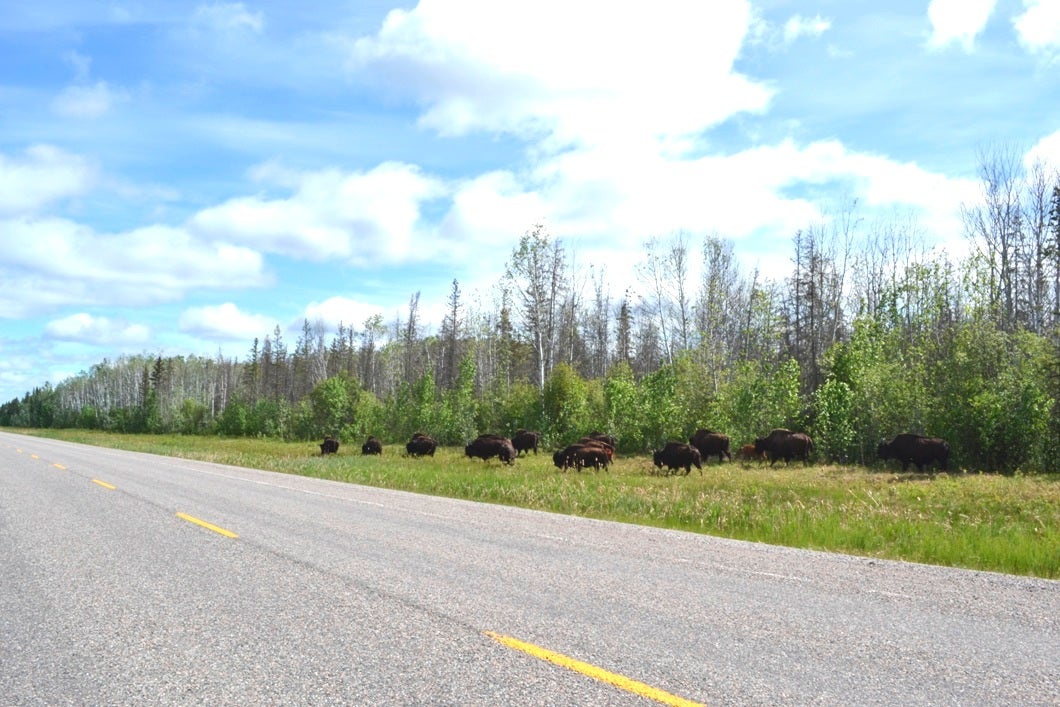
The WRRB has also recommended that a collaborative strategy be developed to reduce the number of wood bison strikes along NWT highways. Collisions between bison and vehicles have been increasing in recent years, particularly in low visibility conditions, resulting in additional losses to the Mackenzie Wood Bison population. Highway 3 runs through the middle of the Mackenzie Wood Bison's range, and bison frequently travel along the sides of the road or cross it.
Background
- There are three populations of wood bison in the NWT: the Mackenzie, Slave River Lowlands, and Nahanni. The Mackenzie population of Wood Bison resides west of Great Slave Lake. Its range extends into the southern corner of Wek’èezhìı.
- Wood bison are listed as threatened under the federal Species at Risk Act.
- Anthrax is a highly infectious and often fatal disease. Bacteria from Anthrax spores can survive for years in the soil where bison inhale or ingest them while wallowing or feeding.
- Wood bison use different habitats depending on the season. They move with the seasons to graze where they can obtain food and protein. In summer, they can be found in small willow pastures and uplands where they feed on sedges, grasses and willows. In the fall, they move into the forest and feed on lichens. In winter, they move to frozen wet sedge meadows and lakeshores where they feed on sedges.
- Unlike caribou that use their front feet to paw through the snow when foraging, bison sweep their heads from side to side to clear snow from vegetation.
- Bison have existed in various forms for more than 2 million years on earth! For more than 12,000 years, various populations of bison have coexisted with humans in North America.
- It's estimated that fewer than 300 wood bison remained at the turn of the century. Since then, there have been conservation efforts to restore the bison in its natural habitat.