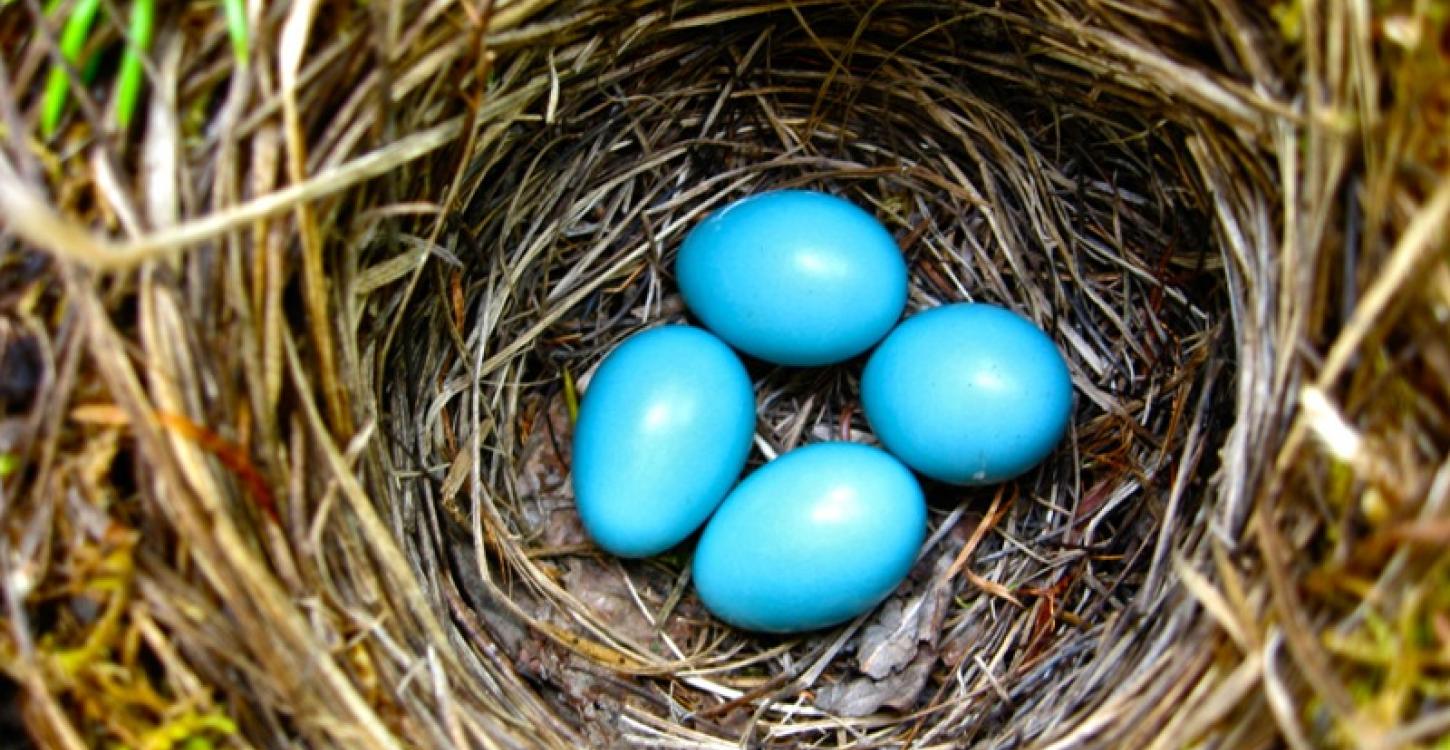
During the breeding season, northern forests are filled with birdsong. The boreal forest is often referred to as a “nursery” for migratory birds because each spring, half of the birds from North America migrate north to breed, taking advantage of insects, budding plants, and an abundance of nesting locations. A team of biologists from Environment and Climate Change Canada in collaboration with the University of Alberta is using sound recordings and field observations to monitor the effects of natural disturbances such as forest fires on bird communities.
In the Tłı̨chǫ region, these communities are often made up of more than 100 different forest bird species with distinct habitat requirements. The information the team collects will provide a better understanding of why some of those birds are declining or increasing after a disturbance and how many years it takes for these bird populations to come back to their original state.
The response of birds to forest fire depends on how severe the fire was, its “configuration” --the number, shape, size and arrangement of habitat patches left behind after a fire --, and how much time it takes for the forest to grow back again and return to pre-fire conditions. Some birds are known to prefer recent burn areas –“burn specialists”. Others are considered “old forest specialists” that depend on old growth forests and don’t use recent burn areas. Another group of birds, the “early stage specialists” thrive in low and dense vegetation emerging 3-10 years after a fire. Some birds listed as species at risk such as the Olive-sided Flycatcher and Common Nighthawk are examples of species preferring recent burn areas.
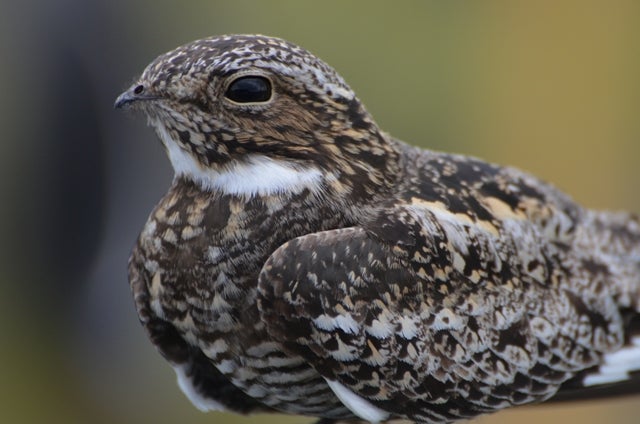
Common Nighthawk. Photo: Andy Reago & Chrissy McClarren / Wikimedia Commons (CC 2.0)
Little is known about the effects of natural disturbances on the habitat of forest birds breeding in northern boreal regions where there are limited human impacts (e.g. salvage logging). In recent years, there has been an increase in the number of forest fires in the NWT –a trend that is expected to continue with warming temperatures and climate change. Understanding the status of birds in our boreal forests can give a first indication of changes that may be happening in these ecosystems used by many other species of plants, mammals, insects, and fishes.
Monitoring Species at Risk in the Boreal Forest
The program also provides an opportunity to learn more about species at risk, particularly the Olive-sided Flycatcher. Some migratory birds, although still commonly seen in the NWT every summer, have shown significant population declines in Canada, and are likely facing threats throughout their annual cycle (i.e. breeding grounds, during migration, and on their non-breeding grounds). The more we understand about the factors limiting population sizes for these species, the better equipped wildlife managers will be to develop proactive conservation strategies to protect them.
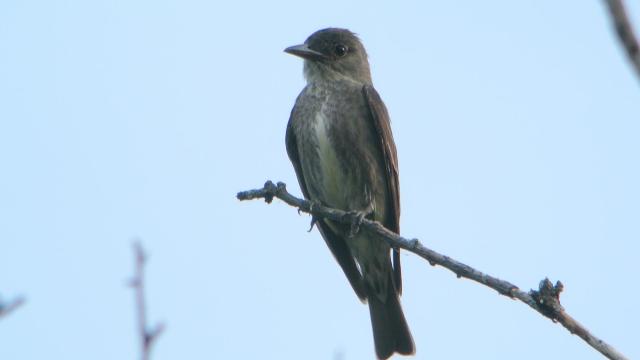
Olive-sided Flycatcher. Photo: Andy Reago & Chrissy McClarren / Wikimedia Commons (CC 2.0)
Summer 2015
Last year was a pilot year for the project where Autonomous Recording Units (ARUs) were used to record sounds at 350 locations along Highway 3 between Fort Providence and Behchokǫ̀. Researchers selected two recently burned (2014) areas and an unburned forest between these two burns to use as “control” sites to understand how things change naturally. They installed 50 ARUs to record for 10 hours each day, from an hour before dusk to 4 hours after dawn, for 4 days to determine which species were present and how abundant they were. Many songbirds sing at dawn, while others like the Common Nighthawk sing at sunset, or at night like the Yellow Rail. Because bird species can be identified by their songs, the researchers are conducting surveys without seeing individual birds. Sound recordings can be viewed in computer software that shows sound frequencies and patterns visually representing unique songs and calls for each species and individual bird.
From the data collected last summer, the team showed that the 10 most common species in the study area were the Hermit Thrush, Swainson’s Thrush, White-throated Sparrow, American Robin, Dark-eyed Junco, Lincoln Sparrow, Chipping Sparrow, Lesser Yellowlegs, Tennessee Warbler, and Yellow-rumped Warbler. These species are often considered “habitat generalists”, capable of breeding in a wide range of habitats. The team also detected Olive-sided Flycatchers only in recently burned areas. There were more American Robins in severely burned sites than in other locations. The Hermit Thrush and the Swainson’s Thrush, on the other hand, showed a preference for habitat where fires were medium to low in severity.
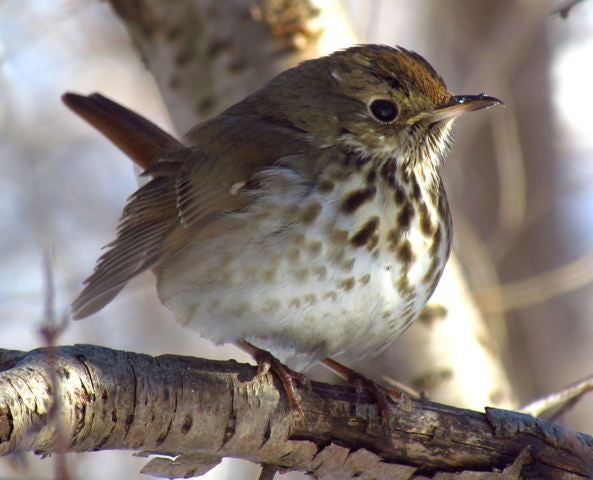
Hermit Thrush on wintering grounds in the fall. Photo: D. Gordon E. Robertson / Wikimedia Commons (CC 3.0)
Each device records time and date, and light intensity at different locations along the way. When this information is known, it’s possible to infer the latitude and longitude of each location. Feather samples were also collected to conduct stable isotope analysis to determine where the birds overwinter (i.e. where they grew these feathers.
So, how does this technique work? A stable isotope can be considered a different version of a particular element (e.g. hydrogen, nitrogen, carbon, etc). Stable isotope analysis measures the ratios of these isotopes in the environment or in the body. Water and food contain stable isotope ratios that are specific to a given region, so when they are ingested by a bird, they are incorporated in their feathers –similar to the “You are what you eat” principle.
The team also sampled aerial insects which are an important food source for the Olive-sided Flycatcher and other “aerial insectivores” (birds that eat insects), and estimated abundance of the most important nest predators (i.e. red squirrel and Gray Jay) to determine the quality of their breeding habitat. Quality habitat for wildlife provides food, water, cover from weather and predators, and space to obtain food, water, attract a mate and escape from predators. The team used Malaise traps to capture insects in eight burned areas and eight surrounding unburned areas. Monitoring insect populations and understanding how they might change with natural disturbance and climate change can help researchers learn more about why these birds might be experiencing declines.
Spring and Summer 2016
This year’s fieldwork season built on the work that was started in 2015. At the end of May, ARUs were deployed at some of the locations that were visited in 2015 for the Natural Disturbance Landbird Monitoring Program and new locations were added to increase geographic coverage and start monitoring forest birds in an older burn (2008) area about 10 km south of Behchokǫ̀. The team selected 30 study sites and 16 recorders were set up at each site, for a total of 480 sampling locations. The team used the same recording procedures that were used in 2015 to continue documenting the response of forest birds to forest fires.
By listening to last year’s recordings of Olive-sided Flycatchers, researchers knew where individuals might be breeding in 2016 because many bird species are faithful to the same breeding sites and likely to return each year. In early May, ARUs were set up at 44 of these sites to estimate their arrival date from migration. Knowing when a bird arrives at a site is another way to assess the quality of a habitat. Earlier arriving birds tend to secure the best habitat available and the areas they choose give a good indication of the kind of habitat these birds prefer.
Monitoring the rate of singing throughout the breeding season can also provide information about whether a particular bird has successfully paired up. Once the males have found their mates and paired up, they sing less often and they stop singing after they produce their young. The team visited the sites many times in June and July to monitor the birds’ pairing and nesting success –another measure that can be used to assess habitat quality.
By comparing the information they collected from the sound recordings with what they observed, the team will determine whether the ARU technology can be used to accurately estimate the birds’ pairing and reproductive success, without a field observer. If that is the case, ARUs could be an efficient way to monitor the birds in a larger area than may be possible by field observations alone.
The team also sighted two of the four birds fitted with geolocators in 2015, but the birds could not be recaptured. Two additional birds were captured and researchers collected feather samples. They also collected blood samples to determine the level of contaminants in their body.
What happens next?
The team collected data in the Tłı̨chǫ region in the 2015 pilot season and this year’s field season. The 2016 data will be analyzed this winter, and the information will be used as a baseline for the Natural Disturbance Landbird Monitoring Program. The program will continue to monitor forest birds in these study sites every three years and generate population trend estimates to track changes in population over time.
They also hope to start monitoring the Tłı̨chǫ winter road or proposed all season road to increase the program’s geographic coverage and provide additional data to better understand the habitat requirements of species at risk breeding in northern boreal regions and identify threats limiting population size.
We’re looking forward to following up with this year’s findings and with this program in future.
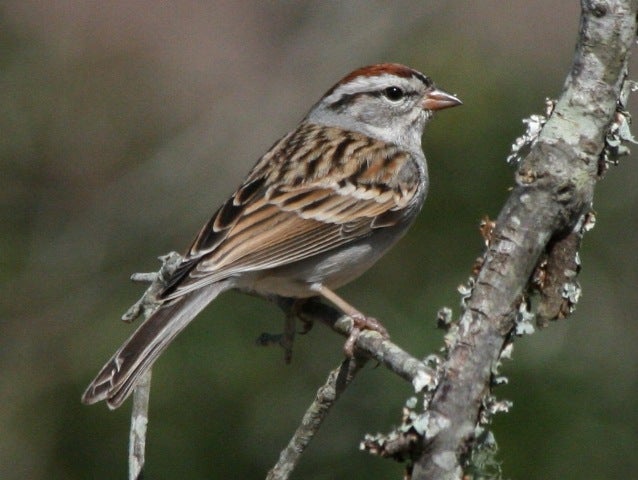
The Chipping Sparrow was one of the 10 most common bird species observed in the study area. Photo: DickDaniels / Wikimedia Commons (CC 3.0)
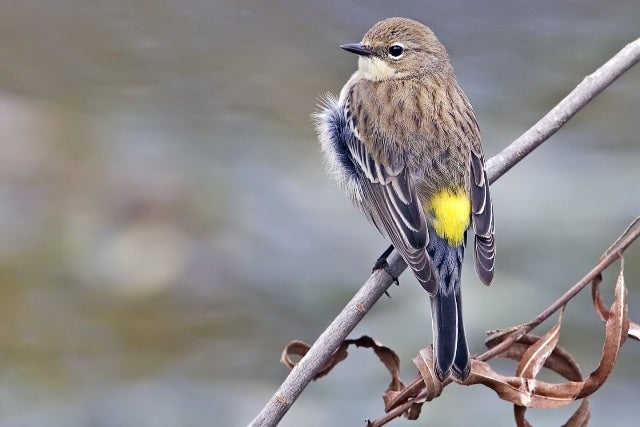
The Yellow-rumped Warbler was also one of the 10 most common birds observed in the study area. Photo: Alan D. Wilson / Wikimedia Commons (CC 2.5)
The team
Samuel Hache, PhD, Lead Landbird Biologist, Canadian Wildlife Service, Northern Region
Environment and Climate Change Canada / Government of Canada
samuel.hache@canada.ca / Tel: 867-669-4771
Rhiannon Pankratz, MSc, Landbird Biologist, Canadian Wildlife Service, Northern Region
Environment and Climate Change Canada / Government of Canada
rhiannon.pankratz@canada.ca / Tel: 867-669-4734
Michelle Knaggs, MSc candidate, University of Alberta
Emily Upham-Mills, MSc candidate, University of Alberta
Erin Bayne, PhD, Professor, University of Alberta
Fact Box: The Boreal Forest Ecosystem and Forest Fire
- The boreal forest is a dynamic environment. Forest fires are important natural processes (natural disturbances) occurring in the boreal forest that renew the landscape, release nutrients from the soil, open up the canopy and let in more sunlight, promote the regeneration of new plants, and increase the overall productivity and diversity of habitats available to wildlife.
- After a disturbance such as a forest fire, various plant communities develop in stages over time through the natural process of succession. Different habitats emerge over time, attracting different species of wildlife.
- Following a fire, light-loving plants and trees such as fireweed and willows appear, along with “colonial” birds such as Dark-eyed Juncos and American Robins. After 2 or 3 years, insects colonize these areas and fire specialists that rely on this important source of food, occur in greater numbers. In 5 to 10 years, vegetation has grown to form an understory on the forest floor and trees have filled in, creating a canopy. Shade-loving plants start growing and a whole new suite of birds comes in, along with other wildlife. This change occurs gradually until the forest comes back to its original state (mature forest: 60+ years).
- The severity of a fire is a measure of the physical change to vegetation, litter or soils in an area caused by burning. The intensity of a fire is a measure of how “hot” the fire was and how long it burned.