What's the Carbon Cycle? Taking A Closer Look
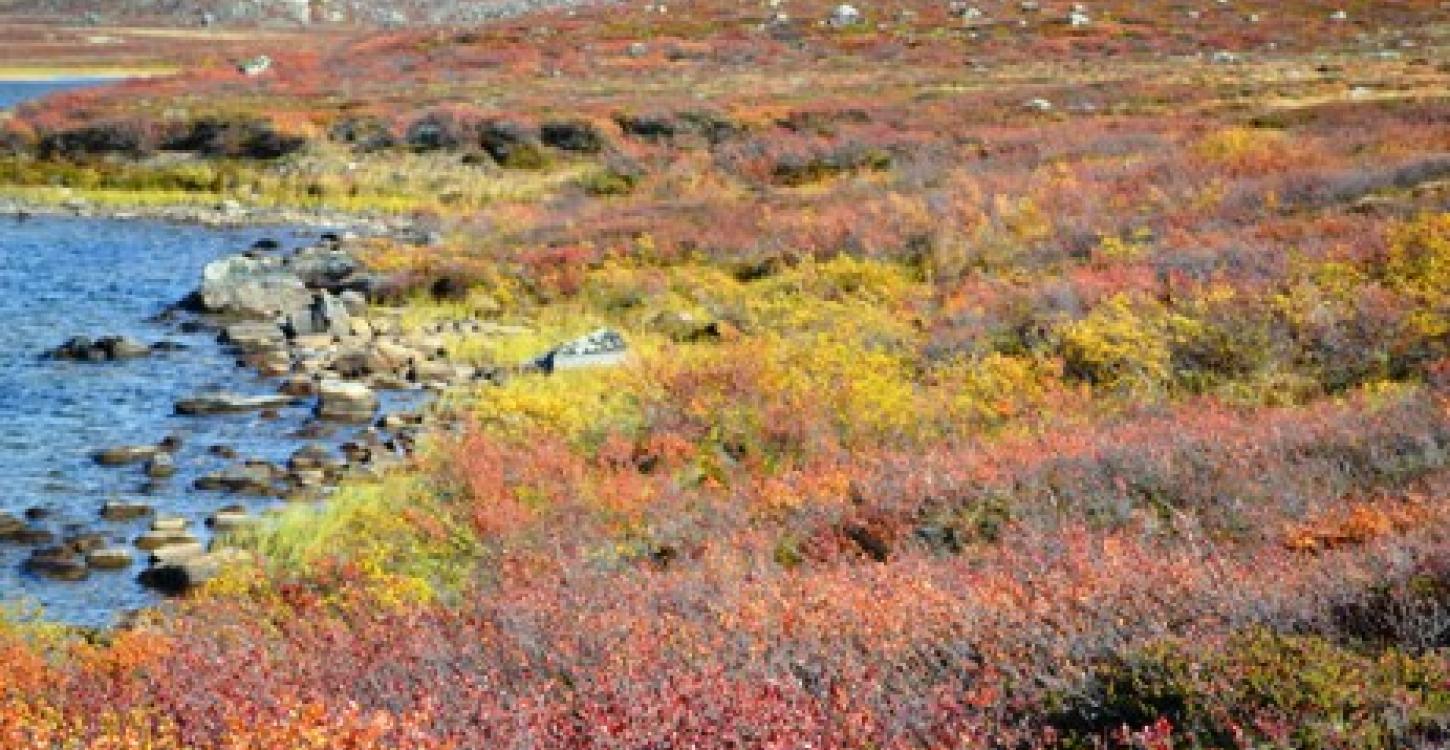
This summer, two students were hired as research assistants in the Tłı̨chǫ Summer Student Research Assistant Program, a joint WRRB and ENR initiative. They had an opportunity to work with university researchers studying climate change on the tundra ecosystem at Daring Lake. Researchers based at ENR's Tundra Ecosystem Research Station are observing the Arctic Carbon cycle which is closely linked to climate change.
What's the Carbon Cycle? Taking A Closer Look
Carbon continuously travels through ecosystems in a circular path called the Carbon Cycle. Through this process, Carbon is exchanged between the atmosphere, the water, and the land. Plants absorb carbon dioxide through their leaves to use in photosynthesis, and they--and other living things--release carbon dioxide back into the atmosphere when they decompose. This carbon exchange process is balanced naturally to maintain the amount of Carbon in the earth's atmosphere.
Another way to think of the Carbon Cycle is to think of Carbon sources and Carbon sinks. Processes that release Carbon to the atmosphere are called "sources", while processes that absorb it are called Carbon "sinks". The amount of Carbon in the atmosphere at any one time depends on the balance that exists between the sinks and sources. This system of sinks and sources is known as the Carbon Cycle.
For the past 10 years, researchers have been studying the sink / source "strength" of the Daring Lake region. They are studying the quantities of Carbon sources and Carbon sinks, respectively, to see whether there are changes in how much Carbon is released--and in how much Carbon is stored. For this field season, researchers are looking at questions such as what role do ponds play in the Arctic carbon cycle? And how might ponds contribute to the Arctic's overall response to a warming climate? What effects does an earlier snow melt (due to a warming climate) have on the growing season of various tundra plants? There are more shrubs covering the tundra up at Daring Lake than there used to be. What effects do vegetation changes have on the carbon cycle?
Climate study research projects like the one at Daring Lake will enhance our current knowledge of the Carbon balance of Arctic ecosystems --and may bring us one step closer to understanding the Arctic's overall response to a changing climate.