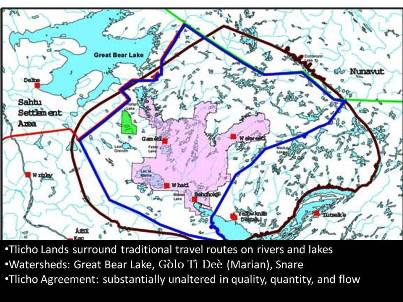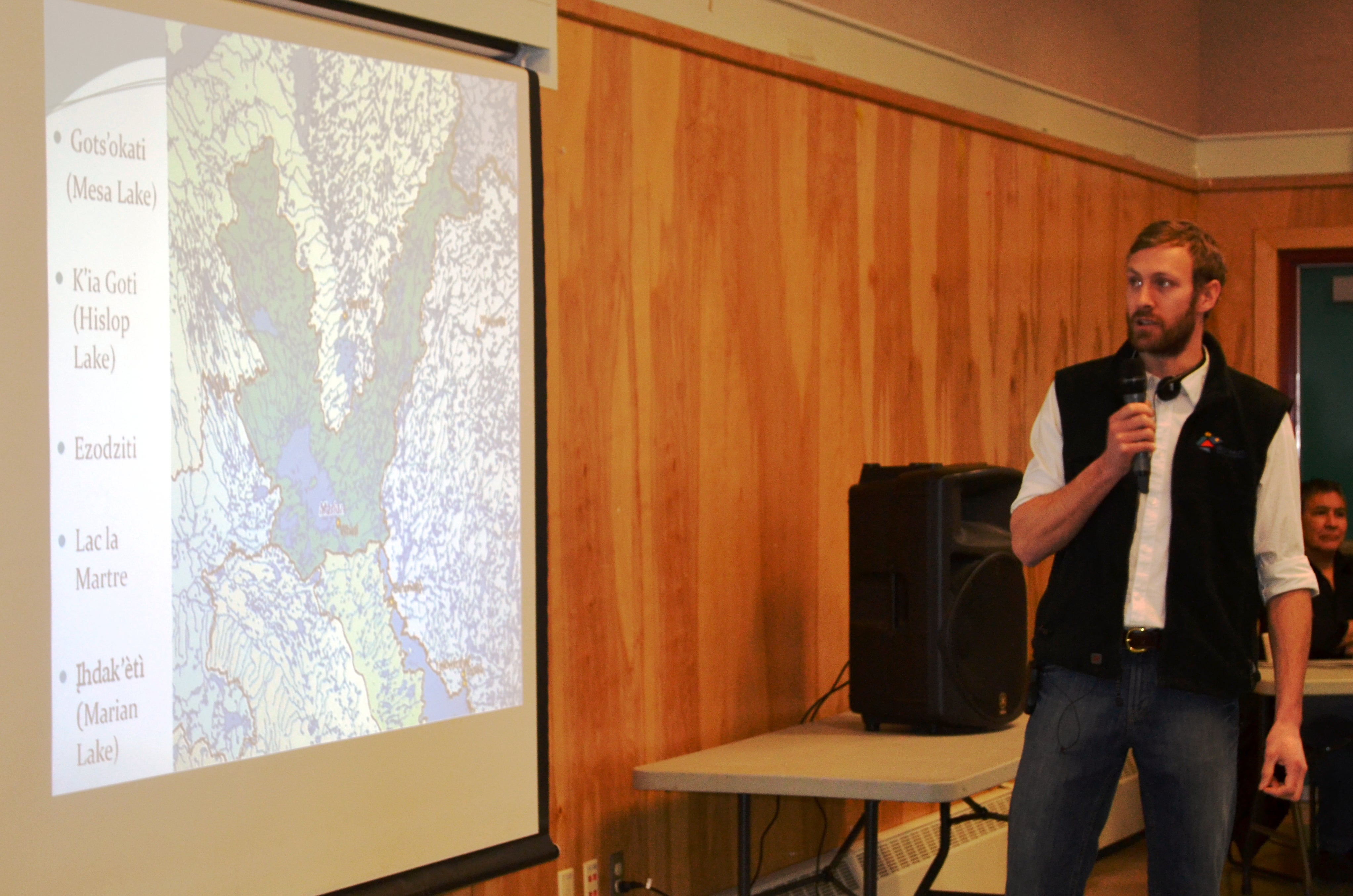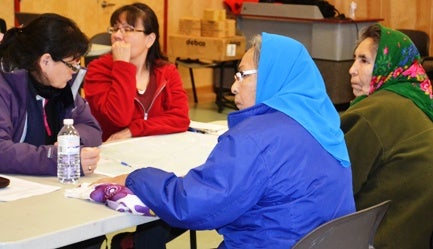
Fish and water was one of four themes discussed at the Tłįcho Wildlife Research workshop held in Gamètì on February 20-21, 2013. Brett Wheeler, Wek’èezhìı Land and Water Board (WLWB) introduced a regional program that will involve community members in monitoring water quality and fish health in the Marian Watershed, one of three main watersheds in the Tłįcho region. The Tłįcho Government, WLWB and WRRB have been working together to develop the Marian Watershed Monitoring Framework to guide overall research and monitoring priorities in the Marian Watershed.
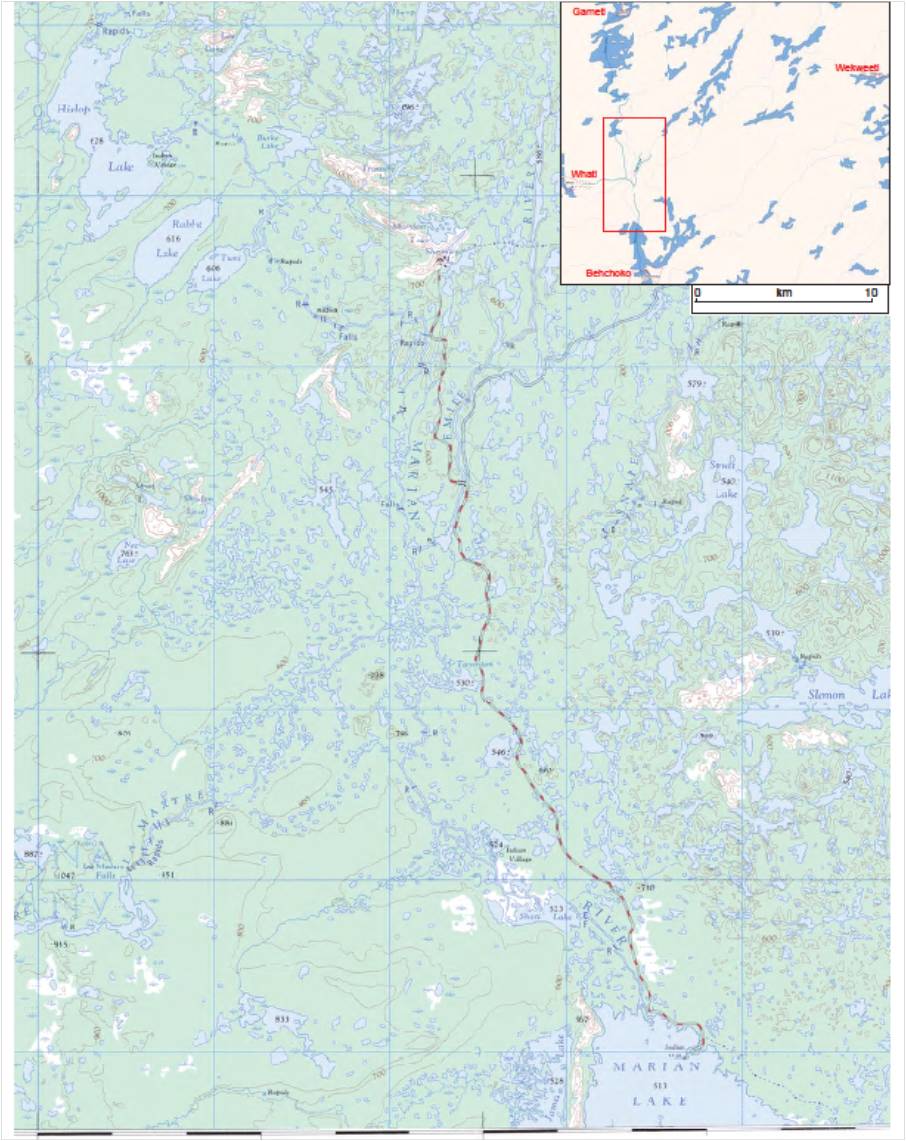
The overall goal of this project is to develop a community-based Aquatic Effects Monitoring Program (AEMP) that will focus on looking for effects from industry. It will start with one specific area—Hislop Lake (K’ia Goti) and downstream to Marian Lake. This area has been selected to study any effects upstream and downstream of the proposed Fortune Minerals NICO mining project and future development.
The WLWB, Tłįcho Government and WRRB are working together to get this new monitoring program off the ground and into the water, so to speak. The goal is for Tłįcho communities to shape the program to reflect their needs and priorities. There will be technical support to help design the program so that it is consistent with other monitoring programs in the area. This is important so that the results can be compared with the findings from other monitoring projects in different locations.
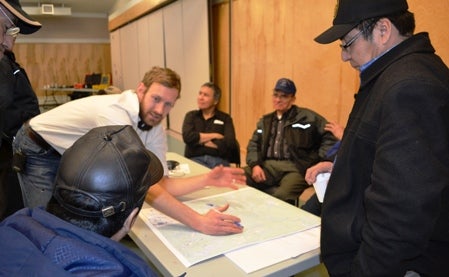
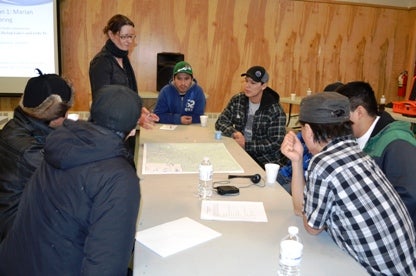
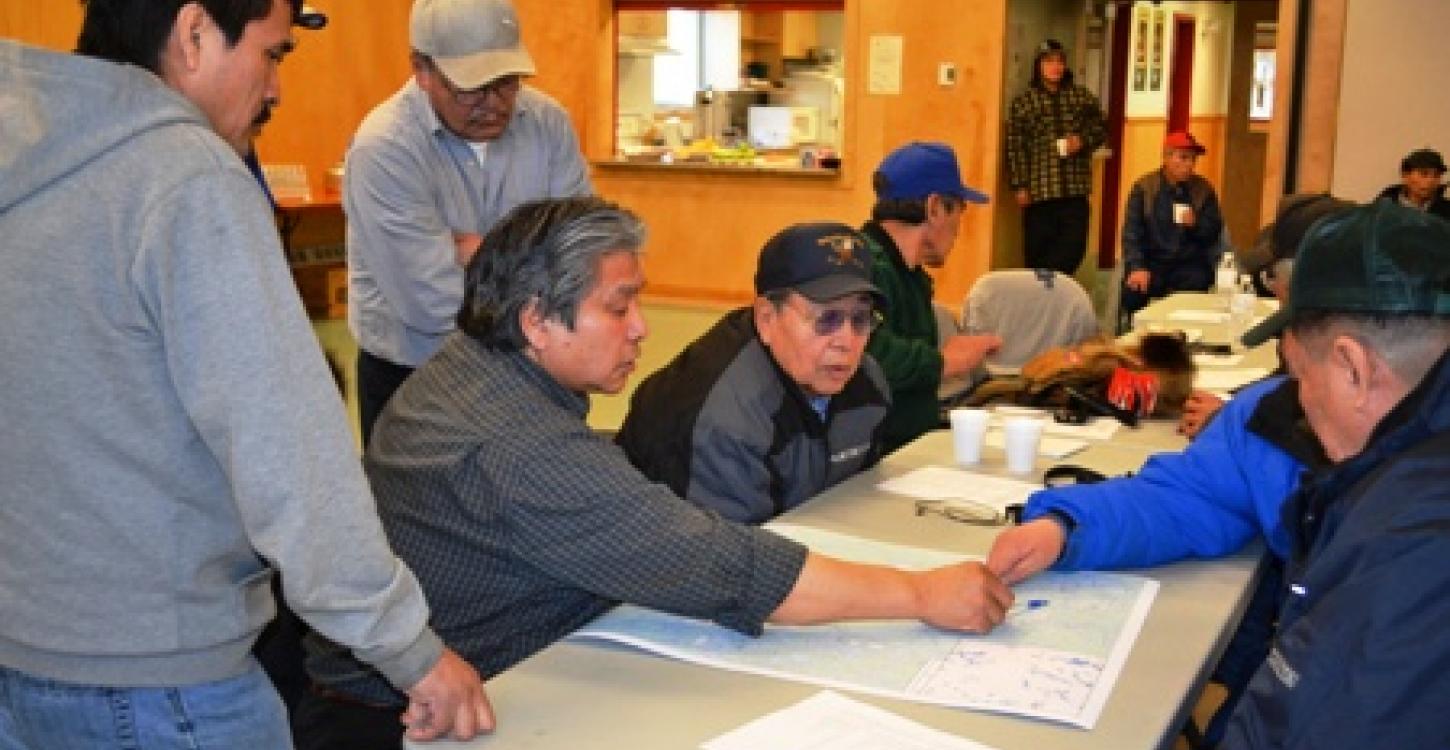
On a map the target area is a relatively small corner of the Marian Watershed (See Photo Gallery below) but it is a large area to monitor and the project will have to focus on specific priority sites. That’s where the advice of the workshop participants comes in. Using maps, break-out groups suggested specific areas where monitoring could take place –places such as traditional fishing sites and areas where people have concerns about potential contamination from previous or existing mining or other developments.
This community based monitoring program will complement other monitoring work in the region, including the Tłįcho Aquatic Ecosystem Monitoring Project and any industry-based monitoring. Community members will be trained to take water and sediment samples in the field to monitor water quality and the health of the ecosystem it supports. It’s an approach that participants are very interested in. As one community member said, “We need to be able to watch with our own eyes.”
Maps in Photo Gallery created by: Wek’èezhìı Land and Water Board