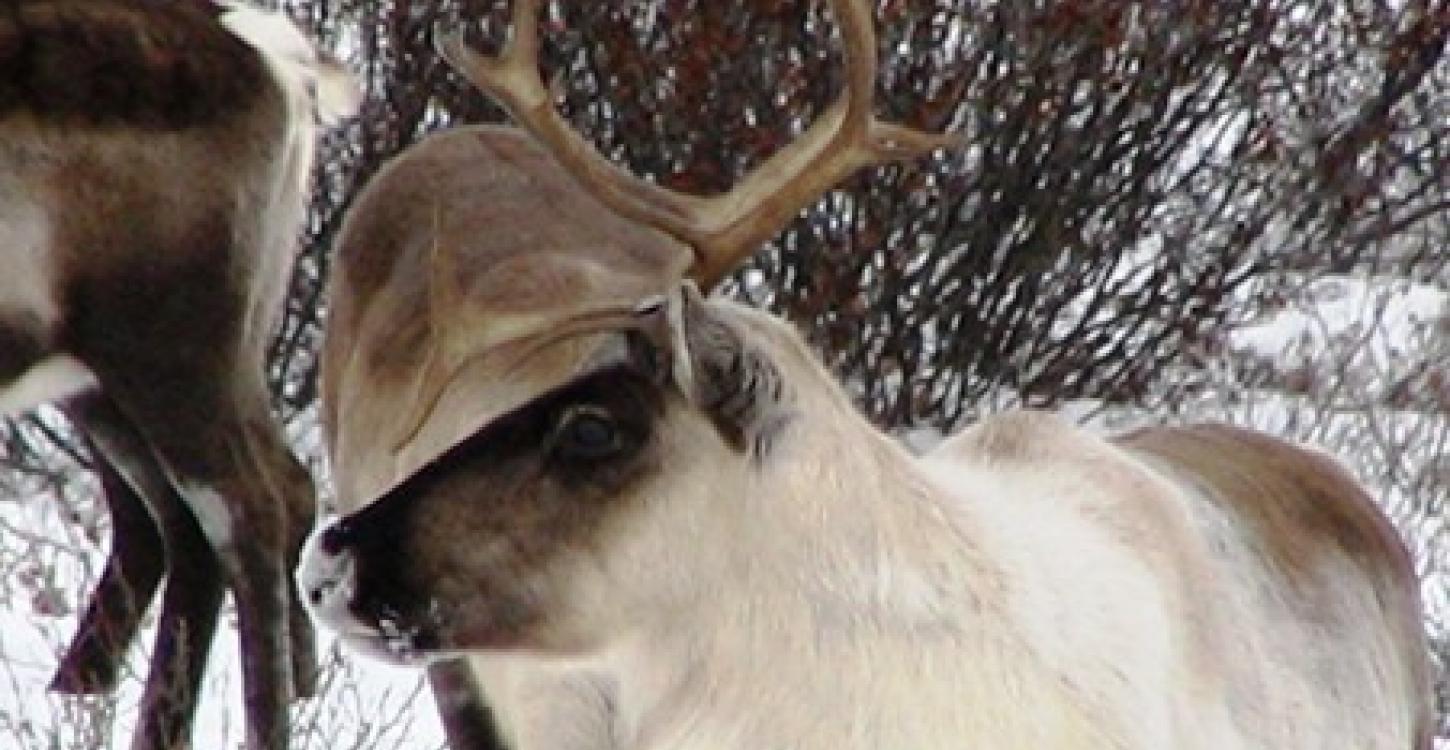
There are different ways to gather the information we need to manage wildlife wisely. We need both science and traditional Tłı̨chǫ knowledge to give a complete picture of what is happening on the land. Traditional knowledge can can map trails that caribou have used in the past, for example. Using technology, scientific knowledge can track the movements of caribou in the present. Each way of ‘seeing’ gives unique information that can be used in different ways.
The last session of the Tłı̨chǫ Wildlife Research Workshop held in Gamètì on February 20-21, 2013, looked at satellite collars as one way that scientists use to build knowledge about caribou. Bruno Croft, ENR, explained why collars are used and how the data they provide can help us better understand caribou populations. The data can be used to
- monitor herd movements to learn when and where the caribou travel
- define seasonal ranges and activities including calving, summer, rutting and winter ranges
- identify individual herds and movement between herds. The way biologists distinguish between herds is by their calving grounds.
- understand the type of habitats caribou prefer
- understand how caribou respond to human activity
- support research on population size and trends
Research into the effects of collars on caribou and collar design is ongoing.
Collaring can provide much useful information but there are community concerns about the use of collars on caribou. The number of collars on Bathurst caribou is currently set at 20. In 2008, the Elders’ Advisory Committee recommended to keep the number of collars at 20 until the collars are redesigned.
During the workshop, participants shared their concerns:
- possible stress or injury to caribou during capture
- the weight of the collars and potential discomfort or harm to caribou
- possible stress or injury to caribou during capture
- the weight of the collars and potential discomfort or harm to caribou
- collars might make caribou more vulnerable to predators
- collared caribou appear to be in poorer condition
- collars seem to make it difficult for caribou to feed
- collaring caribou is not respectful
There is much to learn from scientists and from community members—and as is often the case with wildlife management, the key is to strike the right balance. What do we need to find out and what is the best way to find that information? How can we balance respecting caribou according to traditional Tłı̨chǫ values and learning enough about caribou to ensure their populations remain healthy and self-sustaining?
The starting point is conversation –learning from one another and moving forward in a way that continues the conversation. In his closing remarks, Mike Nitsiza said, “We have shared so much information with each other. We are all on similar ground. We try to help each other.”