It is the most rapidly declining wildlife species in North America –but may be a relatively unfamiliar species to many of us. The Rusty Blackbird is in danger of disappearing and little is known about the reasons for its decline. Scientists suspect that it may be mostly because of changes to their habitat—especially the forested wetlands they’re closely associated with. But there are other threats, primarily on their winter range, including blackbird control programs in the United States.
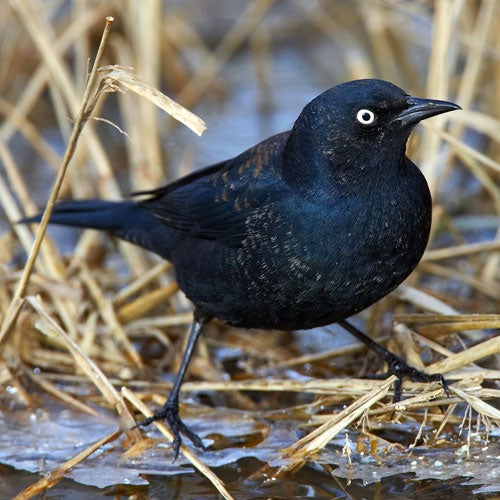
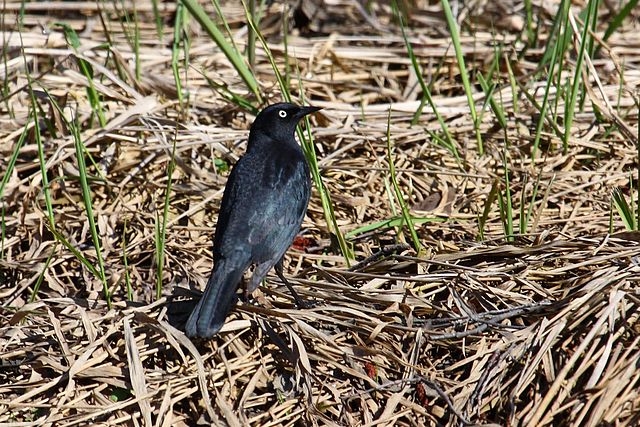
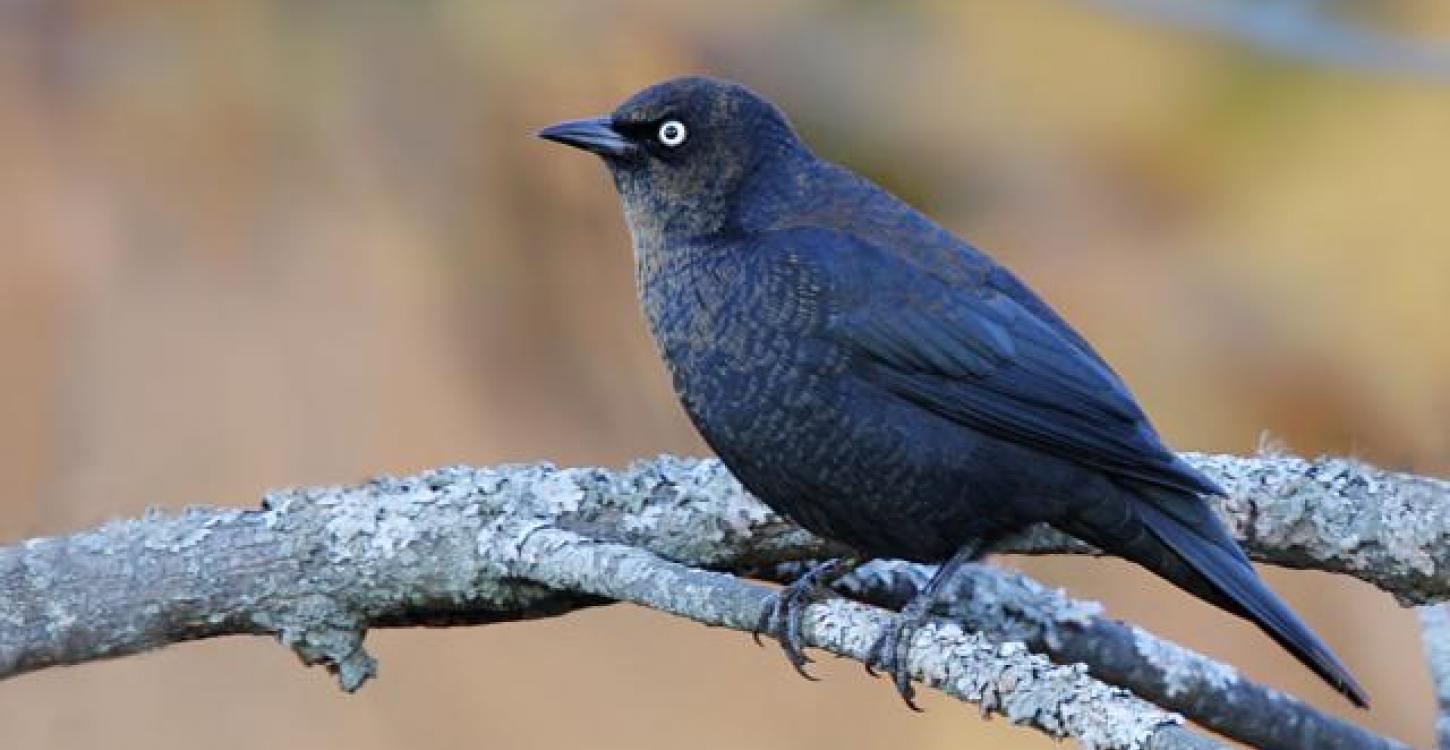
The Rusty Blackbird is a medium-sized songbird, with long pointed wings, striking yellow eyes, black feet and black feathers with an iridescent blue-green sheen on its body and a purple gloss on its head and neck during breeding season. The female is duller in colour than the male –a slate grey. Its name comes from the distinctive rusty coloured feather edges on its winter plumage. Most of the male's rusty feathers edges have worn off by spring.
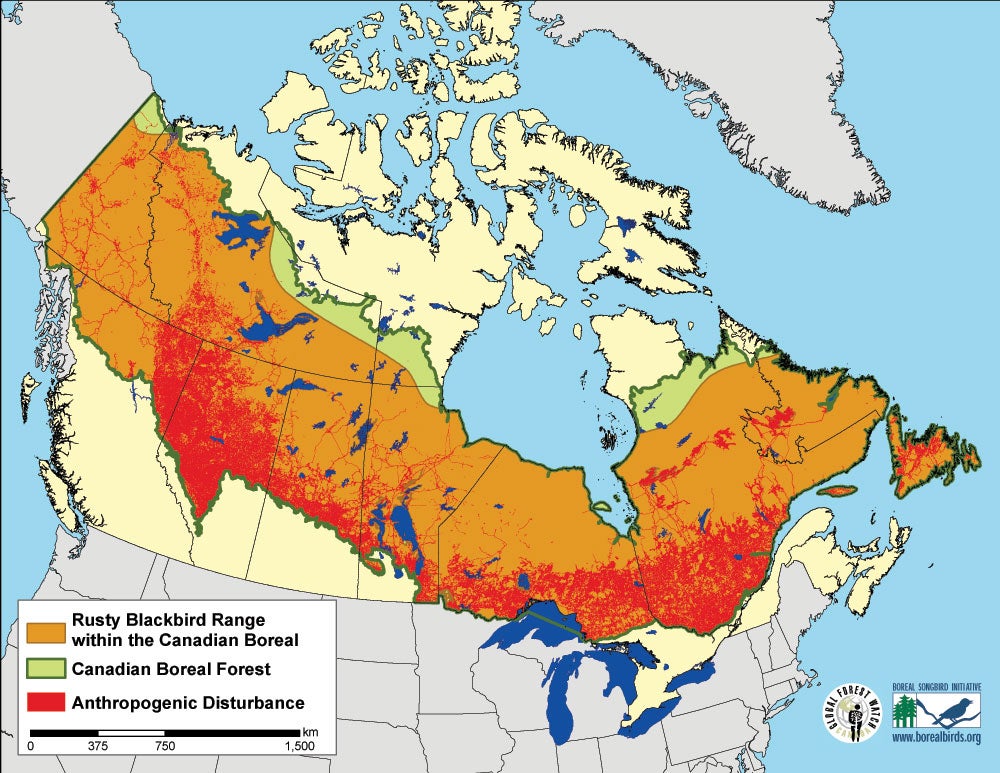
What do we know about the Rusty Blackbird? We need to learn more about its breeding and winter ecology, but we do know that it winters mostly in the wet hardwood forests of the south-eastern United States, and that more than 70% of its breeding range is in Canada’s boreal forest. The Rusty Blackbird nests in the boreal forest, preferring the shores of wetlands like streams, marshes, peat bogs and beaver ponds—to entering the forest interior. Wetlands are very important habitat for this species –for nesting and for winter habitat--but in many places, wetlands are disappearing—often drained so land can be used for other purposes or drying up on account of global warming.
The Rusty Blackbird was listed as a Species of Special Concern under federal SARA in 2009. Donna Bigelow updated the Board on a proposed management plan for the Rusty Blackbird. The draft plan addresses the importance of learning more about threats throughout its life cycle and about its population trends, distribution and habitat requirements. It also proposes measures for the conservation of the species and its habitat for a healthy, stable population in Canada. The WRRB will now review the draft plan and provide its comments and recommendations later this spring.
See the Photo Gallery below for a map (produced by the Boreal Songbirds Initiative) that shows the typical range of the Rusty Blackbird and the level of disturbance / human impact overlaying its range.
Rusty Blackbird Fact Box:
- Rusty Blackbirds usually reach their breeding grounds in April or May.
- The female builds her cup-shaped nest near or in a tree or shrub above a body of water. Nests are made of conifer twigs, dead grasses, moss and lichen and usually lined with a layer of fine grasses. Sometimes the nest is lined with feather, hair or moss.
- The Rusty Blackbird feeds mostly on aquatic invertebrates –insect larvae, crustaceans and snails—including small fish and salamanders. In winter, it supplements its diet with seeds and small fruits.
- One of the WRRB’s recommendations was to increase awareness of this songbird and its habitat in the boreal forest.
·
·