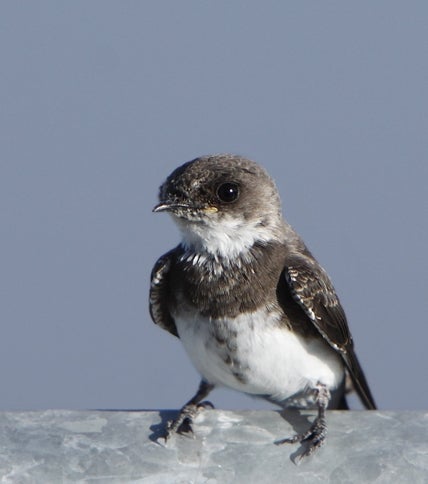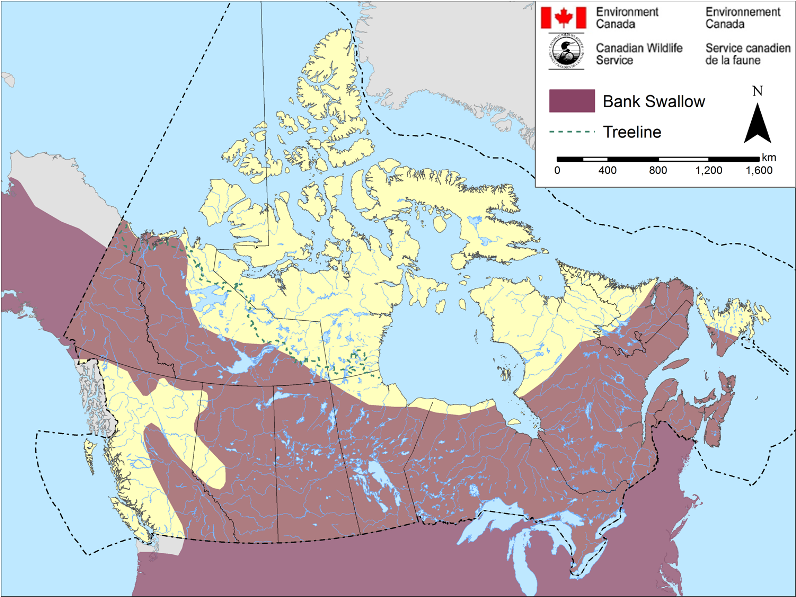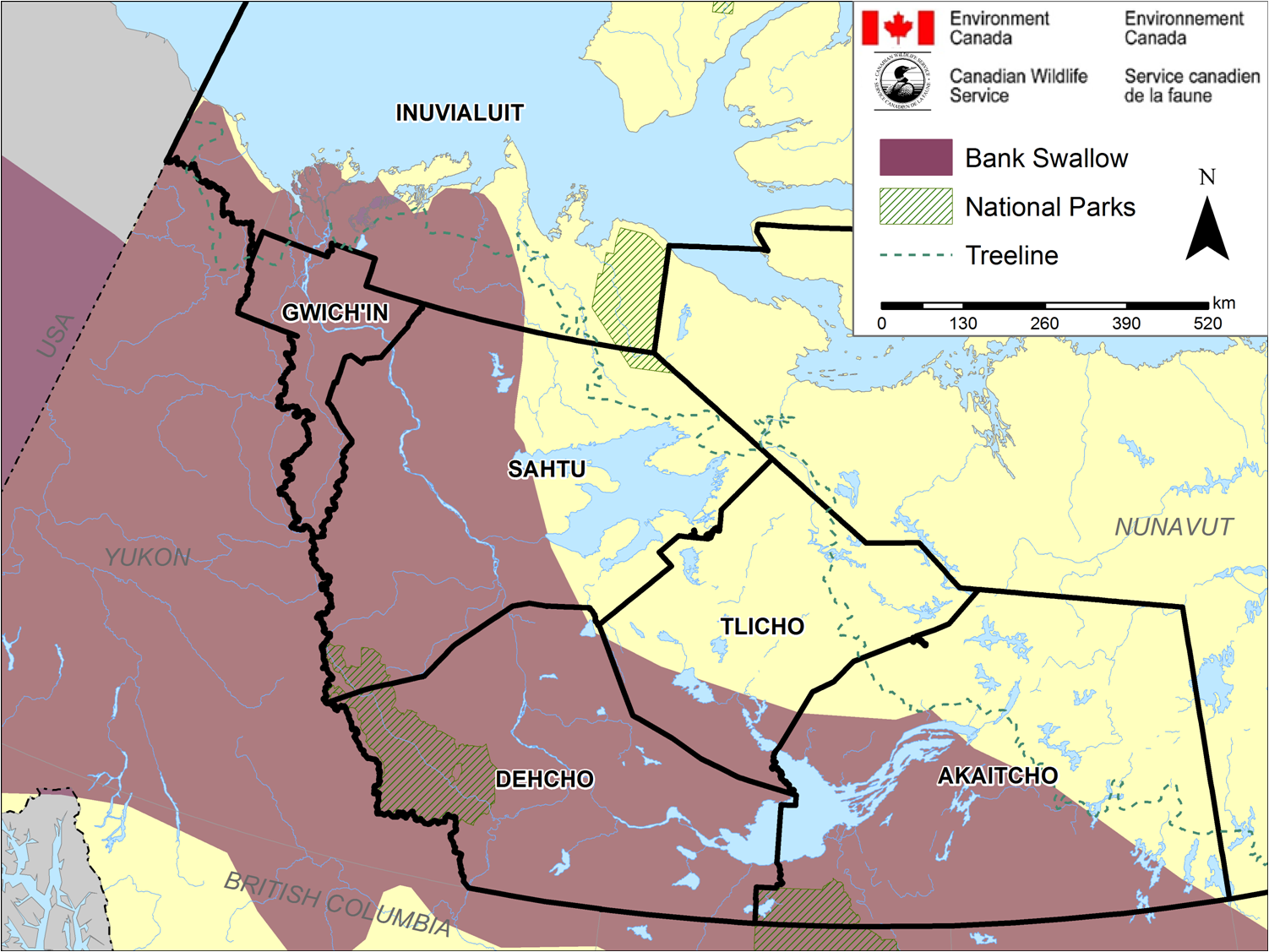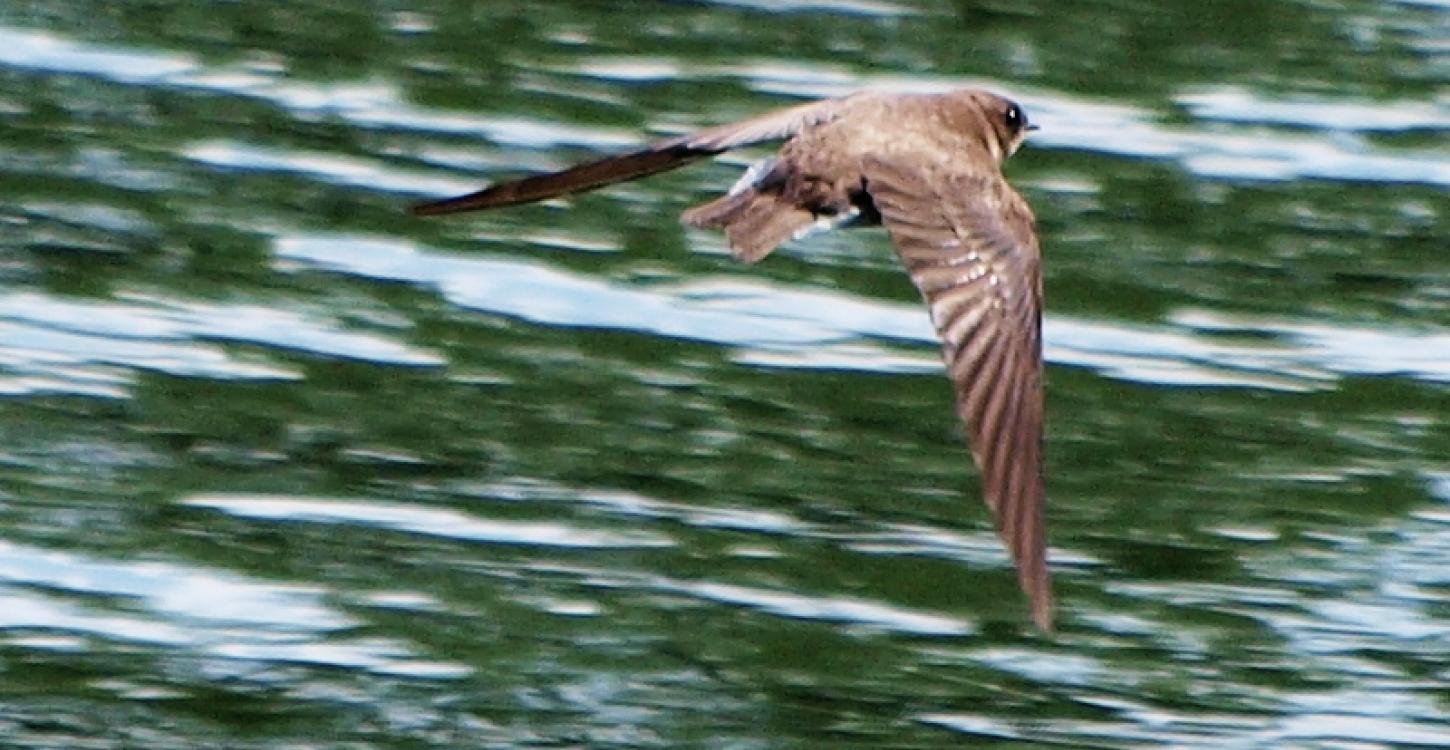
At its recent Board meeting in February, the WRRB supported the proposed listing of the Bank Swallow as a threatened species under the federal Species at Risk Act (SARA). This small, slender songbird whose summer breeding ranges include the southern part of Wek’èezhìı, has experienced a steep and swift population decline. Its Canadian population has plummeted by approximately 98% in the last 41 years, and survey data from 2001-2011 indicate a potential loss of 31% in that 10 year period.
And in various parts of the NWT, people have been reporting that they are hearing fewer songbirds --including Bank Swallows--on the land than in the past. In fact, a recent CBC news story described a new survey that has found that people in the Mackenzie Delta are hearing fewer songbirds than in the 1950s and 1960s.
The reason for this dramatic decrease in numbers is not completely understood, though it doesn’t appear to be the result of a single factor – instead it is believed that the cumulative effects from several sources may be driving the decline. These can include the impacts of climate change – which may influence winter survival; loss of breeding and foraging habitat – through assorted human activities, including flood control and agricultural practices; and pesticide use - affecting the abundance and diversity of insects which the swallow eats.
Bank Swallows feed almost exclusively on insects, catching them while flying above water or open ground. With warmer temperatures resulting from climate change, insects are emerging earlier in the Bank Swallow’s breeding range, appearing before the swallows return from their wintering areas in the south. By the time they complete their migration from as far south as Central and South America, there may not be the quantity of insects they require to raise their young. Hotter summers can also mean fewer insects and less food for Bank Swallows. And with climate change, too, has come an increased number of major storms. The tiny Bank Swallow may be blown off course expending energy it can’t afford to waste, it may not find the food it needs, or be injured along its journey.
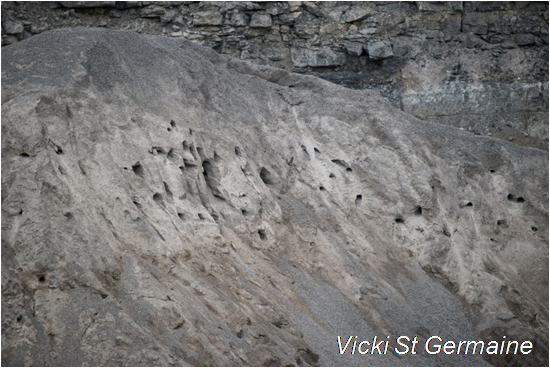
Bank Swallow colonies usually include vertical cliffs and banks where they nest in colonies of a handful to hundreds of nests. Though in the past Bank Swallows were most commonly found around natural, often eroding river or creek banks, more and more these swallows are using human-made sites such as sand and gravel quarries or road cuts. Their burrows may be hard to detect in these places and often are unknowingly destroyed during excavation activities, resulting in lost eggs or nestlings. Changes to Bank Swallows’ nesting habitat in sand or mud banks through erosion or human activity are also potential threats. A photo in the Gallery at the end of this story shows the Bank Swallows' nesting holes in typical habitat (photo: Environment Canada).
“Swallows have great respect for one another. They help and support one another.” - Archie Wetrade, WRRB Board Member
What Happens if Bank Swallows are listed under SARA?
The Species at Risk Act (SARA) provides legal protection for species at risk and their residences. When wildlife species are listed under SARA as Threatened, a recovery strategy and action plan is created within two years of listing. The strategy would outline goals for protecting and recovering the species, review information on the species and its needs, identify threats to its survival, and identify critical habitat, where possible.
Critical habitat is the habitat that is necessary for the survival and recovery of a species.
Bank Swallow Facts
- A handsome, tiny bird, the Bank Swallow has brown upperparts, white underparts and a distinctive dark breast band.
- Known for their graceful, swooping flight, their long, pointed wings and streamlined bodies, Bank Swallows are well adapted for their aerial lifestyle, feeding mostly on flying insects.
- The Bank Swallow’s Tłįcho name, Yatł’ǫdda or “flutterer”, aptly describes its swift, erratic flight, alternating rapid wing beats with graceful glides.
- The Bank Swallow’s scientific name is Riparia riparia – with riparia being Latin for “belonging to the bank of a river”. The males dig burrows into river banks and females build the nest with grass, rootlets, and weeds, lined with feathers. The nests are usually located mostly in the upper third of the bank to avoid ground predators.
- The male begins to dig a burrow into the river bank before he has a mate; the female then hovers in front of the burrows to choose a mate and his nest site.