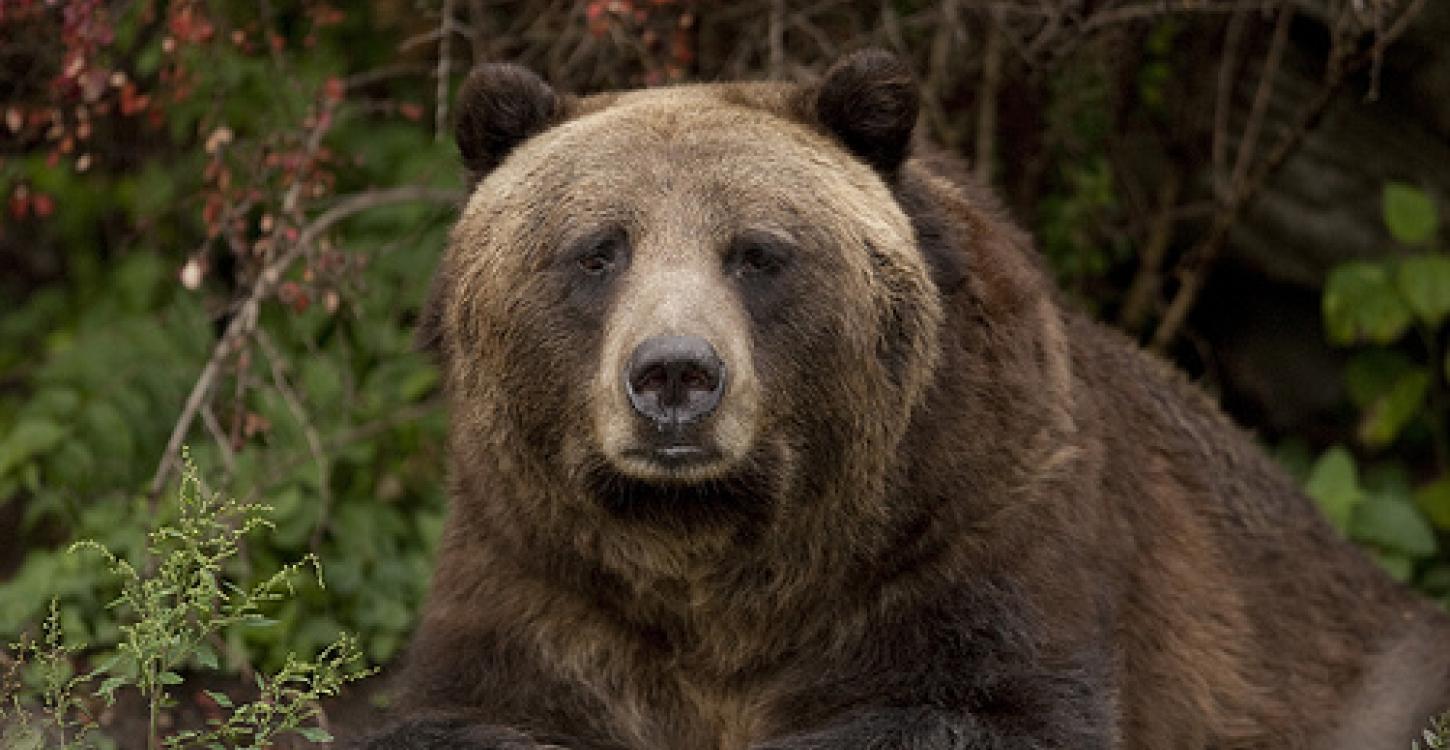
Globally, the Grizzly Bear (sahcho in Tłįcho)have been reduced to half its historic range. Today, Grizzlies are mostly found in Northwestern Canada. Overall, their population seems to be stable—and in fact, their range seems to be expanding in the North—but they’re not doing so well in the southern parts of their range where their populations are declining and becoming more isolated.
Grizzly Bears are extremely sensitive to habitat disturbance and have difficulty recovering from population declines. The exact number of mature Grizzlies in Canada is unknown but could be close to 10,000. In the NWT, their numbers are estimated at 3,500-4,000. Their biggest threat appears to be loss and fragmentation of their habitat. The northern part of their range is relatively undisturbed, but this is changing with increasing pressures from natural resource development. Elsewhere, roads into previously inaccessible areas have resulted in a high risk of mortality for Grizzlies. These factors, combined with their low reproductive rates, mean that they could be of greater concern in future if these pressures are not addressed.
Grizzlies found up here in the North are part of a larger unit assessed across Canada. In May 2012, the Committee on the Status of Endangered Wildlife in Canada (COSEWIC) assessed the Grizzly Bear (sahcho in the Tłįcho language) as a Species of Special Concern. Now, consultation with communities and Wildlife Management Boards, including the WRRB, is underway for approval to list Grizzly Bears under the federal Species at Risk Act (SARA). At its Board meeting this March, the WRRB supported this proposed listing for Grizzly Bears.
If a species is listed with federal SARA as Special Concern, then a management plan for the species and its habitat is prepared to prevent the species from becoming endangered or threatened. Typically, the management plan reviews information on the species and its needs, and considers the larger ecosystem in which it lives; describes threats to its survival; and identifies conservation approaches and activities.
Grizzly Bear Fact Box
- Grizzly Bears are found throughout the northern regions of the world with populations in Europe, Asia, Canada and the United States.
- In Canada, the Grizzly Bear’s range is B.C., Western Alberta, Yukon, NWT, mainland Nunavut and parts of the island group in the southwestern Canadian Arctic Archipelago, northern Saskatchewan and northeastern Manitoba
- The ancestors of modern Grizzly Bears are believed to have migrated from eastern Asia to North America between 50,000 and 100,000 years ago.
- In the North, caribou are a common food source for Grizzly Bears but their diet also includes vegetation (horsetails, sedges, cotton grass and berries), small mammals (Arctic ground squirrels, marmots), moose, birds and fish.
- The Grizzly Bear is considered to be a good indicator of ecosystem health.